“Fancy Photographs” perk unveiled at Save Snapshot Serengeti
How would you like to hang this on your wall?
You might recall this stunning photograph from National Geographic’s latest feature story on the Serengeti Lions capturing the dramatic and devastating fight between C-boy and three of the Killers. It’s now one of 4 options for our ‘Fancy Photograph’ perk on our Save Snapshot Serengeti campaign.

C-boy being evicted by the killers.
The National Geographic article chronicles the story of C-boy and his coalition partner Hildur, who were evicted from the Jua Kali pride in 2009 by a ruthless group of four males called the Killers. Ingela Jansson took this photo on what was supposed to be a routine day of lion tracking. I was a new graduate student out in Serengeti for the first time, and in the car with Ingela when this happened. It was at that moment that I realized that endless hours of napping that lions did belied a soap opera life that was both dramatic and deadly.
Being a male lion is tough; males live significantly shorter lives than females, and it’s clear why from this picture. But don’t worry, for those of you out there who want a slightly less violent view of nature, Daniel Rosengren, our resident lion-tracker and world-class photographer, has generously donated the following three prints to choose from as well:
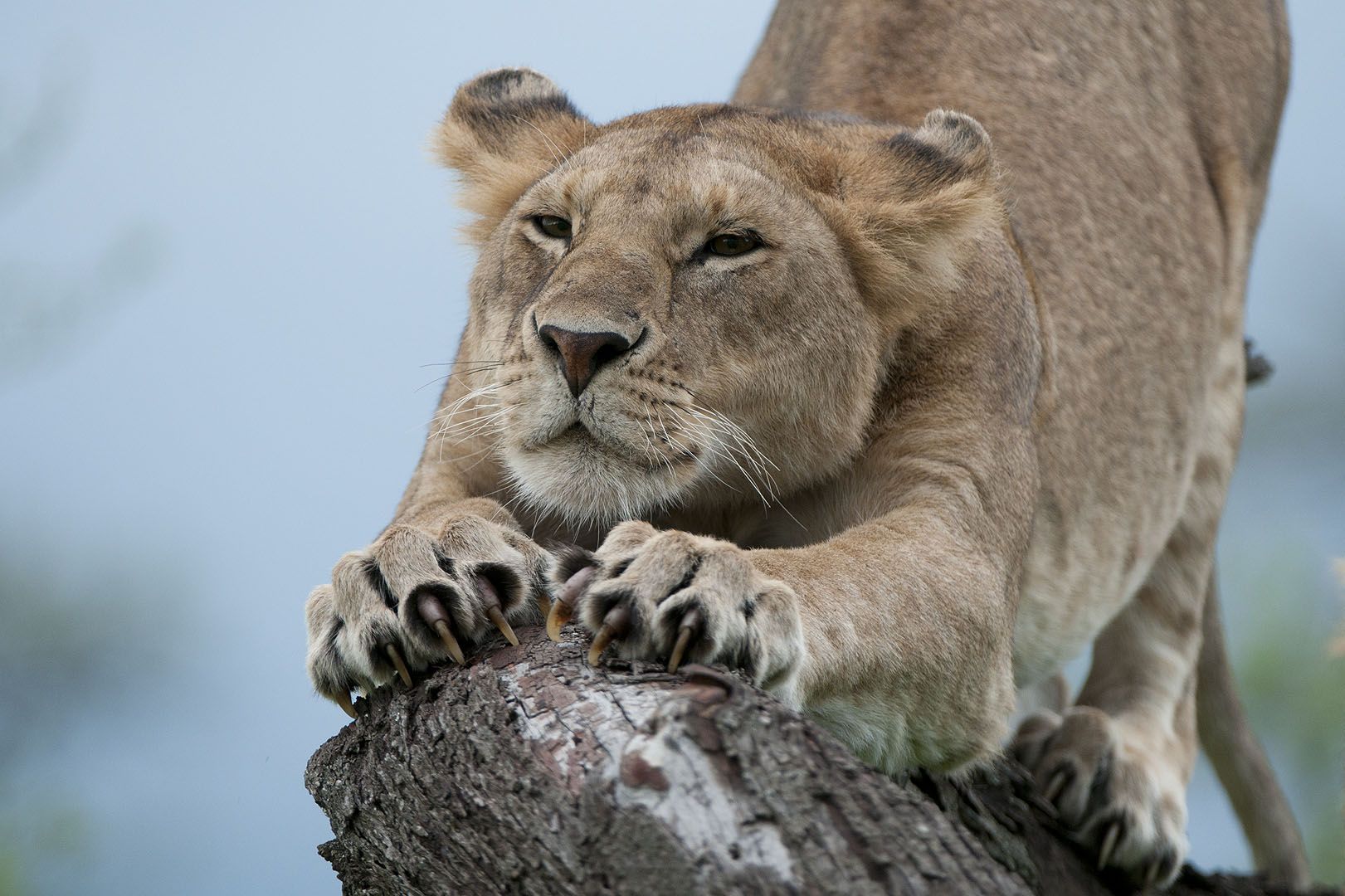
Lioness stretching. Those claws are sharp!
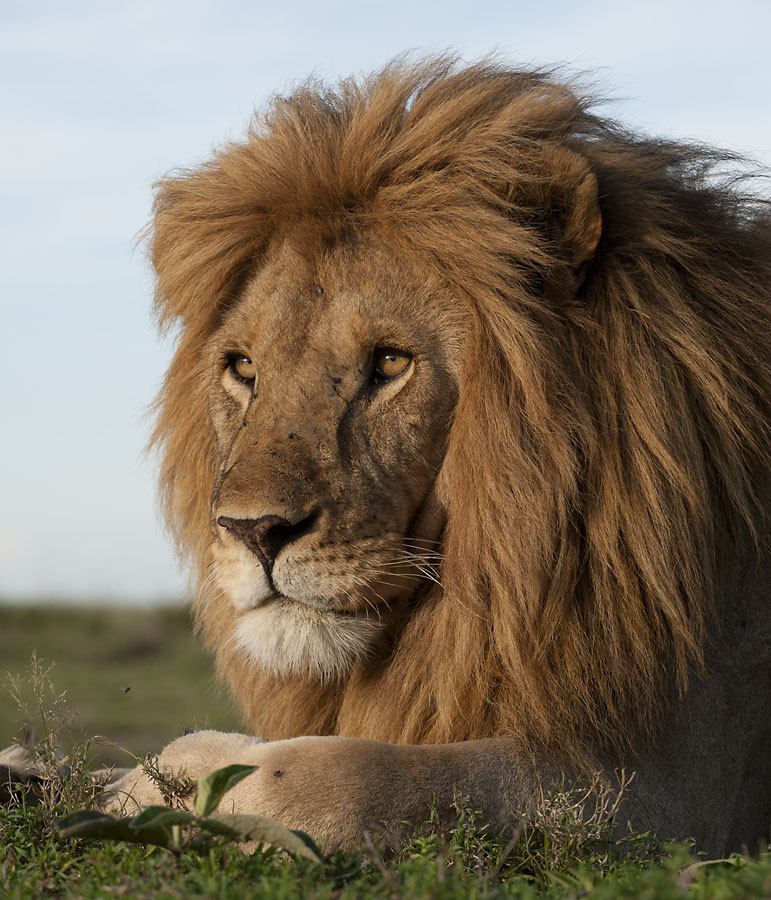
Hildur, C-boys coalition partner.
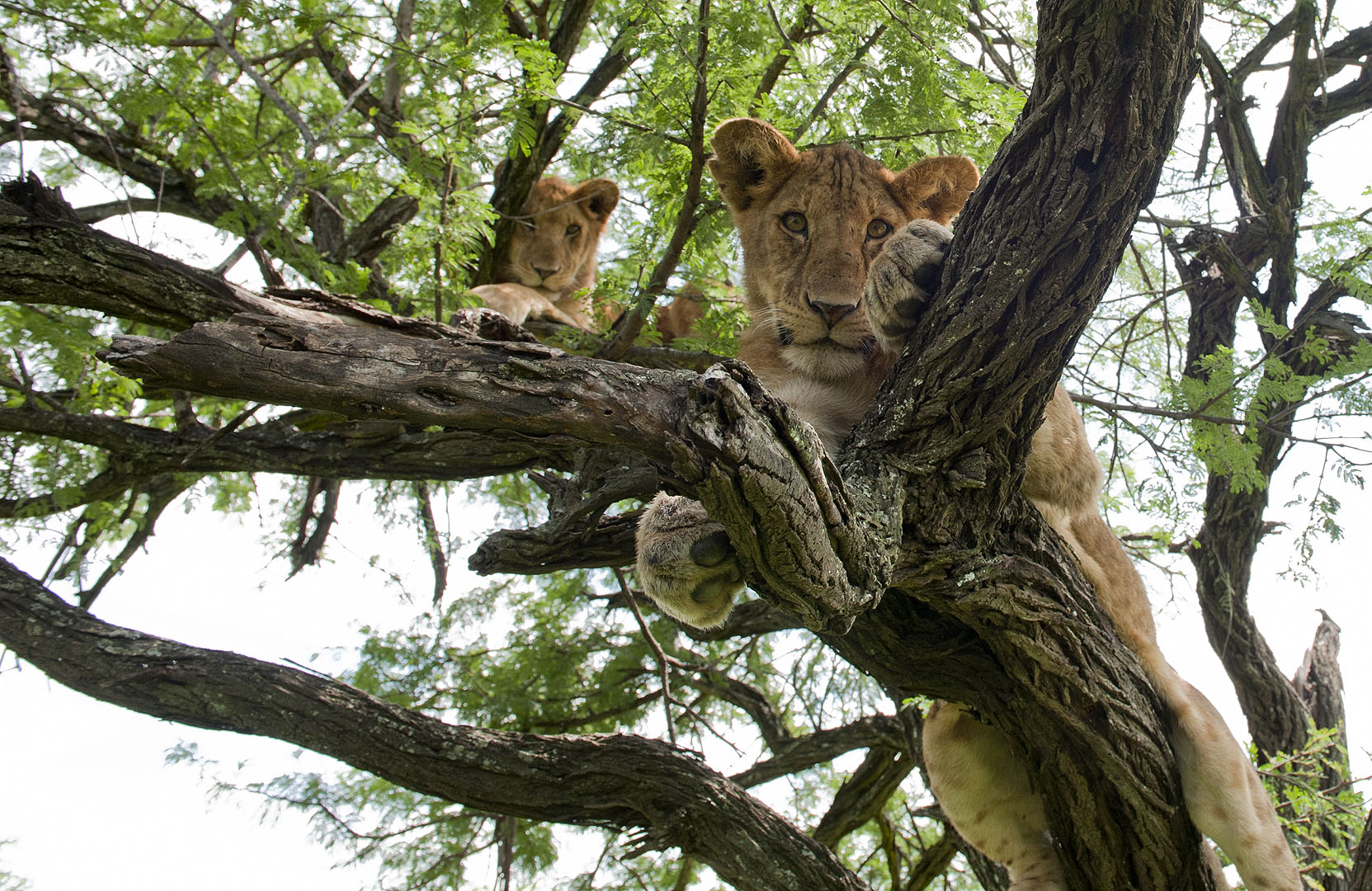
Cubs up in a tree. Who said lions don’t climb?
Please share this news (and the campaign!) with any of your lion-loving friends who might want to hang a piece of Serengeti history on their wall. Thank you all, again, for your dedication and support for Snapshot Serengeti. We on the Snapshot team love doing what we do, and with every picture our camera traps take, we move one small step closer to understanding what makes the Serengeti – and all the animals within it – keep on thriving as one of the world’s most dynamic and iconic ecosystems.
In search of
Hi everyone! We recently discovered that National Geographic, who has just published the big lion feature, might be interested in publishing this Snapshot Serengeti photo:
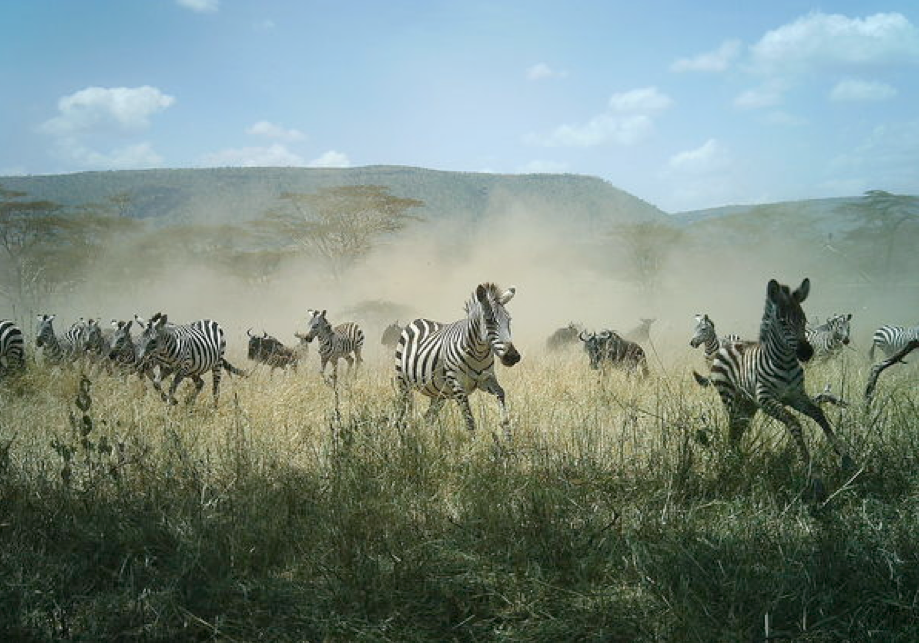
Which would help raise money for the project. Does anyone have it collected on Snapshot Serengeti? We’re trying to track down the url and send NG the full-res version. If so, please let us know!! Thank you!
Photos of the year
Thank you so much to everyone who sent in their favorite photos. We’ve submitted the following 12 to BBC’s photo-of-the-year contest. Of course, there were many, many more we wish we could have used!


and one of my new personal favorites:

In other news, we are *almost* at halfway to our Indiegogo fundraising goal!!!! Thank you all for your support so far! And please don’t forget to check out the meme generator at http://www.SaveTheMemes.org! You can now make a meme directly from the talk pages!
Save the Memes
You have to check this out. Zooniverse has put together a hilarious web site called Save the Memes. It’s a light-hearted way of spreading the story about our Save Snapshot Serengeti campaign. And while it’s good for that… it’s perhaps a little distracting for us scientists, too!
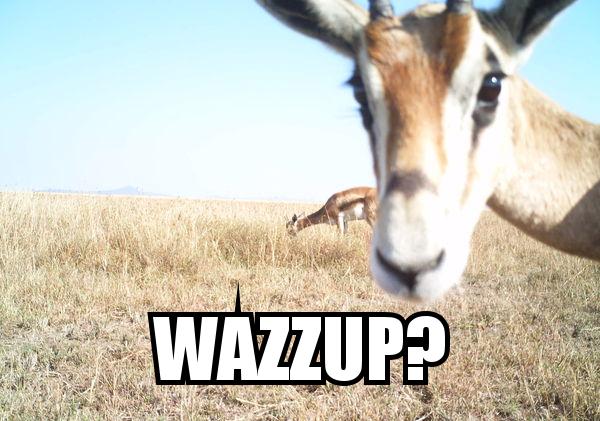


Give it a go with some pre-selected images. Or, you can turn your favorite Snapshot Serengeti image into a meme from the Talk pages now using the “Meme This!” button.
Fave photos?
Calling all camera trap captures!
BBC’s annual camera-trap ‘photo of the year’ contest is drawing a close – and we’re pretty sure Snapshot Serengeti has some winners. So we’re asking for your help to find them!
The contest has three relevant categories:
- Animal Portraits Images taken during the course of research that capture the character or spirit of the animal
- Animal Behaviour Images captured during the course of research that show interesting or unusual behaviour.
- New Discoveries Images that show something new to science, such as a species never before photographed in the wild or outside its known range, or behaviour never before recorded. The caption must make clear what the discovery is.
We can submit up to 12 photos across these three categories. Long-time Snapshot Serengeti moderator lucycawte has already pinpointed a couple of fantastic photos:
…but we’d like your help to find some more!
So send us the subject ID’s or urls of your all-time favorite Snapshot Serengeti pics (via comments here). One of them just might wind up front and center in the next issue of BBC Wildlife or make Snapshot Serengeti the proud winner of a monetary prize to keep the cameras clicking.
And speaking of Snapshot Serengeti funding, I wanted to take a minute to say thank you all who have supported our Save Snapshot Serengeti campaign so far. Yesterday we passed our 20% mark, and we’re marching forward! For everyone out there who loves looking at these incredible photos, please take a look at our campaign — we have some really fun perks that you might enjoy. And whether or not you’re able to make a donation, please help us spread news of the campaign by sharing our link: igg.me/at/serengeti — the more people we reach, the better our chances of bringing you these photos for years to come. Thank you for your support, your effort, and for being as addicted to Snapshot Serengeti as we are!
Season 6: Snapshot Serengeti’s Final Season?
A lot has happened in the Serengeti over the last six months. The wildebeest migration, which appeared towards the end of Season 5, swept down onto the plains in pursuit of nutritious new grass. I improved my hyena-proofing strategies,
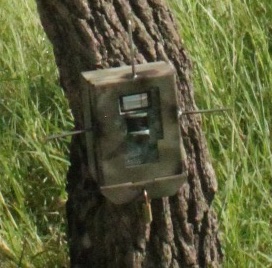
Spikes make the cameras less palatable…I hope….
and Daniel found and collared the long-lost Transect Steady pride.

And, although Season 6 marks my last field season as a graduate student, we on the Snapshot Serengeti team want to keep the cameras running for as long as we can. There is still so much to learn about the Serengeti, and many of its secrets can only be understood by long-term projects that capture both annual variability and unexpected events. The Snapshot Serengeti cameras let us study this incredibly dynamic system in a way that was never possible before – and we’re not ready to stop.
But we need your help. Our NSF funding has run out, and unless we raise enough money to keep the team going, there won’t be a Season 7.
So we’ve launched a crowd funding campaign on Indiegogo to meet our immediate funding needs. And we’re asking for support in any way you can give. We’ve got some fun “perks” in return for your donations, but the biggest perk of all will be having a Season 7 to look forward to.
So, if you too are addicted to pressing ‘play’ on the silly warthog close-ups or collecting images of baboon selfies, please share this campaign with your friends and family.
The more people we reach, the better our chances of meeting our goal and keeping our cameras running…and the better our chances of truly understanding what makes this incredible ecosystem work.

Unanticipated events and the need for long-term studies
In 1994, a terrible disease ripped through the Serengeti, killing lion after lion. By the end of the year, a third of the lions in the Serengeti were dead. The culprit was a virus known as canine distemper, and lions that died of the disease did not die quietly. The symptoms were clear to any observer: facial twitching, disorientation, and eventually convulsive seizures.
The lions in Craig’s study area were not spared, but the data he had been collecting over the previous decades proved invaluable in understanding what happened in 1994.

Using archived blood samples that had originally been taken for genetic analysis, Craig and his colleagues were able to go back and test for a number of viruses. The earliest year blood had been sampled was 1984, but because some of the lions sampled had been ten years old or older, he was able to infer information about when lions had been exposed to viruses as early as 1970.
They found that there had been previous outbreaks of canine distemper in the lions in 1977 and 1981. Because the lions had been studied then, he knew that these outbreaks had not caused large die-offs like the one that occurred in 1994. Instead, he found that by 1994, essentially all lions in Serengeti were free from canine distemper antibodies, meaning that none of the lions had any immunity to the disease. This widespread lack of immunity and a mutation in the virus were thought to have caused so many deaths.
The lion population recovered after the 1994 outbreak. Just years later, though, two “silent” outbreaks hit the population in 1999 and 2006. Unlike the 1994 outbreak, these ones were not noticed at the time because few lions died. They were only detected through blood sample testing. An analysis of the archived blood samples finally revealed the major difference between the canine distemper outbreak that led to massive death and those that did not. High death rates in the 1994 outbreak were due to the simultaneous infection with another disease — a protozoan parasite known as Babesia — that becomes increasingly common during and after major droughts. When Babesia is absent, lions contract canine distemper, but their immune systems fight it and they become immune. When lions are also infected with Babesia, they cannot fight off the canine distemper virus as easily, and more of them get sick and die.
The long-term lion data was also instrumental in understanding the spread of canine distemper in the 1994 outbreak. The disease showed up sporadically in the study area prides, suggesting that lions acquired the disease from an outside source, rather than spreading it from one lion to another. Sophisticated analyses revealed that the origin of the outbreak was likely in domesticated dogs in the human settlements around the Serengeti ecosystem. Further, it is likely that lions acquired the disease repeatedly from hyenas. Hyenas move great distances, use human-inhabited areas around the Serengeti more than lions do, and interact with lions at kills.
Scientists cannot predict major droughts. Nor can they predict wildlife disease outbreaks. It isn’t possible to recreate major droughts with experiments in vast wilderness areas. Nor is it ethical to introduce novel diseases into natural areas in order to understand more about the disease. It is ONLY through long-term research projects like the Serengeti Lion Project that we acquire the data necessary to understand what happens in nature during disease outbreaks, droughts, and other rare, but important events.
Ideally we would like to run Snapshot Serengeti for at least a decade. We want to be able to capture some drought years in our data set, and some years with unusually wet dry seasons. We want our cameras to be running when the next unexpected disease outbreak occurs — in lions or in other species. To those of you have already contributed to our crowd-funding campaign, a heartfelt thank you. If you haven’t yet, and are able, please consider a donation.
To read more about canine distemper, Babesia, and Serengeti lions, check out:
The life of a lion isn’t easy
Hopefully you’ve been enjoying the adventures of the lions that David Quammen has been writing about in this month’s National Geographic. David writes about the dramatic lives of C-boy and Hildur, two very good-looking male lions that roam the Serengeti, and the challenges that they face as male lions trying to survive in the Serengeti. I was in the car with Ingela that day that the Killers nearly destroyed C-boy — it was one of my first days in Serengeti, and one of the many moments that I fell in love with the dramatic lives of the animals there.
There’s a good chance you’ve seen C-boy and Hildur and Killers, as well as all the ladies they’ve been fighting over, in the camera traps. Below is a map of the pride territories overlaid on the Snapshot Serengeti cameras. There are a lot more prides than this, but these are the ones that Nick Nichols and Davide Quammen followed.

SnapshotSerengeti cameras and the lions that David writes about in NatGeo
Jua Kali, where Hildur and C-boy resided in 2009, control just a tiny patch of land in the center of the study area where the Seronera river begins. They spend most of their time in a marshy lowland where those two small tributaries, converge. The marsh has lush grass and standing water, but is just a tiny oasis in the otherwise dry and desolate grassland. It is not the best territory that a lion can have.
After C-boy and Hildure were deposed from Jua Kali, they eventually took over the Vumbi pride. It worked out pretty well for them in the end – the Vumbi’s are not only a bigger pride, but maintain control over the Zebra Kopjes, a suite of rocky outcroppings that provide shade, water, and a vantage point to watch for prey across the open plains. Despite C-boy’s brush with death and his inelegant retreat from power, C-boy and Hildur really haven’t done too badly for themselves.
North of Vumbi, the Kibumbu pride ranges along the Ngare Nanyuki river. When David was writing about our lions, the Killers had recently taken over the Kibumbu pride. Unfortunately, the Kibumbu females had had young cubs fathered by the previous coalition; the Killers would have killed these cubs to bring the Kibumbu females into sexual receptivity. Infanticide is a brutal, but natural part of a lion’s life.
So there it is. The lions that are gracing the pages of this month’s National Geographic magazine are the same ones that you see yawning, sleeping, and stretching in front of the Snapshot Serengeti camera traps. David’s story, and Nick Nichols’ photos, provide an amazing and detailed dive into their lives.
We’re currently raising funds to keep Snapshot Serengeti and the long-term Lion Research Project afloat. Thanks to everyone who has donated so far!
More lions at National Geographic
In addition to the main feature story on the Serengeti lions that I wrote about on Wednesday, there are a number of lion extras at National Geographic Magazine, too.
The article “Living With Lions” talks about the challenges of lion conservation, and brings up some topics I’ve written about before, including fences and trophy hunting.
There’s an interactive map, where you can see the fragmentation of wild lions. The Serengeti (‘C’ on the map) is one of only a handful of strongholds that contain at least 1,000 lions.
There’s a short interview with Michael Nichols, the photographer for the stories, and a fabulous slideshow of images that he took. (Although I have to say that I always think lions look very strange in black and white.)
And there’s a high-resolution download of this image of Serengeti lion cubs you could use for your desktop background if you wanted.

Our lions in National Geographic Magazine
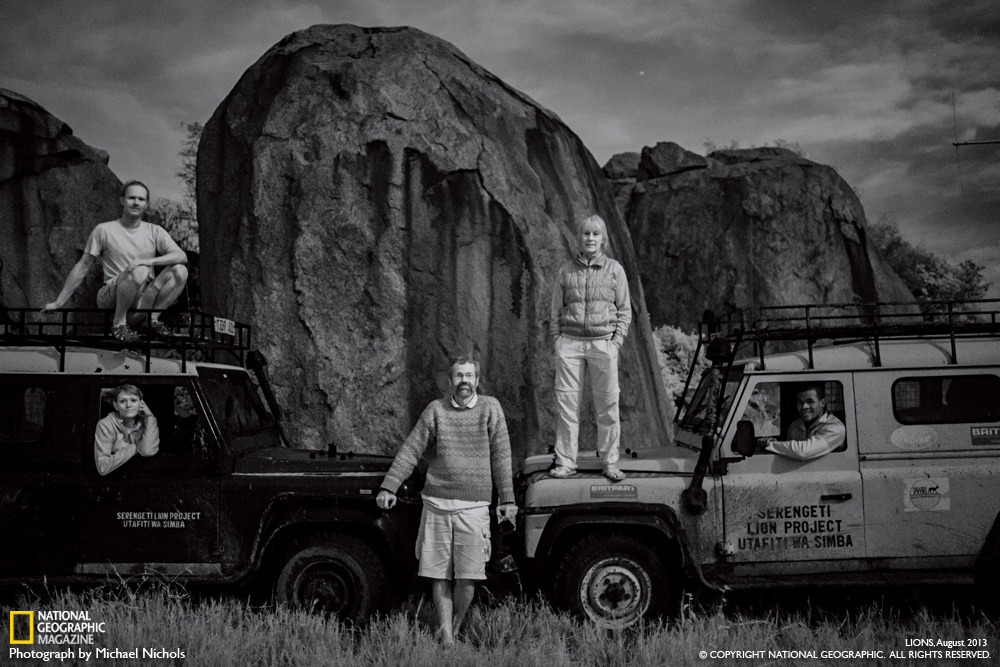
The August edition of National Geographic Magazine has a cover story on the Serengeti lions that Craig has been studying for decades. And because Ali set out the camera trap grid in the same place as Craig’s lion study area, you see the same lions (plus more) on Snapshot Serengeti as those featured in the article. In fact, photographer Michael Nichols was out in the Serengeti during Season 5, so his pictures are contemporaneous with the ones up on Snapshot Serengeti right now.
So if you have a moment, go check out “The Short Happy Life of a Serengeti Lion,” which is entertaining and gives a nice history of the foundational research on which the Snapshot Serengeti science rests. And take a gander at the editor’s note, which accompanies this picture.