
Heating up and keeping cool
I’m just returning from a lovely vacation in Maine, where the air was cool and the crowds few and far between. It may not always be that way.
It’s no secret that over the next several decades, the average temperature in the United States (and in many parts of the world) is going to increase. That means warmer summers, both in the hot parts of the country and in the more northerly regions where people typically go in the summer to cool off. As the summer weather get warmer, more people may head north on vacation, or they may go further north than before. We can expect animals to try to compensate for warmer weather, too.
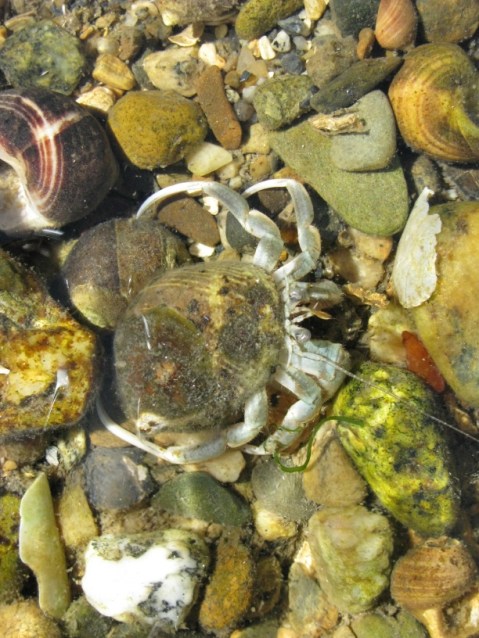
A hermit crab in a Maine tidal pool. Kinda makes you want to cool off with some Seafloor Explorer, doesn’t it?
The first week of August I was in Minneapolis for the annual meeting of the Ecological Society of America, and I spent Thursday sitting in on two symposiums: “Warming Consumers and their Prey: General Principles and Applications for How Temperature Affects Trophic Interactions” in the morning and “Rapid Climate Change and Species Range Shifts: Observations, Predictions, and Management” in the afternoon.
The morning session was about how warming climate may influence interactions between plants and animals and between animal predators and animal prey. It is not an easy topic, as the relationships among species are complex, and scientists are only starting to understand how warming will affect single species directly (that is, if they don’t interact with other species). One speaker pointed out that while some species might normally adapt to warming or move to cooler areas, having other species around might prevent that adaptation or movement. For example, if you overheat easily and your plant food does not move northward as the climate warms, you cannot very easily move northward to adjust to the changing climate. Another speaker showed that we should think about maximum summer temperatures and minimum winter temperatures, rather than average annual temperature (as is typically done); plants and animals are likely to experience the greatest impact of climate change when they experience unusually hot or unusually cold conditions.
The afternoon session was equally interesting. One speaker talked about how over the past few decades, the ranges of plants and animals studied all over the world are moving towards the poles (north in the northern hemisphere, south in the southern hemisphere), up mountains, and down into deeper water (for aquatic organisms). Another talked about using information from botanical gardens and commercial plant nurseries to understand where some plant species can live and reproduce, even if they’re not native to that area to begin with; this is useful information for predicting how plants might change their ranges in the future.
Regional climate models for East Africa do not suggest that the area is going to get much warmer in the next decades. However, the climate will get more variable, with wetter wet seasons and more frequent droughts. That’s one of the reasons we want to run Snapshot Serengeti for many years. By collecting data over a decade or more, we’re likely to catch at least one drought year and at least one very wet rainy season. If the Serengeti’s future holds more of these extreme climate years, the data from Snapshot Serengeti will help us determine what will happen to the various animals that live there — and in other parts of Africa.
See where other Snapshotters are
The Zooniverse has just launched Zooniverse Live, which puts pinpoints up on a world map when anyone classifies an image in Snapshot Serengeti (or any other Zooniverse project). We’ve got the yellow dots. The site uses your IP address to locate your general vicinity, which works pretty well, but sometimes your internet traffic is routed in surprising ways. For example, Zooniverse Live seems to think I’m in Fountain Hills, Arizona, rather than in northern Virginia. Give it a try: classify an image on Snapshot Serengeti and then watch (quickly!) as your image scrolls up along the side of the page on Zooniverse Live. Did it get your location right?

More at Nat Geo!
National Geographic keeps adding more Lion Project tidbits to their website: listen to Craig Packer talk about what makes good real estate if you’re a lion. The camera trapping survey is centered on prime lion real estate – and the Campsites, Transects, and Mukoma Gypsies prides are all ones you’ve undoubtedly seen!
A Serengeti Soap Opera
### Today’s story is a guest post by Craig Packer, Director of the Serengeti Lion Project. He’s currently in Tanzania, and will soon be bringing home Dead Camera Centerpieces for our Indiegogo donors! ##

This may look like the prototypical lion family – mom, dad and cub – but it is unique. The two adults, SU5 and SU6, are littermates, and they are the older siblings of the male cub, SU9. The adults have been raising SU9 since their mother died in December, when he had only just been weaned. This sort of adoption is extremely rare in any species, and it’s the first time we’ve seen it in the lions.
When SU5 and SU6, were born, their mother’s pride contained a healthy number of four females. But two died before SU5 & SU6’s first birthday, and a third died when SU5 & SU6 were 2.5 yrs old, leaving the mother, SU-K, as a solitary. Solitary female lions must confront the terrifying circumstances of living alone in a world filled with vicious gangs of neighbors, so solitaries often remain unusually close with their subadult offspring, and SU-K was remarkably tolerant of 3-yr-old SU5 and SU6 when she gave birth to three new cubs, SU8, SU9 and SU10, in May 2012.
Solitary females almost never rear cubs successfully, so it was truly extraordinary that SU-K managed to keep her three youngest cubs alive while also dealing with the needs of SU5 and SU6. Then SU-K was killed by a large neighboring pride in mid-December; SU8 and SU10 disappeared the same day as their mother, and we assumed that SU9 must have died as well. But we found 11-mo-old SU9 with his big brother, SU6, in April — and the two of them were seen with their sister, SU5, the following month.
Now all three siblings are constantly together, and they moved about 10 miles from their wet-season hangout before returning to the eastern Simba kopjes just a few days ago. The female is now a full-grown adult, but when I saw her two weeks ago, she was stalking a small herd of Grant’s gazelle in a fairly hopeless situation. All three lions were in good condition — it looked like they had eaten their fill a few days earlier. On the open plains, lions mostly feed themselves by scavenging from cheetah kills.
Besides the miracle of keeping their younger brother alive for the past 9 mos, the most fascinating part of the story is that if SU9 can survive another year or so, he will form a coalition with SU6 – and as a member of a pair, SU6 will be far more likely to take over a proper pride someday – so SU6 really needs his little brother.
I have no idea whether SU5 has any inkling of the advantages to her brothers from teaming up — or if she’s just glad to have company!
Close Encounters
## Margaret and I are both recovering from a crazy week at the Ecological Society of America conference and the incredibly successful Save Snapshot Serengeti campaign, so we’re posting a fantastic story from our regular contributor and Snapshot moderator Lucy Hughes. Thank you all again for helping us to make Snapshot Serengeti so successful. ###
When you live in the African bush you imagine it will be full of close encounters with wildlife like lion, hyena and elephant. It’s true to say there is a fair number of these encounters but in reality it’s the small critters you encounter more frequently. Often these can be far more heart stopping. I am talking about snakes. What’s more, they don’t relegate themselves to the bush; they tend to congregate around your house.

Black mamba in the road.
My house was a thatch and stone affair that nestled in amongst rocks, very scenic but also perfect snake habitat. Snake encounters were an almost daily occurrence on the reserve and life with them took a bit of getting used to.
My first encounter just weeks after I moved in was right by the front door. Coming home one day I caught movement out of the corner of my eye and realised I had just walked past a snake sticking its head out of the rock wall. I went hot and cold as my ankle must have been inches away from it. Fumbling with the key I burst through the door and from the safety of its glass watched the now empty hole to see if the snake would reappear. Oh yes, it came out alright, a Mozambique spitting cobra. To cut a long story short Sid the Spitting cobra and I became friends. I didn’t disturb my door sentinel and he didn’t bite me. I regularly saw him peak out of the same hole. Learning to live with snakes is important in the bush. Killing any wildlife is frowned on in a reserve.

Sid, the spitting cobra.
One night whilst doing the dishes idly gazing out the window the rock wall suddenly seemed to move. Once my brain readjusted to the image I realised a rock python was making its way out of the thatch and down to the ground on a night time foray. Now a 2 meter python in the roof is not a bad thing. For a start it keeps the tree squirrel population down and that in turn keeps the black mambas away (who love tree squirrel snacks). As long as it’s a small python you don’t worry about it finding its way into your bed at night, a black mamba on the other hand caused me quite a few sleepless nights after I saw it disappear into the thatch.
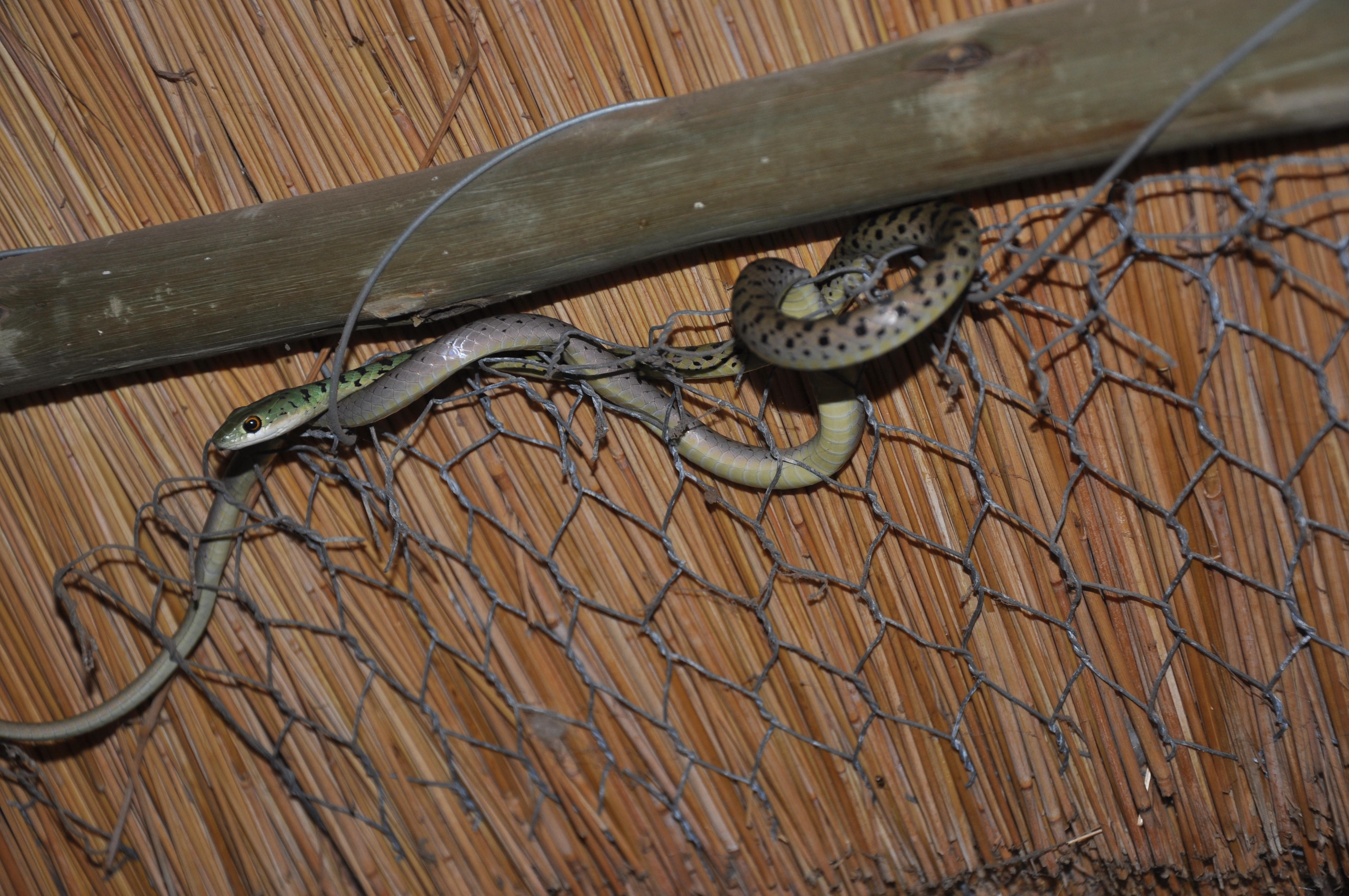
Spotted bush snake at home in the roof.
My shower was out doors and had a resident foam nest frog living on a shelf. One morning going for a shower I heard a terrible squealing. A spotted bush snake had my frog and was busy devouring it. It took over an hour to swallow my friend.

Spotted bush snake eating a gecko
I once had a pair of orphaned baby tree squirrels (yes mum fell afoul of a Mamba) When they where big enough I would sit in the garden with them whilst they ran around exploring. The little female was quite brave and was scampering around on the rocks. Next thing I hear a piercing squeal and the little squirrel shot up into a low branch. I raced over and scooped her up and sat with her in my hand for about a minute whilst she breathed her last. A Puff adder sitting in a crevice had struck her.
But for all the horror stories snakes are fascinating things and it is a thrill to see them in action so close. I would rather they stayed out of my house though, the garden is close enough! When we learn to live with nature it offers us such rewards.
And so our cameras keep on clicking.
We can’t begin to tell you how excited and grateful we are. Thanks to all of you, we’ve raised over $36,000 to keep Snapshot Serengeti going through our funding gap. You did it. And all the funds raised over our $33,000 goal will go towards expanding the survey (read: replacement cameras to fill in the gaps left by hungry hyenas) and keep it running even longer.

Not only are the pictures produced by the Snapshot Serengeti fun and funny, breathtaking and surprising, they are also real scientific data — data that wouldn’t be possible without your help. By clicking away night and day, the cameras give us a window into the Serengeti that we’ve never had before. One photo is an anecdote; thousands – or in our case, millions – tell a story about the way this ecosystem works. We’re learning how all the large predators live together, even though they kill each other whenever they can. We’re learning how prey animals try to balance their need to eat with avoiding being eaten themselves. And because our camera survey is currently the biggest in the world, and we’re the first to use camera traps to answer these questions, we are actually developing new statistical approaches to use camera trapping data – approaches that other camera trapping projects around the world will be able to use as well.
And none of this science would be possible without you. Since we launched last December, you have helped us wade through three years of data that would still be piling up otherwise. And now you’ve helped us bridge the gap between our National Science Foundation funding. We’ll be applying to research grants in the coming months, and will keep you posted on our process. But one of the coolest things about the Snapshot Serengeti camera survey (besides the incredible pictures) is that it sits on an incredible foundation of long-term research in Serengeti — research that would have shut down had we not met our goal — making it much, much harder to start back up later on.
So thank you, once again, for helping us to bring you a Season 7. In the meanwhile, Seasons 5 and 6 are still up and running – so check them out! You never know just what you’ll find…

We did it! You did it! (Thanks!)
We have made our fundraising goal of $33,000. Our cameras will keep running through the rest of this year, and we’re laying plans to keep them going after that. Thank you so much to each of you who contributed to the campaign (And thank you, too, to those of you who just shared the link, or who tried, but couldn’t due to Indiegogo’s limited payment options.)
We’re not quite done – there’s still a day left and any donations we receive will still go towards the costs of operating the camera trap network. If today goes exceptionally well, then we might even be able to expand the network of camera. The good news, though, is that YOU DID IT and Snapshot Serengeti will continue far into the future.
National Geographic has put together another article for your enjoyment, this time based on Snapshot Serengeti. It’s got 18 animated GIFs based on the sets of three images you see when you classify. Have a look for a Friday smile.
And thank you again for bringing smiles to our faces.
Almost there
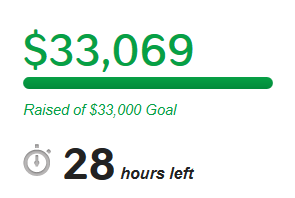
With just three days left, we’ve hit are 66% mark and are closing in on our fundraising goal. Margaret and I are still at ESA all week, so please do stop us and say “hi” if you’re here too!
Also! If you missed it on today’s MPR show, you can listen to the Daily Circuit story online about Snapshot Serengeti! In Tom Weber’s words, cheetah photo bomb!

We also got some coverage on BoingBoing this morning!
Thank you all again for your effort and support with this project — we really do love bringing you pictures of these ridiculously adorable cheetah cubs!
Get your dead camera, right here!
Remember all the photographs like these?
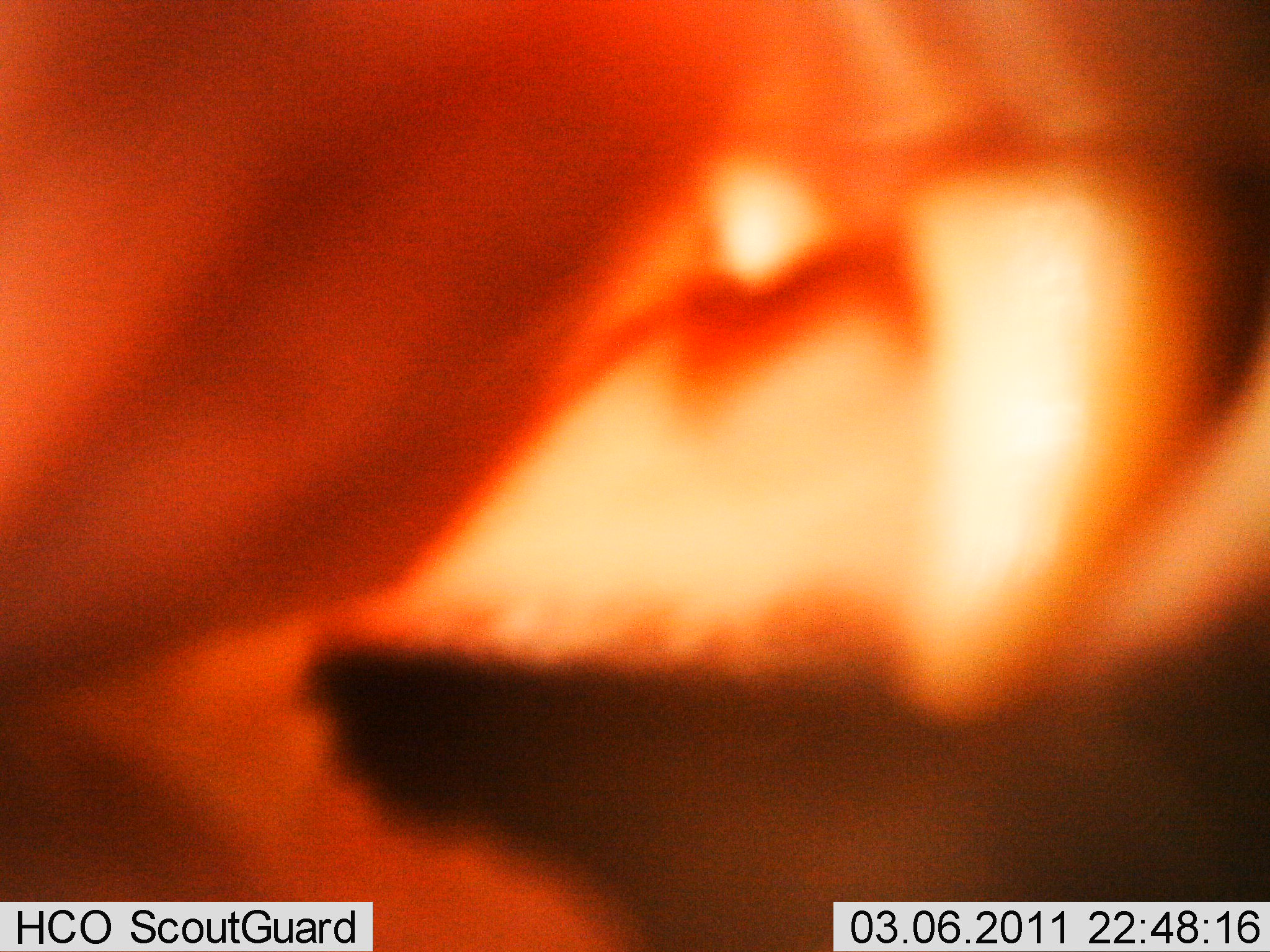
Hyena tooth…
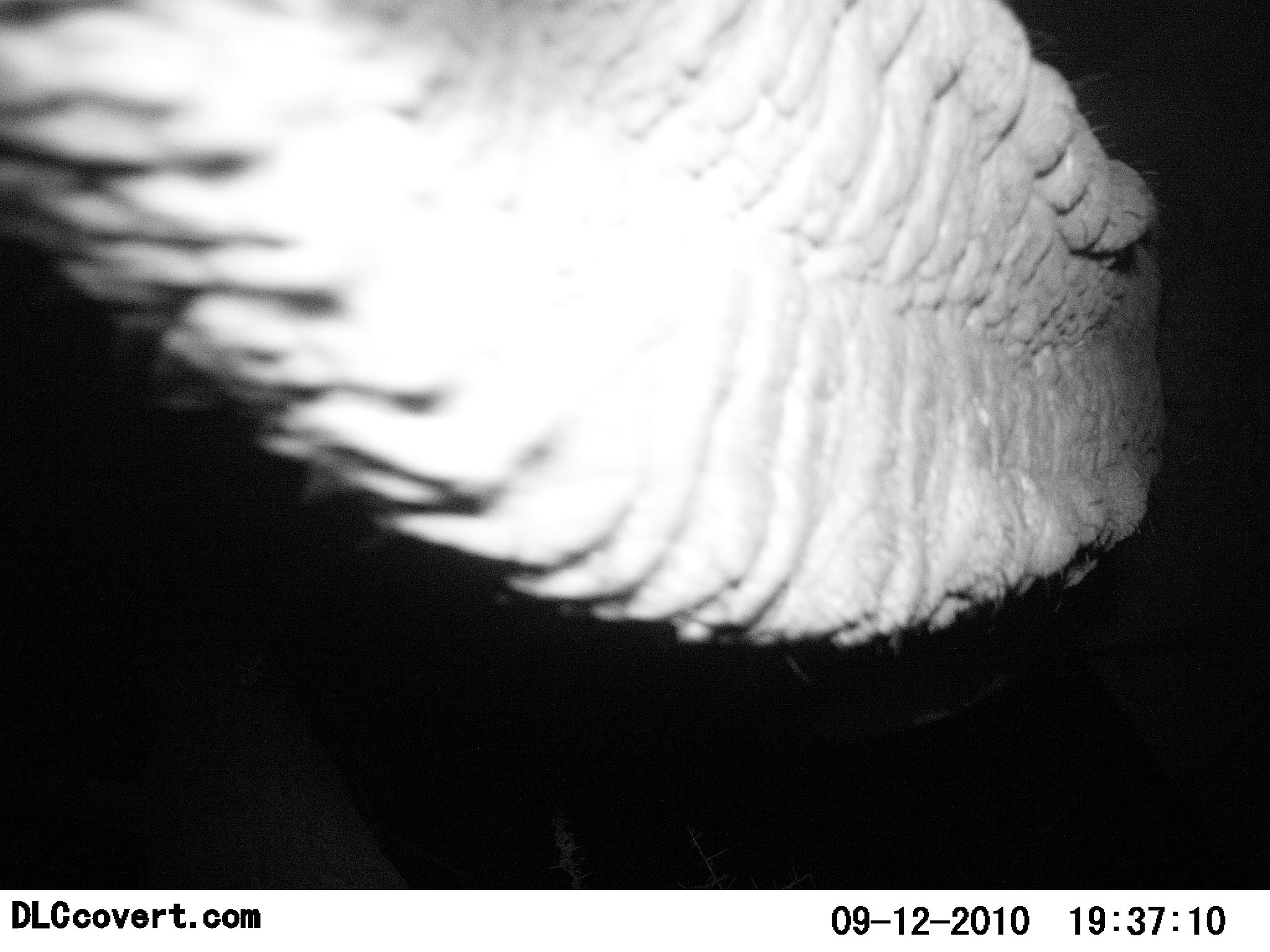
Elephant trunk…
Well, those cameras didn’t survive…

Own this!
And have been up on Indiegogo as one of our “high-end” perks. Well, as we’re down to the wire with 4 days left to raise nearly $15,000, we’re offering dead cameras for a $288 donation. So please tell anyone you think might want some hyena-munched plastic gracing their curio cabinet. It’s pretty cool, and comes with a classic “last picture this camera ever took” photo.
(Don’t worry, if you’ve donated already but really really really want this camera, you can add to your existing donation. And of course, if you’ve already donated more, you’ll get a camera sent straight to your doorstep as well.)
Thank you once again for your dedication to Snapshot Serengeti – for your hard work in classifying photos and for all of your support since we launched the fundraising campaign. We’ve raised enough to get us through almost to November — which is huge. Not only do all of us on the Snapshot team really love what we’re doing (though ask me again next time I’m digging myself out of an aardvark hole), but we also really believe that the scientific knowledge you’re helping us produce with this project is incredibly important – both for general ecology and for ultimately better conserving the Serengeti. So, thank you. And fingers crossed that we’ll be able to keep on bringing the Serengeti to you for months and years to come.
Tune in!
Hi everyone! Just wanted to let you know that Minnesota Public Radio will be doing a short follow-up piece to their December 2012 story tomorrow at 9:50am Central Time. You can listen to MPR live here or tune into the site later — we’ll put up a link once it’s posted.
Also! Check out Margaret’s guest post on the Scifund Challenge blog. The Scifund Challenge is a group of dynamic and dedicated scientists trying to bring science to you through outreach, citizen science, and crowdfunding projects.
Finally, Margaret and I will be at the Ecological Society of America conference all week – so if you’re here too, please come say hi!
Happy Monday 🙂

