
What makes a vintage year for the Serengeti lions?
### Today’s blog is an excerpt from Craig Packer’s forthcoming book, “Lions in the Balance: Man-eaters, manes and men with guns”, which will be published by University of Chicago Press in the fall of 2014. ###
When the Italians attempted to conquer Abyssinia in 1887, they provisioned their troops with livestock brought from India, but some of the cattle were infected with the rinderpest virus. By 1897, the disease had spread south from the Ethiopian plateau to South Africa’s Cape of Good Hope and across to West Africa, killing ninety percent of domestic livestock across the entire continent. Control programs were initiated throughout Africa; by the 1960s rinderpest was restricted to only a few areas, and Serengeti was the last major reservoir in Tanzania. A cattle-vaccination program around the Serengeti finally eliminated the disease from the wildlife inside the park in 1963. Liberated from rinderpest, the wildebeest, buffalo, warthog and other ruminant populations grew exponentially until they reached their current plateaus in 1979.
The lion population grew, too, but in a very different pattern.
The lions in the wooded habitat of our study area remained stable from 1966 until 1973 when the population suddenly leapt to a new equilibrium, then remained stable for another ten years before leaping again in 1983. The ruminant population had nearly tripled between 1966 and 1973; what held back the lions for so long? And what happened in 1973 and 1983?
Our lions endure an annual pattern of feast and famine; the migration brings the wildebeest and zebra within easy reach during the rainier months but sends the herds north to Kenya each dry season. In normal years, our study lions struggle to persist on warthog and buffalo, but these only sustain the adults – few cubs manage to survive.
The dry season of 1973 was the rainiest in decades, and the unseasonably green grasses attracted the wildebeest and zebra to our woodlands study area more or less continuously until the normal rains returned in November. Without the usual dry season famine, virtually every cub born in 1973 survived.
These surviving cohorts were large enough to form entirely new prides that could compete successfully against the prevailing social order and redraw the map of lion pride territories. Tough new gangs squeezed their way into the neighborhood, allowing the lion population to finally rise to a higher post-rinderpest plateau.
The recovering herds not only provided more meat on the hoof, but the wildebeest’s insatiable appetite for grass subsequently modified the habitat in the lions’ favor. An awful lot of grass was left uneaten when the wildebeest population was held low by rinderpest: grass fires roared through the park each year, burning the young acacia trees to stumps. But the expanding wildebeest population became the world’s largest lawn service, mowing the grass down to the nubs over thousands of square kilometers – creating fire breaks through much of the park. By the mid-1970s, less than a quarter of the Serengeti burned each year, and saplings were able to grow unhindered. Tree recruitment reached a peak in 1980 and persisted for ten years.
Lions need cover to hunt more successfully, and 1983 was the first year with favorable dry-season rainfall in this new improved world for hunting lions. Once again, the woodland prides recruited large numbers of young – large enough to spawn an expansion of new prides and redraw the map, with more groups packed more tightly than ever before.
The woodlands population crashed during a major disease outbreak in 1994 – lion numbers fell back to levels unseen since the late 1960s. But in 1999 – the first post-outbreak year with favorable dry season rainfall – the woodland population bounced all the way back up to the same level as in 1983-1993.
On the plains, the population’s initial post-rinderpest spurt occurred sometime after George Schaller’s departure in 1969, reaching a new plateau by 1974 when monitoring of the plains prides resumed. The plains population remained unchanged until November 1997, when El Niño brought the heaviest rains in forty years. The grasses on the plains had started growing taller during the early 1990s, and the El Niño floods kept the migration out on the plains for the longest period in decades. A single year with a more consistent food supply was enough to allow the plains lions to spawn whole new prides in the taller grasses.
As Lenin once said, “Sometimes decades pass and nothing happens; and then sometimes weeks pass and decades happen.”
Thanks to the Snapshot Serengeti camera trap grid, we can now watch the migration respond to year-to-year variations in rainfall. The next time the lions have a banner year, we will all be able to witness how food on the hoof translates into a baby boom of lucky cubs.
What does the fox say?
By now, you have probably heard of this silly (but hilarious) video that’s been making the rounds of the interwebs lately:
It’s pretty catchy, not just because it’s ridiculous, but because it’s a pretty good question. I mean, how many of you out there have actually ever heard a fox?
The sounds of the bush are one of the many, many things I miss being back here in civilization. From my slightly sketchy corner of Saint Paul, I hear fire crackers and unmuffled engines roaring. Occasionally I get chattered at by an angry squirrel in the back yard. But that’s about it. Nothing like the otherworldly chorus of the Serengeti savanna that Lucy so beautifully described.
The sounds really are incredible and often unbelievable, and I thought I’d share some of them with you. I couldn’t actually figure out how to upload audio files, so I scoured Youtube for the best audio clips I could find and embedded them as videos here.
Zebras: Nothing like horses, these stripy equids sound something like a braying donkey crossed with a barking dog.
Wildebeest: I believe that somewhere in the annals of Zooniverse blogs, there is an audio or video clip of me doing a wildebeest impression. This is better.
Hyenas: Despite being hell-bent on devouring all of my camera traps, these guys are pretty cool. They have a rather large repertoire of very…unusual…vocalizations that are used to communicate in a number of situations. The whoop, which you hear at 0:05 and 0:55, is a long-distance call often used to rally scattered clan members. The laugh at 2:33 is a sign of nervousness or submission. Similar to human voices, hyena vocalizations are individually recognizable to clan-mates. To learn more about hyena vocalizations, check out this blog by hyena expert and director of Masai Mara’s long-term hyena project, Kay Holekamp.
Lions: And finally, for the best, non-hollywood lion roar, scroll about halfway down through our lion research center’s page. This is what they really sound like.
I’ll take any of these noises over the sounds of the city any day.
Don’t worry!
Deep breath; I promise it will be okay.
By now, many of you have probably seen the one image that haunts your dreams: the backlit photo of the towering acacia that makes the wildebeest in front look tiny, with those two terrible words in big white print across the front — “We’re Done!” Now what are you going to do when you drink your morning coffee?? Need a break from staring at spreadsheets?? Are in desperate need of an African animal fix?? Trust me, I know the feeling.
Deep breath. (And skip to the end if you can’t wait another minute to find out when you can ID Snapshot Serengeti animals again.)
I have to admit that as a scientist using the Snapshot Serengeti data, I’m pretty stoked that Seasons 5 and 6 are done. I’ve been anxiously watching the progress bars inch along, hoping that they’d be done in time for me to incorporate them in my dissertation analyses that I’m finally starting to hash out. Silly me for worrying. You, our Snapshot Serengeti community, have consistently awed us with how quickly you have waded through our mountains of pictures. Remember when we first launched? We put up Seasons 1-3 and thought we’d have a month or so to wait. In three days we were scrambling to put up Season 4. This is not usually the problem that scientists with big datasets have!
Now that Seasons 5 and 6 are done, we’ll download all of the classifications for every single capture event and try to make sense of them using the algorithms that Margaret’s written about here and here. We’ll also need to do a lot of data “cleaning” — fixing errors in the database. Our biggest worry is handling incorrect timestamps — and for whatever reason, when a camera trap gets injured, the time stamps are the first things to malfunction (usually shuttling back to 1970 or into the futuristic 2029). It’s a big data cleaning problem for us. First, one of the things we care about is when animals are at different sites, so knowing the time is important. But also, many of the cameras are rendered non-functional for various reasons – meaning that sometimes a site isn’t taking pictures for days or even weeks. To properly analyze the data, we need to line up the number of animal captures with the record of activity, so we know that a record of 0 lions for the week really means 0 lions, and not just that the camera was face down in the mud.
So, we now have a lot of work in front of us. But what about you? First, Season 7 will be on its way soon, and we hope to have it online in early 2014. But that’s so far away! Yes, so in the meanwhile, the Zooniverse team will be “un-retiring” images like they’ve done in previous seasons. This means that we’ll be collecting more classifications on photos that have already been boxed away as “done.” Especially for the really tricky images, this can help us refine the algorithms that turn your classifications into a “correct answer.”
But there are also a whole bunch of awesome new Zooniverse projects out there that we’d encourage you to try in the meanwhile. For example, this fall, Zooniverse launched Plankton Portal, which takes you on a whole different kind of safari. Instead of identifying different gazelles by the white patches on their bums, you identify different species of plankton by their shapes. Although plankton are small, they have big impacts on the system — as the Plankton Portal scientists point out on their new site, “No plankton = No life in the ocean.”
Wherever you choose to spend your time, know that all of us on the science teams are incredibly grateful for your help. We couldn’t do this without you.
Who knew?
Just wanted to brighten your morning with a pretty unbelievable video that has nothing to with the Serengeti. Frogs freeze. That’s right. They don’t hibernate, they freeze. I couldn’t embed this video from NOVA’s Science Now site, but just click here to watch!
I hope that rocks your morning as much as it rocked mine.
This is what grant applications do
I’ve been working on a federal grant application the last couple of weeks. It’s left me feeling a bit like this:
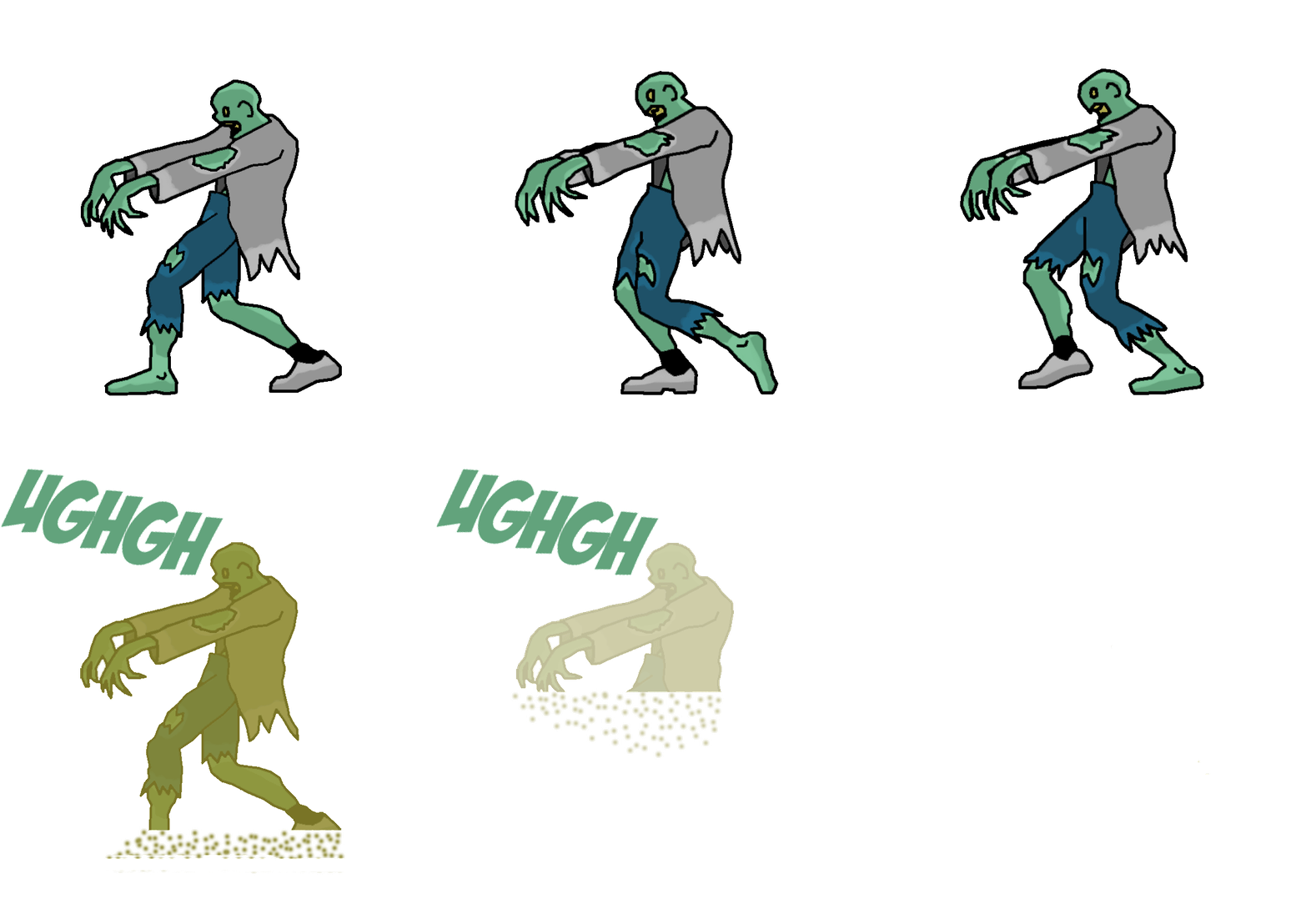
The grant was originally due this upcoming Thursday, but with the government shutdown showing no signs of ending, who knows what will happen? The National Science Foundation’s website is unavailable during the furlough, meaning that nobody can submit applications. So we’ve all been granted an unexpected extension, but we’re not sure until when.
The grant I’m applying for is called the Doctoral Dissertation Improvement Grant. It’s an opportunity for Ph.D. students to acquire funding to add on a piece to their dissertation that they wouldn’t otherwise be able to do. I’m applying for funds to go down to South Africa and work with a couple of folks from the conservation organization Panthera to collate data from two sites with long-term carnivore research projects. Their research team currently has camera surveys laid out in two reserves in Kwazulu-Natal, South Africa: Phinda Private Game Reserve and Mkhuze Game reserve. Now, the cool thing about these reserves is that they are small, fenced, and pretty much identical to each other…except that lions have been deliberately excluded from Mkhuze.
Now, one of the biggest frustrations of working with large carnivores is that I can’t experimentally isolate the processes I’m studying. If I want to know how lions affect the ranging patterns and demography of hyenas, well, I should take out all the lions from a system and see what happens to the hyenas. For obvious reasons, this is never going to happen. But the set-up in Phinda and Mkhuze is the next best thing: by holding everything else constant – habitat, prey – I can actually assess the effect of lions on the ranging and dynamics of hyenas, cheetahs, and leopards by comparing the two reserves.

Camera surveys (yellow dot = camera) in Serengeti (left) and Phinda/Mkhuze (right).
So, that’s what I’m working on non-stop until whenever it turns out to be due. Because this would be a really cool grant to get. I’m currently working on analyzing some of the camera trap data from Seasons 1-4 and hope to share some of the results with you next week. Until then, I’m going to continue to be a bit of a zombie.
Science Shutdown
It’s Day 2 of the U.S. government shutdown. While the media blares about congressional politics and occasionally offers a run-down of what the shutdown may or may not mean for the average Joe, the impacts of the shutdown on science are not generally noted. Notice that I said ‘science’ and not ‘U.S. science’ because this shutdown affects scientists around the globe.
For starters, all the federal grant-making agencies are shut. This means no processing of grants, no review of proposals. Everything grinds to a halt. At best, it causes delays. But at worst, it means important science that depends on continuity gets interrupted, forcing some scientists to start their experiments over from scratch; for expensive experiments, it could mean a death knell. Other research that depends on getting funding before a field season may be delayed a year even if the government is shut down for only a few days.
Much of U.S. science is actually done by government employees. One agency, the United States Geological Survey, employs (oh, I can’t look up the number; the website is shut down; let’s just say “many thousands of”) scientists who work on topics like climate, ecosystems, earthquakes, and water quality. While some of these employees — like those who monitor for earthquakes, for example — will keep working as “essential” employees, most are furloughed. They get sent home with no pay and are forbidden by law to do any science. Forbidden. It’s a felony to work when furloughed. This hits home for me, as my husband is a post-doctoral geologist with the the U.S. Geological Survey and we are going without three-quarters of our household income for the length of the shutdown.
In addition to the direct impacts of the shutdown on government funding agencies and on government scientists, many more scientists are indirectly affected by issues of access. I am a fellow at the Smithsonian Institution’s National Museum of Natural History in Washington D.C., but I am employed by the University of Minnesota. The Smithsonian, being a quasi-governmental organization, is shut down. Most of the Smithsonian’s scientists are furloughed. (The folks in the entomology department, where I spend my time, are many of the ones that describe new species of insects previously unknown to science. No new species for a while, everyone. Sorry.) And on top of that, even people who aren’t employees of the Smithsonian (like me) cannot do their work, because they can’t get into the building. I know of visitors from other countries who came to visit the Museum for a few weeks to do research. But they can’t get in.
There are many, many scientists all over the world who collaborate with U.S. government scientists, who depend on U.S. government funding, and who use U.S. federal facilities. All these people are feeling the negative effects of the shutdown and aren’t able to get their science done.

The short and happy life of a Serengeti lion
### Last week Craig spoke for Cafe Scientifique about lions and shared the research that Lion Project has been conducting for the last 45 years. Check out the video here. Peter and Faith, UMN undergrads conducting research in the Lion Lab, attended the talk and share their experiences as well. ####
Peter and Faith here! Last week we had the opportunity to attend the Bell Museum’s Cafe Scientifique. Cafe Scientifique allows scientists from all disciplines and specialties to share their research directly with the public in the form of a casual presentation given at the Bryant Lake Bowl in Minneapolis, MN. This past month’s talk was given by Snapshot Serengeti’s own Professor Craig Packer, giving a historic rundown of some of the highlights of the lion research conducted by the University of Minnesota’s Lion Research Center.
As prospective lion researchers ourselves, it was both interesting and valuable to hear the conclusions of past research from the perspective of the researcher. Not to mention having it be told in a casual and humorous way, which is a refreshing break from the stack of scientific papers we are usually reading! The audience, which was made up of local community members, was also engaged in the talk. Even though Dr. Packer presented complex graphs and maps, he explained the research in a way that was accessible to everyone. The studies that were discussed during the talk included the lion’s mane study, why lions form prides, and even a bit about lion conservation and the potential use of fences to protect vulnerable populations. In addition to reviewing past research, Dr. Packer also talked about the lion project’s current research–Snapshot Serengeti. The audience was amazed by how fast volunteers sorted through the millions of images on Snapshot Serengeti. (To all of you that have contributed to the success of “Snapshot”, cheers to you!) By the end of the talk, the entire audience, (including us!) had loads of insightful questions, and left with a piqued interest in the world of lion research.
Craig at Bryant Lake Bowl TONIGHT
If you’re in the Twin Cities area, Craig will be giving a Café Scientifique talk (“The Short and Happy Life of a Serengeti Lion”) at the Bryant Lake Bowl at 7pm tonight.
If you’ve never been to one, the Café Scientifique talks are loads of fun. They’re informal presentations by scientists in a bar setting. Eat, drink, laugh, science. Can’t get much better than that.
Introducing Meredith
Please welcome Meredith Palmer, a new graduate student with us here in the Lion Lab at the University of Minnesota. Meredith is joining our Snapshot Serengeti science team, so you’ll be hearing more from her as she gets settled in. In her first blog post here, she gives us a glimpse into the work she’s been doing the past several years. — Margaret
—
I hear the “ragged jean” look is still cool with young people these days, but when I slip into my black hoodie with the ripped up sleeve, it’s not to make a fashion statement. Rather, it serves to remind me of a time several years ago when I was last in Africa. This particular jacket once fell afoul of a rambunctious pair of orphaned lion cubs, and I must admit that I’m looking forward to the time when I once again will be sacrificing perfectly good clothing during the call of field duty.
Joining the Lion Lab is my opportunity to work with the giant accumulation of behavioral and camera trap data, supplemented by my own work in the Serengeti, which will enable me to elucidate some of the mechanisms involved in savanna predator-prey dynamics. I’m a first-year grad student, freshly back in school after spending the last several years working on science projects in various corners of the globe. I’ve had the good fortune to have spent time in Africa, Central and South America, the Caribbean, and even a brief stint on the island of Borneo! I’ve come straight to the University of Minnesota from the South Pacific, and the disparity between the warm tropical air I’m used to and the cool Twin Cities mornings is almost (almost!) makes me wish that I had a jacket that wasn’t full of holes…
My previous work in Africa has for the most part taken place in the southern portion of the continent. I stepped foot into Namibia five years ago to work for the Cheetah Conservation Fund (CCF). Cheetahs were having a particularly bad time, as they were considered – unjustly, in almost all cases – by local farmers to be a substantial source of livestock losses and were persecuted accordingly. We did a substantial amount of work on education and outreach with the people in the surrounding communities, but I would be lying if I didn’t say the exciting part for me was the work we did out in the bush. Shivering in the cold during 24hr water-hole watches, spitting out dust as we sped along in the back of a Toyota conducting large herbivore surveys, and of course, interacting the with the population of injured and rehabilitating cheetahs maintained on the reserve were the highlights of my experience.
I returned to Africa after I graduated college and helped to manage large herbivore populations at a safari reserve in the Limpopo region of South Africa. This area is right outside of the famous Kruger National Park and abounds with much of the same wildlife. It was here that I drove my first stick-shift, ate my first warthog, and spent many an evening sitting on top of a kopje drinking sundowners and watching the stars come out over the African plains. I had the opportunity to camp out in the Kruger Park and met characters involved in African conservation at all levels. I later migrated to the other side of the country to take a job in the Succulent Karoo. This was a desert landscape, loomed over by weirdly rounded hills and covered, during the springtime, in the most gorgeous blanket of wildflowers that I have ever encountered.
That being said, I simply can’t articulate how much I am looking forward to working again in the savanna ecosystem and getting a chance to glean some good data out of Snapshot Serengeti!
Top speed: Technology, movement, and the cheetah’s secret weapon
I got to spend all of last week at a movement ecology workshop in Zurich, Switzerland – conveniently beating the heat wave Minnesota has apparently been having!

Migration patterns of the sooty shearwater, revealed by Scott Shaffer of UC Santa Cruz in a new study.
Movement ecology explores both how and why the way animals move the way they do, and what this means for them as individuals, as populations, and species. What triggers do animals use to decide where to go and what to do while they’re there? Why are some species territorial, while others overlap? Why are some species migratory? What do these behaviors mean for their individual fitness, their population dynamics, and global distributions? How does our understanding of animal movement change the way we try to protect species and the habitats they need?
It’s a pretty big field…and it’s one that is growing in leaps and bounds with modern technology – from camera traps to GPS collars, vast satellite networks and high resolution global imaging – we are able to ask questions about movement and distribution that would have been impossible just a few decades ago.
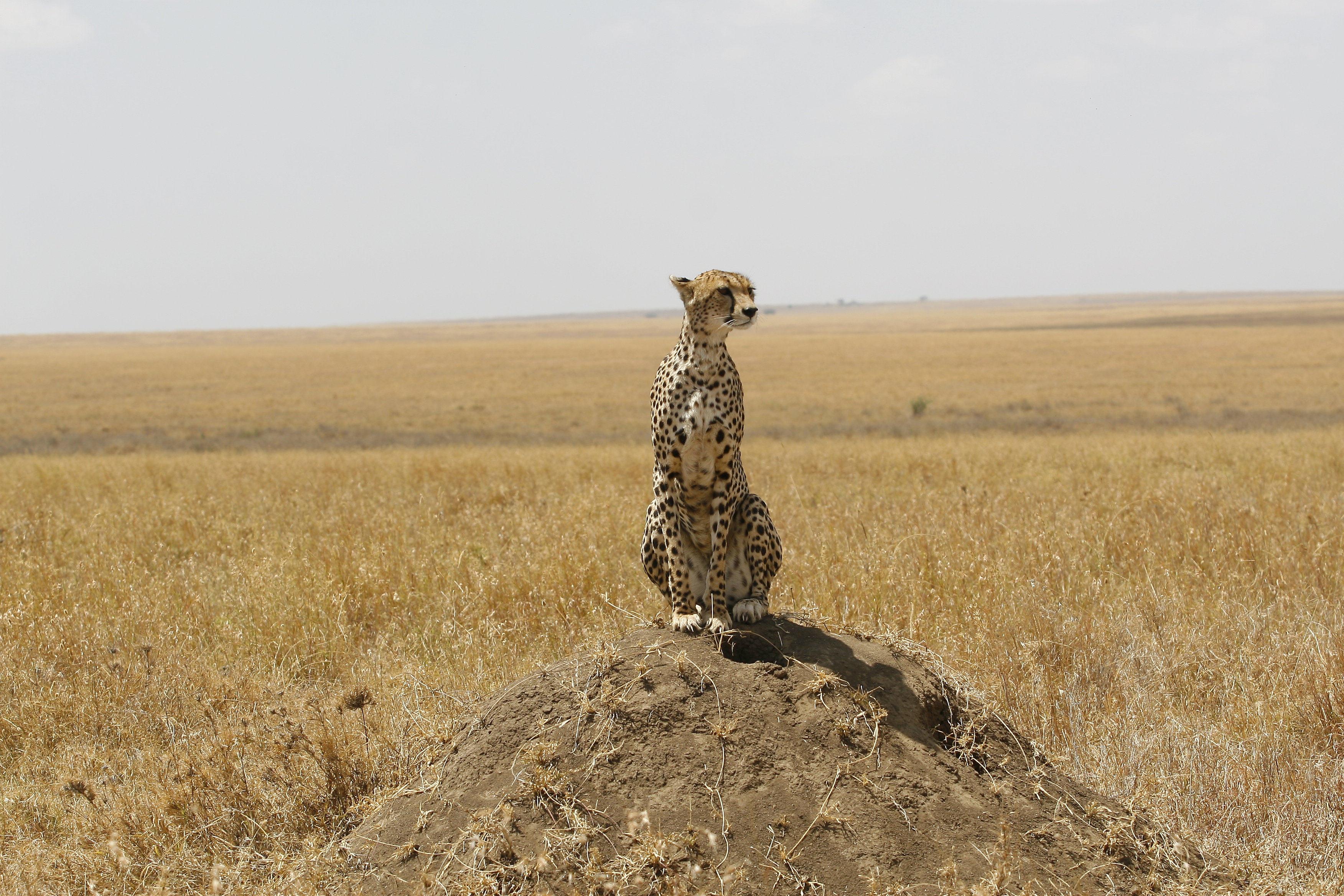
For example, researchers from London’s Royal Veterinary College recently discovered that cheetahs – contrary to popular opinion – might not rely on their top speed to catch their dinner, but instead their agility and acceleration. In captivity, cheetahs had been clocked at nearly 105 km/hour – but new, lightweight, super-fancy GPS collars let researchers take these speed tests to the wild. What they found was that cheetahs in the wild averaged about half that speed – but that they accelerated and turned with unparalleled power and agility. Which means that our long-standing perception of cheetahs as needing wide open spaces for really fast chases might not be accurate – and that they might actually be able to hunt quite well in the woods!
This is just one of many, many secrets that the field of movement ecology, with the help of modern GPS technology, is uncovering. Some other stories are a little less exotic and closer to home. The Today Show recently covered the amusing tale of a concerned cat owner who designed a tiny tracking device to see just where her pet was going every day. Her sleuthing turned up some interesting results – not just for cat owners, but for scientists too — and scientists are now encouraging cat owners around the country to track their cats and share their data on an online repository called Movebank.org. So if you have a cat and want to see where it goes when you’re not looking, or help scientists understand how domestic cats fit in to the larger ecosystem, check it out!
 Snapshot Serengeti