
Happy Thanksgiving
Tomorrow is American Thanksgiving. Whether or not you celebrate Thanksgiving this week, I hope you’re able to spend time with family,
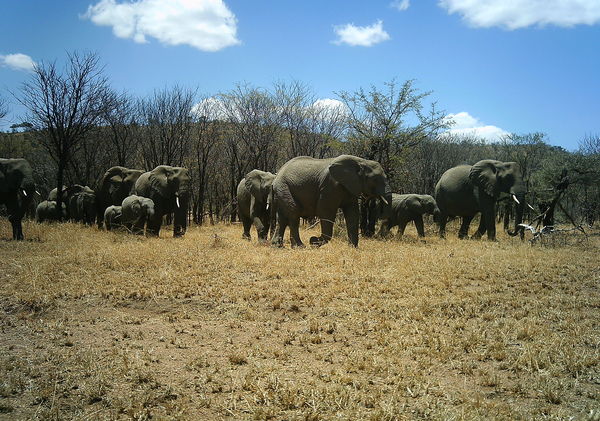
Spending time with family
hang out with friends,
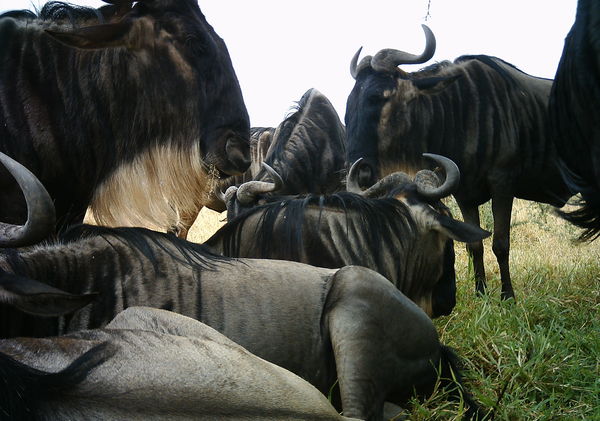
Hanging out with friends
find some tasty food to eat,
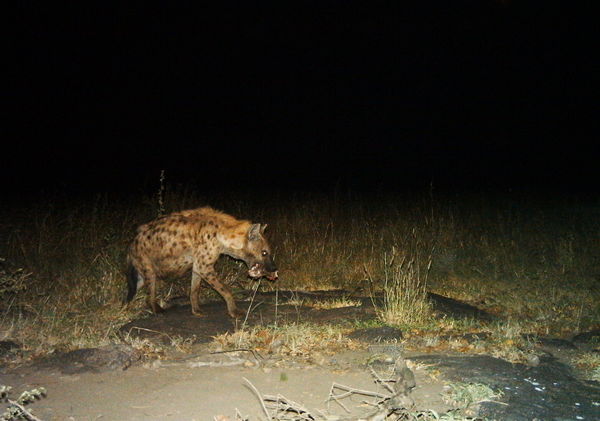
Good eats!
get some rest,
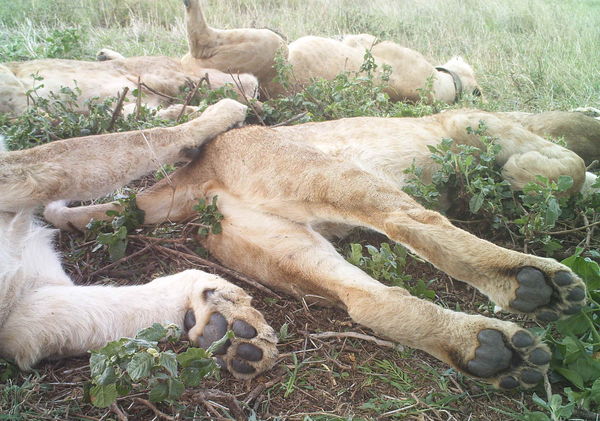
Getting some rest
and give thanks for the good things in life.
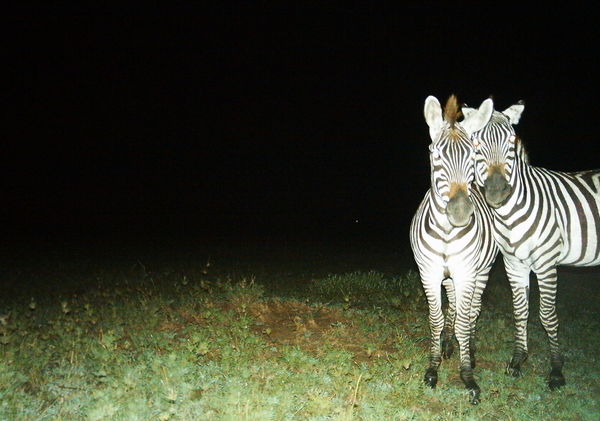
Giving thanks
And a special thank you from us to you for all the work you’ve put in to classifying animals on Snapshot Serengeti.
Fave photos?
Calling all camera trap captures!
BBC’s annual camera-trap ‘photo of the year’ contest is drawing a close – and we’re pretty sure Snapshot Serengeti has some winners. So we’re asking for your help to find them!
The contest has three relevant categories:
- Animal Portraits Images taken during the course of research that capture the character or spirit of the animal
- Animal Behaviour Images captured during the course of research that show interesting or unusual behaviour.
- New Discoveries Images that show something new to science, such as a species never before photographed in the wild or outside its known range, or behaviour never before recorded. The caption must make clear what the discovery is.
We can submit up to 12 photos across these three categories. Long-time Snapshot Serengeti moderator lucycawte has already pinpointed a couple of fantastic photos:
…but we’d like your help to find some more!
So send us the subject ID’s or urls of your all-time favorite Snapshot Serengeti pics (via comments here). One of them just might wind up front and center in the next issue of BBC Wildlife or make Snapshot Serengeti the proud winner of a monetary prize to keep the cameras clicking.
And speaking of Snapshot Serengeti funding, I wanted to take a minute to say thank you all who have supported our Save Snapshot Serengeti campaign so far. Yesterday we passed our 20% mark, and we’re marching forward! For everyone out there who loves looking at these incredible photos, please take a look at our campaign — we have some really fun perks that you might enjoy. And whether or not you’re able to make a donation, please help us spread news of the campaign by sharing our link: igg.me/at/serengeti — the more people we reach, the better our chances of bringing you these photos for years to come. Thank you for your support, your effort, and for being as addicted to Snapshot Serengeti as we are!
Weavers
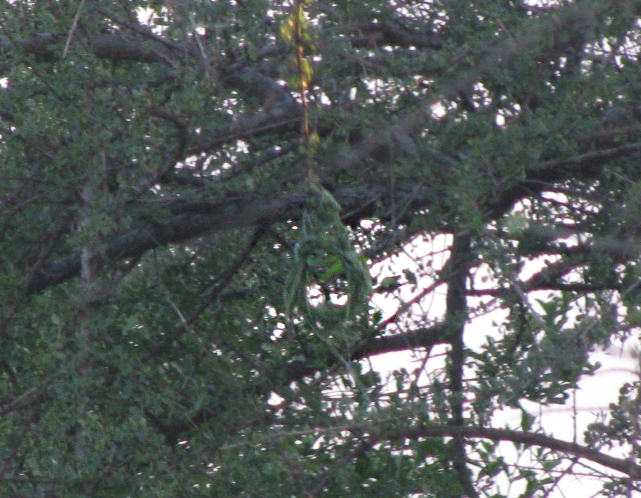
Every once in a while, a camera gets knocked off a tree and ends up pointing up into the tree where there are many grassy balls hanging from the branches. We have one of these cameras in Season 5, and it is taking pictures like this one:

What are those odd grassy balls? Why, they’re the nests of weaver birds. My Birds of East Africa book lists a dozen species of weavers in the Serengeti, and most of them have a yellow and black pattern. Here’s what some of these guys look like close up.
Several years ago, I watched through a Lion House window as a weaver bird build its nest from scratch. The bird started with just a branch, one with something of a knot at the end where a twig may have split off in the past. The weaver grabbed a long blade of grass and wrapped it around that knobby joint and tucked the blade under itself, as you might do if you were tying your shoe. Then it got another blade of grass and wove that through the loop it had created with the first blade, tucking it securely back under and through the loop a second time. It continued to add blades for the next twenty minutes or so, such that the grass formed two clumps, one sticking out of either side of the knot.
(Aside: the soundtrack is completely coincidental; field assistant John was cooking something in the kitchen while listening to music.)
Straddling the two clumps, with one talon hanging on to each, the weaver then took a long blade from one clump and wove its end back up into the other clump. The result was a loop. The bird pulled additional grass from one clump to the other and strengthened the loop. Bit by bit.
I watched for over a half-hour, but I had work to do, too. So I left the little weaver to its task, and checked in again that evening before the sun set. There it was, a hefty wreath of grass hanging from the end of a tree branch.
I checked again a couple days later. The weaver had been working on filling in grass around the sides to form the ball shape.

Three days later the ball shape was becoming apparent (and I finally decided to take pictures outdoors instead of through the window, so that they’re better in focus).

Aha! I caught a decent shot of the builder. My bird appears to be a Vitelline Masked Weaver male. (Although, my book also says that the top of the head ought to be rather chestnut color and this guy has maybe only a little bit of chestnut and rather brown markings on the back instead of black. Maybe it’s a young male?) These guys generally are found solitary or in pairs, which explains why I saw just one of them building a nest in a tree all alone. And their nests are “distinctive onion-shaped nests with an entrance hole at the bottom.” Looking good…
Five days later Mr. Vitelline’s work was looking very much like a nest.
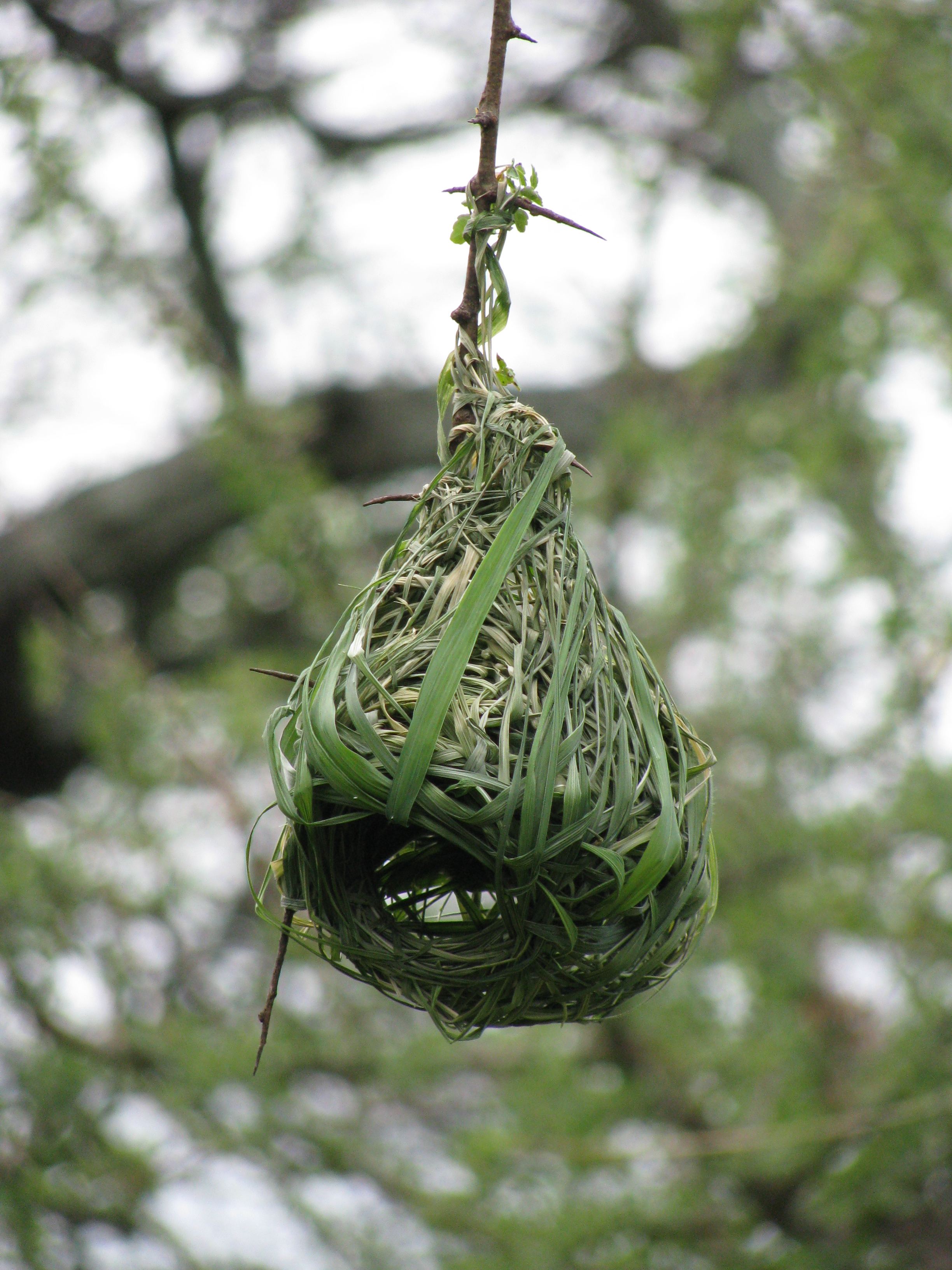

Five days later was also my last day in the Serengeti, so I didn’t see further developments of this nest. But I suspect it was completed and became a comfortable abode for its industrious builder.
Grass
You’ve undoubtedly seen it: Grass. Tall waving grass. Lots of it. From here to the horizon. If you’re itching to get images of animals to classify, the “nothing here” grass images can seem annoying. Some people find the grass images soothing. The animals themselves, well, a lot of them seem to like it.
Some animals find that tall grass is nice for concealing themselves from predators, like these guys:
Or this impala:
And some animals think the grass is nice for eating, like here:
Or here:
This post is brought to you by Faulty Cameras that switch unexpectedly to video mode when they’re not supposed to. These Season 5 videos have no sound, but capture some of the movement you don’t get with the photographs, so I thought you might like them.
The trouble with shade
Who knew that shade could be so problematic? A couple of weeks ago, I wrote about how shade seems to be my biggest obstacle in reconciling how the cameras see the world vs. what is actually going on. My job is to figure out how to make things right.
To start with, the camera traps are up on trees. Mostly. As you know, the cameras are on a rough grid layout – 225 grid cells, each 5km2 (2.236km on each side) — covering a total of 1,125 km2 of Serengeti’s center. This kind of design makes sure that we are covering enough of the landscape to capture the bigger picture of animal distributions and movements. Each camera is roughly at the center of each grid cell – on the closes suitable tree to that center point. Some trees are big and shady; some are small and spindly. In the woodlands, there are trees everywhere; on the plains, the camera-trap tree can be the only tree for miles. And sometimes there are no trees at all, and here the cameras get put up on metal poles.


These different habitats are important to capture. I think that animals might behave very differently in areas with lots of trees than they do in areas with very few trees. When it comes to the aggressive interactions between carnivores, for example, trees, shrubs, and tall grass provide great hiding places for the smaller species. It’s like trying to hide from someone you don’t like in an empty room vs. in a really huge, crowded shopping mall.
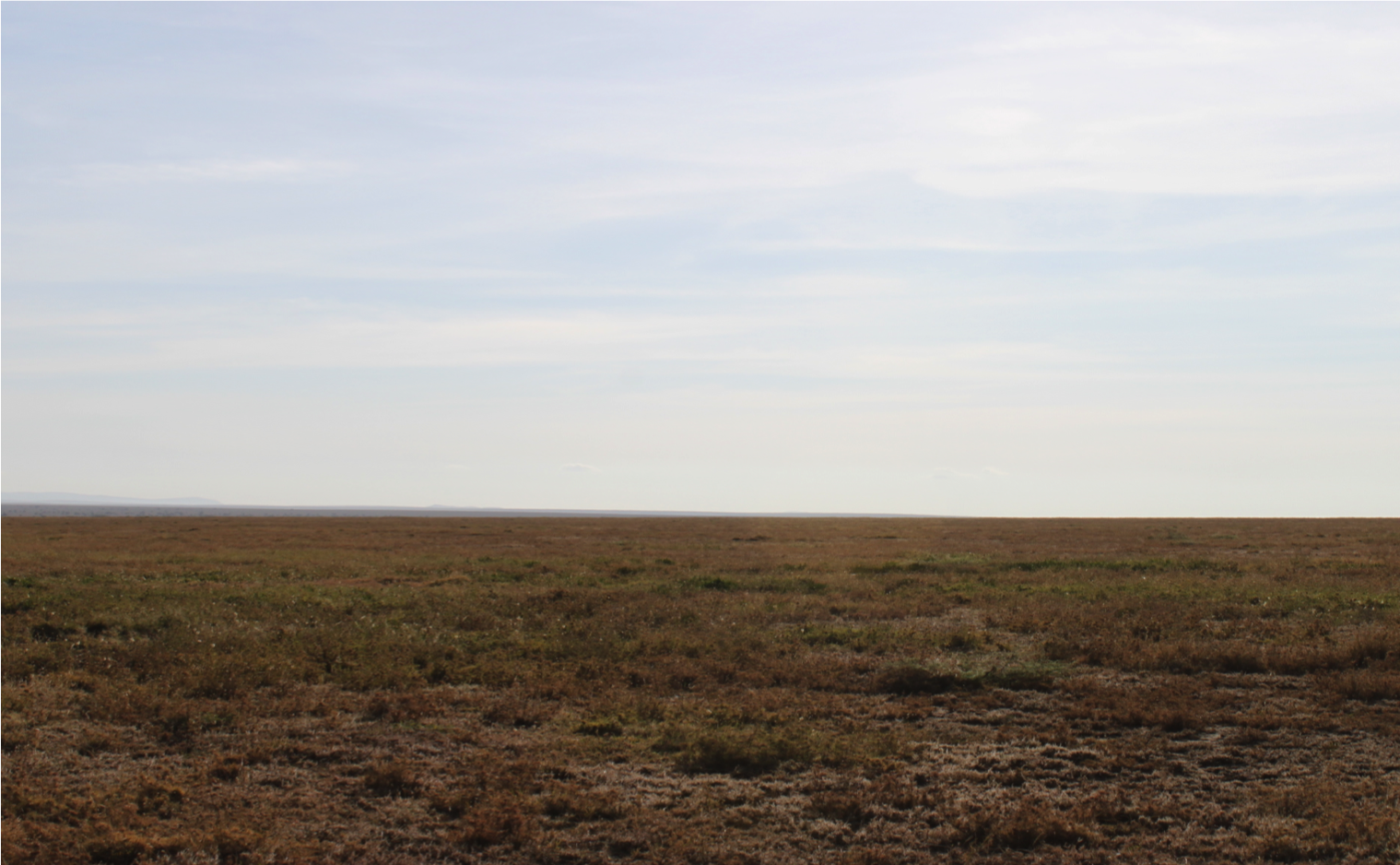
It’s a lot harder to hide from lions here
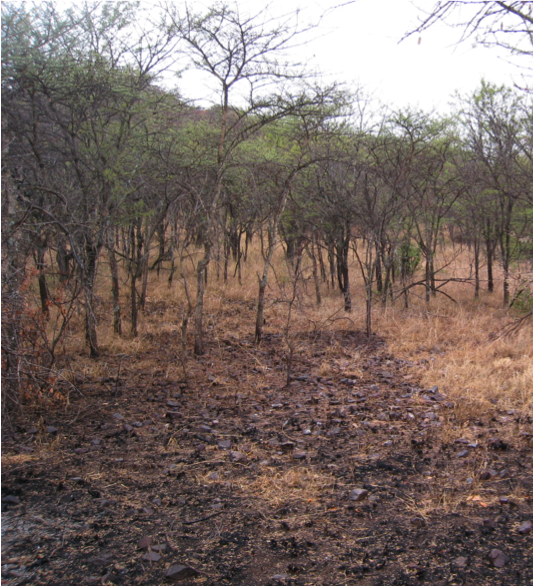
…than here
The problem is that camera traps work better in some habitats than others – at least for certain species. Say you are a huge, muscle-bound lion. Even standing is tiring in the Serengeti heat, and you spend your days breathing heavily even at rest. You like shade. A lot. If you are out in the open plains, a single shade tree will stick out for miles, and you’ll probably work your way to it. Chances are, that tree has a camera. In the woodlands, though, there are lots of trees. And the camera trap could be on any one of them. So even if you’re searching for shade, the chances of you walking past the camera trap in the woodland are far smaller – just because there are so many trees to choose from.
Here’s a map of the study area – green shows more densely wooded areas, whereas yellow marks the plains. Camera traps that have captured lions are shown with circles; the bigger the circle, the more lions were seen at that trap. I know for a fact that there are more lions in the northern half of that map than in the southern half, but the lions out on the plains seem to really like getting their picture taken!
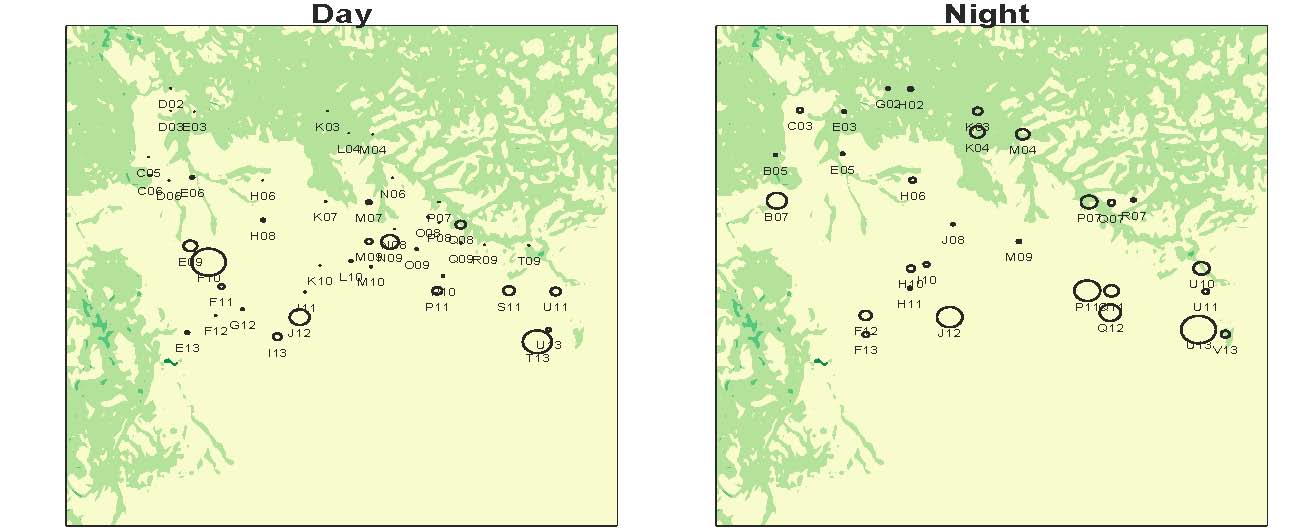
The pattern looks a little better at night than in the day, but it’s not perfect. So perhaps shade isn’t the only thing affecting how these cameras “see” lions in different habitats.
As depressing as this problem seems at first glance, I’m optimistic that we can solve it (enter Kibumbu’s new GPS collar!), but those methods are material for another day. In the meanwhile, what else do you think might be going on that attracts lions, or other animals to trees, besides shade?
Space and time
If you are a nerd like me, the sheer magnitude of questions that can be addressed with Snapshot Serengeti data is pretty much the coolest thing in the world. Though, admittedly, the jucy lucy is a close second.
The problem with these really cool questions, however, is that they take some rather complicated analyses to answer. And there are a lot of steps along the way. For example, ultimately we hope to understand things like how predator species coexist, how the migration affects resident herbivores, and how complex patterns of predator territoriality coupled with migratory and resident prey drive the stability of the ecosystem… But we first have to be able to turn these snapshots into real information about where different animals are and when they’re there.
That might sound easy. You guys have already done the work of telling us which species are in each picture – and, as Margaret’s data validation analysis shows, you guys are really good at that. So, since we have date, time, and GPS information for each picture, it should be pretty easy to use that, right?
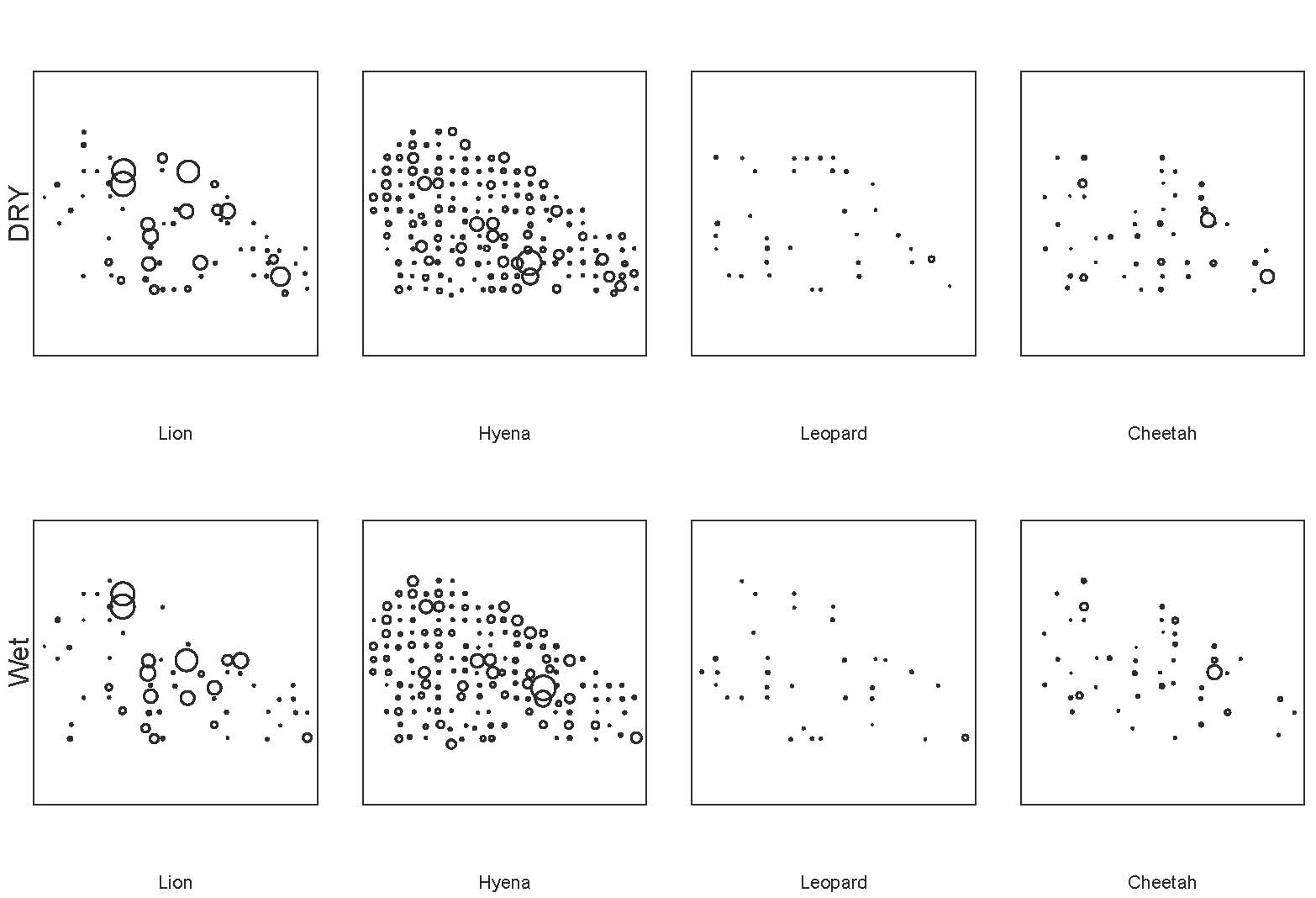
Sort of. On one hand, it’s really easy to create preliminary maps from the raw data. For example, this map shows all the sightings of lions, hyenas, leopards, and cheetahs in the wet and dry seasons. Larger circles mean that more animals were seen there; blank spaces mean that none were.
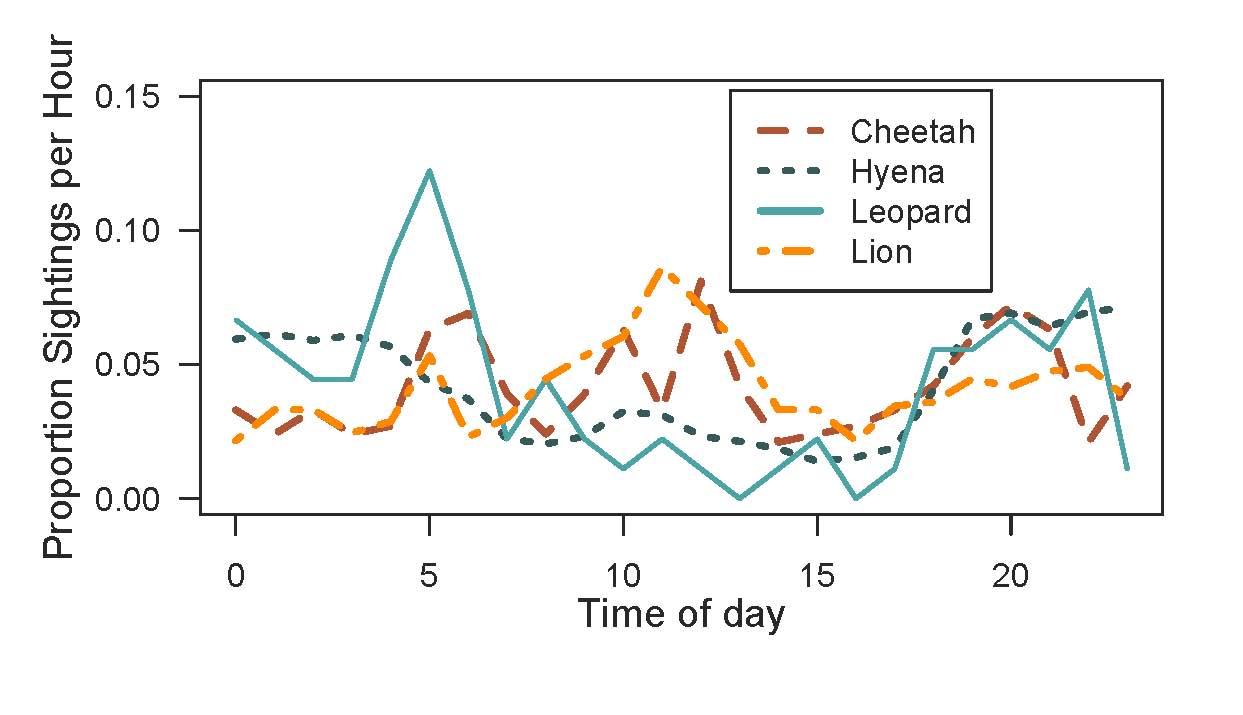
And it’s pretty easy to map when we’re seeing animals. This graph shows the number of sightings for each hour of the day. On the X-axis, 0 is midnight, 12 is noon, 23 is 11pm.
So we’ve got a good start. But then the question becomes “How well do the cameras reflect actual activity patterns?” And, more importantly, “How do we interpret the camera trap data to understand actual activity patterns?”
For example, take the activity chart above. Let’s look at lions. We know from years and years of watching lions, day and night, that they are a lot more active at night. They hunt, they fight, they play much more at night than during the day. But when we look at this graph, we see a huge number of lion photos taken between hours 10:00 to 12:00. If we didn’t know anything about lions, we might think that lions were really active during that time, when in reality, they’ve simply moved 15 meters over to the nearest tree for shade, and then stayed there. Because we have outside understanding of how these animals move, we’re able to identify sources of bias in the camera trapping data, and account for them so we can get to the answers we’re really looking for.
So far, shade seems to be our biggest obstacle in reconciling how the cameras see the world vs. what is actually going on. I’ve just shown you a bit about how shade affects camera data on when animals are active – next week I’ll talk more about how it affects camera data on where animals are.

Hard to find a better place to nap…
Drumroll, please
If you’ve been following Margaret’s blogs, you’ve known this moment was coming. So stop what you’re doing, put down your pens and pencils, and open up your internet browsers, folks, because Season 5 is here!
It’s been an admittedly long wait. Season 5 represents photos from June – December 2012. During those six months I was back here in Minnesota, working with Margaret and the amazing team at Zooniverse to launch Snapshot Serengeti; meanwhile, in Serengeti, Stanslaus Mwampeta was working hard to keep the camera trap survey going. I mailed the Season 5 photos back as soon as possible after returning to Serengeti – but the vagaries of cross-continental postal service were against us, and it took nearly 5 months to get these images from Serengeti to Minnesota, where they could be prepped for the Snapshot interface.
So now that you’ve finally kicked the habit, get ready to dive back in. As with Season 4, the photos in Season 5 have never been seen before. Your eyes are the first. And you might see some really exciting things.
For starters, you won’t see as many wildebeest. By now, they’ve moved back to the north – northern Serengeti as well as Kenya’s Masaai Mara – where more frequent rains keep the grass long and lush year-round. Here, June marks the onslaught of the dry season. From June through October, if not later, everything is covered in a relentless layer of dust. After three months without a drop of rain, we start to wonder if the water in our six 3,000 liter tanks will last us another two months. We ration laundry to one dusty load a week, and showers to every few field days. We’ve always made it through so far, but sometimes barely…and often rather smelly.
You might see Stan

Norbert

And occasionally Daniel

Or me
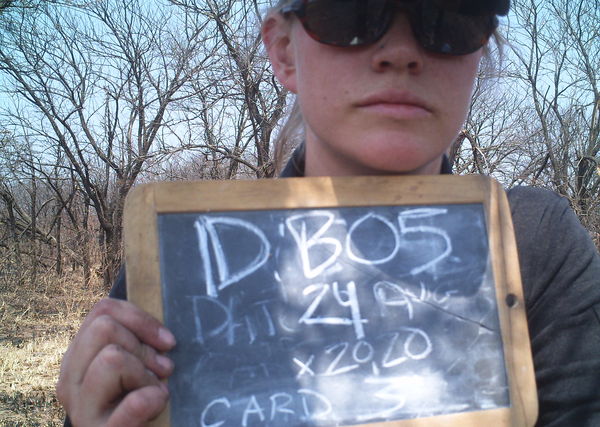
Checking the camera traps.
But most excitingly, you might see African wild dogs.

photo nabbed from: http://en.wikipedia.org/wiki/File:LycaonPictus.jpg
Also known as the Cape hunting dog or painted hunting dog, these canines disappeared from Serengeti in the early 1990’s. While various factors may have contributed to their decline, wild dog populations have lurked just outside the Serengeti, in multi-use protected areas (e.g. with people, cows, and few lions) for at least 10 years. Many researchers suspect that wild dogs have failed to recolonize their previous home-ranges inside the park because lion populations have nearly tripled – and as you saw in “Big, Mean, & Nasty”, lions do not make living easy for African wild dogs.
Nonetheless, the Tanzanian government has initiated a wild dog relocation program that hopes to bring wild dogs back to Serengeti, where they thrived several decades ago. In August 2012, and again in December, the Serengeti National Park authorities released a total of 29 wild dogs in the western corridor of the park. While the release area is well outside of the camera survey area, rumor has it that the dogs booked it across the park, through the camera survey, on their journey to the hills of Loliondo. Only a handful of people have seen these newly released dogs in person, but it’s possible they’ve been caught on camera. So keep your eyes peeled! And if you see something that might be a wild dog, please tag it with #wild-dog!! Happy hunting!
Living with lions
A few weeks ago, I wrote about how awful lions are to other large carnivores. Basically, lions harass, steal food from, and even kill hyenas, cheetahs, leopards, and wild dogs. Their aggression usually has no visible justification (e.g. they don’t eat the cheetahs they kill), but can have devastating effects. One of my main research goals is to understand how hyenas, leopards, cheetahs, and wild dogs survive with lions. As I mentioned the other week, I think the secret may lie in how these smaller carnivores use the landscape to avoid interacting with lions.
Top predators (the big ones doing the chasing and killing) can create what we call a “landscape of fear” that essentially reduces the amount of land available to smaller predators. Smaller predators are so afraid of encountering the big guys that they avoid using large chunks of the landscape altogether. One of my favorite illustrations of this pattern is the map below, which shows how swift foxes restrict their territories to the no-man’s land between coyote territories.
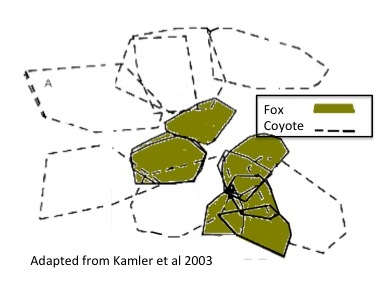
A map of coyote and swift fox territories in Texas. Foxes are so afraid of encountering coyotes that they restrict their territories into the spaces between coyote ranges.
The habitat inside the coyote territories is just as good, if not better, for the foxes, but the risk of encountering a coyote is too great. By restricting their habitat use to the areas outside coyote territories, swift foxes have essentially suffered from habitat loss, meaning that they have less land and fewer resources to support their population. There’s growing evidence that this effective habitat loss may be the mechanism driving suppression in smaller predators. In fact, this habitat loss may have larger consequences on a population than direct killing by the top predator!
While some animals are displaced from large areas, others may be able to avoid top predators at a much finer scale. They may still use the same general areas, but use scent or noise to avoid actually running into a lion (or coyote). This is called fine-scale avoidance, and I think animals that can achieve fine-scale avoidance, instead of suffering from large-scale displacement, manage to coexist.
The camera traps are, fingers crossed, going to help me understand at what scale hyenas, leopards, cheetahs, and wild dogs avoid lions. My general hypothesis is that if these species are generally displaced from lion territories, and suffer effective habitat loss, their populations should decline as lion populations grow. If instead they are able to use the land within lion territories, avoiding lions by shifting their patterns of habitat use or changing the time of day they are active, then I expect them to coexist with lions pretty well.
So what have we seen so far? Stay tuned – I’ll share some preliminary results next week!
#####
Map adapted from: Kamler, J.F., Ballard, W.B., Gilliland, R.L., and Mote, K. (2003b). Spatial relationships between swift foxes and coyotes in northwestern Texas. Canadian Journal of Zoology 81, 168–172.
All in the name of science
Today’s guest blogger is Lucy Hughes. Lucy lived and worked on a private nature reserve in South Africa for four years, carrying out field research that included a camera-trap study into the reserve’s leopard population and twice monthly bird surveys for Cape Town University’s Birds in Reserves Project (BIRP).
Arrhhh, that really hurts! A three inch thorn had just penetrated my, admittedly inadequate, footwear and was stuck deep in the sole of my foot. Thorns are a serious hazard of camera trap placement in the South African bushveld where plants with thorns or hooks seem to make up about 90% of species.
My colleague Michelle ran back to the landy to get a first aid kit whilst I set about extracting the thorn, there seemed to be an awful lot of blood. I watched the path eagerly for Michelle’s return but as she got near she seemed to slow down and as she opened her mouth to speak I knew exactly what she was going to say. “Luce, if it’s not too painful, what about spreading your blood around a bit?”
Callous as it may seem it wasn’t a bad idea. We had been having trouble with capturing clear night shots of leopards. They always seem to be in a hurry and the shots we had were often blurry making it impossible to id the individuals. We needed a way to get the leopards to pause for a second or two in shot of the camera trap.
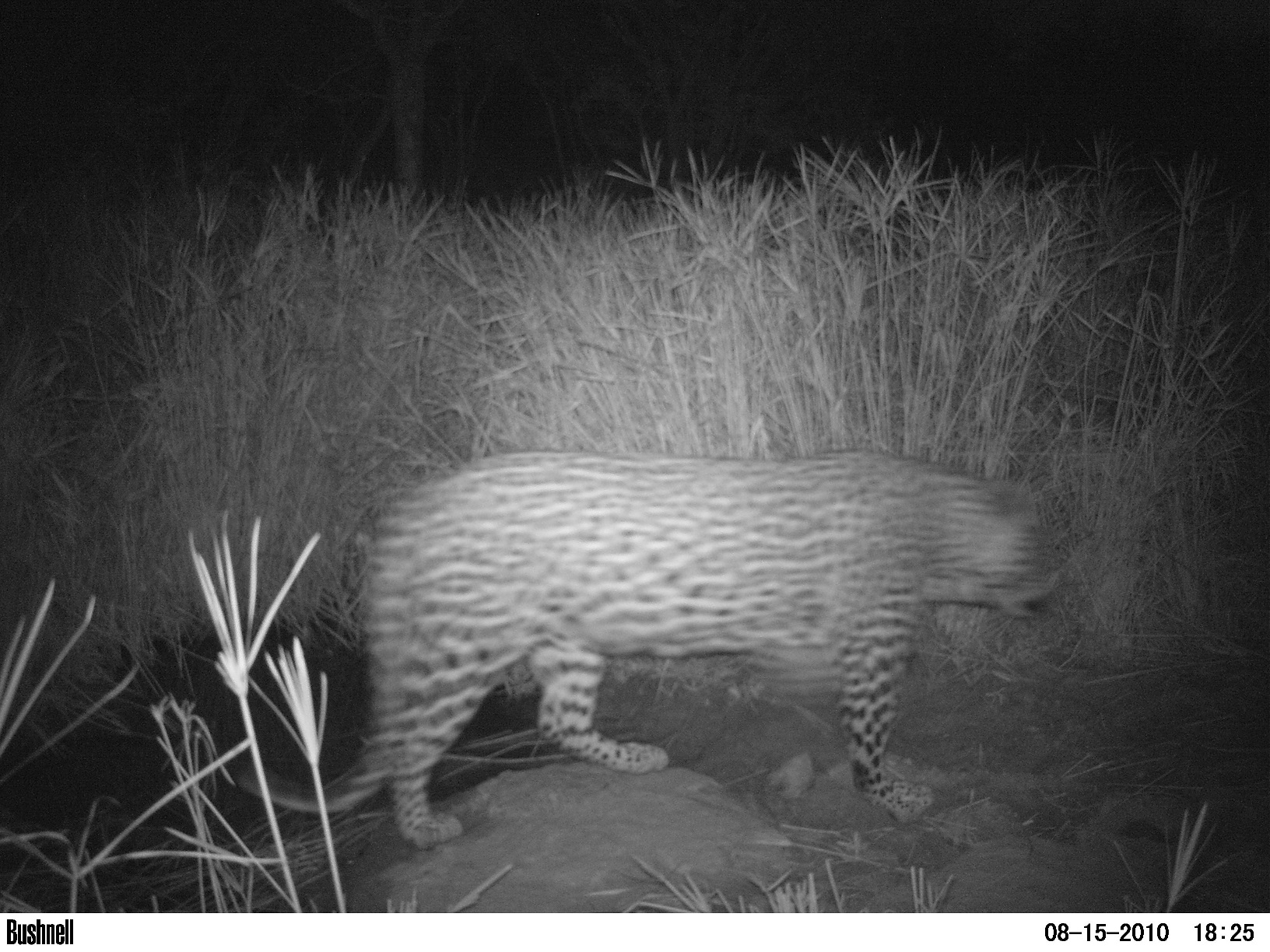
We had been advised that scent was the answer and were experimenting with various different ones and now it seemed human blood was to be the next test. I dutifully hobbled out in front of the camera and scraped my bleeding foot around on a nice flat rock Michelle had procured, wondering about the sensibleness of using human blood as bait for a predator. My slight discomfort was all in the name of science.
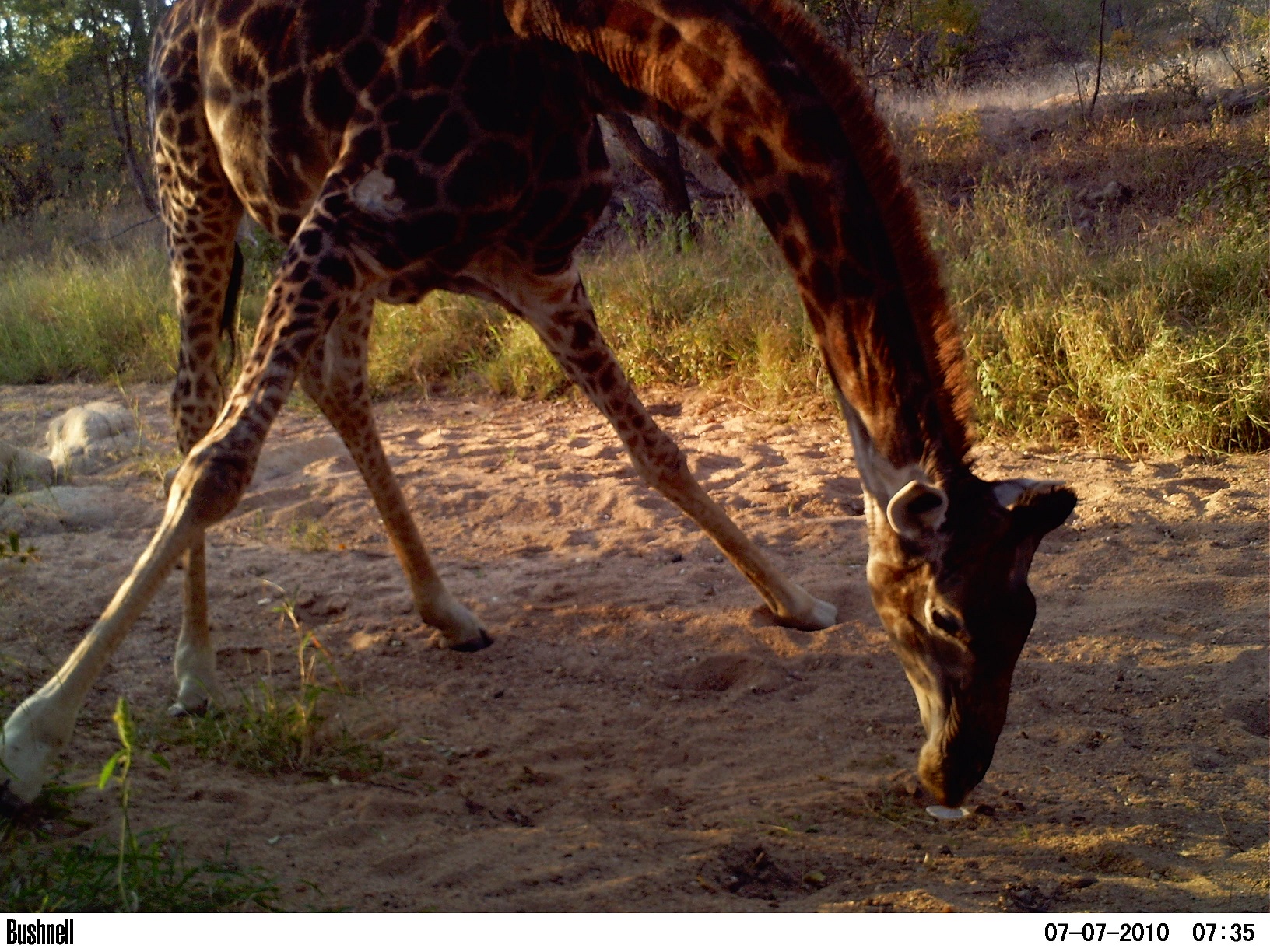
In the end it didn’t work, It rained a couple of nights later and my efforts where washed away. We never did find the perfect scent. We were told that tinned sardines worked wonders as well as catnip and perfume. We tried them all. It seems our cats where immune to these. The only thing that stopped them in their tracks was the scent of other leopards. I did learn however that the scent of tinned sardines was particularly interesting to giraffe of all animals. My method was to bury a plastic cup up to its rim in sand and put a blob of sardines in the cup. Now you would have thought that giraffe would have walked on by but as the picture below testifies, giraffe just have to take a closer look. You always learn something new!
Big, Mean, & Nasty

I recently gave a talk at the Arusha-based Interpretive Guide Society – a really cool group of people interested in learning more about the natural history of Tanzania’s places and animals. I’ve taken a few clips from the presentation that describe in a bit more detail how lions bully their competitors.
Looking at the photos above (all nabbed from the internet), how many of you would like to be a wild dog? A leopard? A cheetah? There’s no doubt about it – lions are big, and mean and nasty. If you are any other carnivore species in the Serengeti – or across Africa, lions chase you, steal your food, even kill you. So what do you do? How do you survive? That’s essentially what my dissertation seeks to answer. How smaller “large carnivores” – hyenas, leopards, cheetahs, and wild dogs — live with lions. Under what circumstances do they persist? Under what circumstances do they decline or even disappear?
There are a handful of ways in which these species interact, but what I’m most interested in is aggression and it’s repercussions. As the above pictures suggest, lions tend to dominate aggressive interactions.
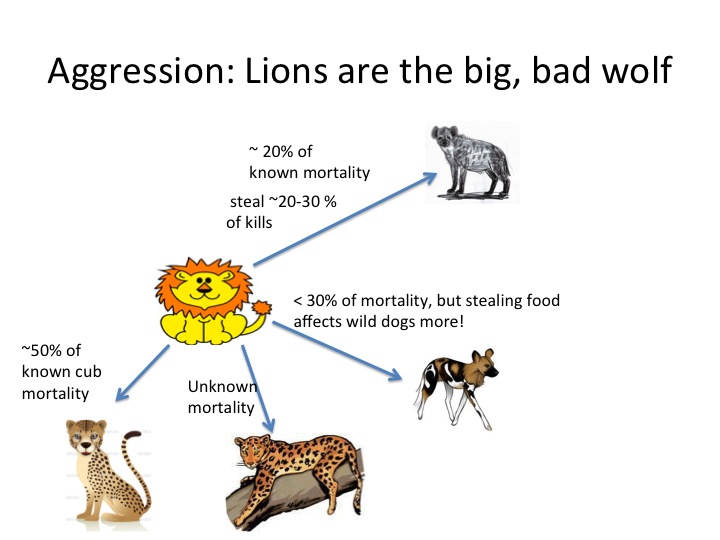
The relationship between lions and hyenas is one that has wormed its way into the public psyche through nature documentaries such as “Eternal Enemies.” While such movies play up the frequency of such interactions, they certainly do happen. Lions not only kill a number of hyenas, but steal their hard-won kills. Dispel any notion of lions as some noble hunter — they in fact steal a lot of their food from other carnivores. In fact, research from Kay Holekamp’s group in Masaai Mara indicates that lions can suppress hyena populations just because they steal food from them! It’s actually a similar story for wild dogs – lions kill wild dogs too, but since wild dogs expend so much energy hunting, that if lions steal just a small fraction of the food that wild dogs catch, wild dogs simply cannot recover. They would have to hunt for more hours than there are in a day to make up for this caloric loss.
It doesn’t stop there. We don’t know how much food lions steal from cheetahs or leopards. We also don’t know how often lions kill leopards, but lions kill cheetah cubs left and right. Studies from Serengeti indicate that lions may be responsible for up to 57% of cheetah cub mortality!

So how do hyenas, wild dogs, leopards, and cheetahs survive? Well, that’s what I’m trying to figure out. But what I can tell you is that not all of these smaller carnivores sit back and take their beating quietly. Take hyenas. They’re about 1/3 the size of a lion, but they live in groups. Big groups. Much bigger groups than lions. And if there are no male lions around, if hyenas have strength in numbers, they can steal food from female lions, and even kill their cubs. While leopards don’t live in groups, they can easily kill (and eat!) a lion cub that has been hidden while mom is away hunting.
Unfortunately, what we don’t know is whether this reciprocal aggression by leopards and hyenas has any measurable affect on lion populations, and whether it’s this aggression that allows hyenas and leopards to coexist with lions. The cameras behind Snapshot Serengeti will provide the first-ever map of leopard and hyena distributions within the long-term lion study area – by comparing lion reproductive success (which we know from >45 years of watching individually identified animals) to leopard and hyena distributions, we can see if lions do better or worse in areas with lots of hyenas or leopards – and whether this is due to getting less food or producing fewer cubs.

What about cheetahs and wild dogs? Even though wild dogs, like hyenas, live in groups, there’s no evidence that this helps them defend themselves or their kills against lions. And cheetahs, well, there’s no record of them killing lion cubs, but who knows?
So how do these guys live with lions? To be honest, wild dogs don’t tend to do very well in places with lots of lions. In fact, it’s generally believed that wild dogs have failed to recolonize Serengeti, despite living *just* a few km from the border, because lion populations are so high. For a long time, researchers and conservationists believed that cheetahs also couldn’t survive in places with lots of lions – but that perception is beginning to change, due, in part, to data coming in from Snapshot Serengeti! It seems that cheetahs not only do just fine in reserves with lots of lions, but use the same areas within the park as lions do. I have a sneaking suspicion that how cheetahs use the habitat with respect to lions, how they avoid encountering lions even though they’re in the same places, holds the key to their success. Avoidance, combined with habitat that makes avoidance possible (read: not the short grass Serengeti plains you see below).
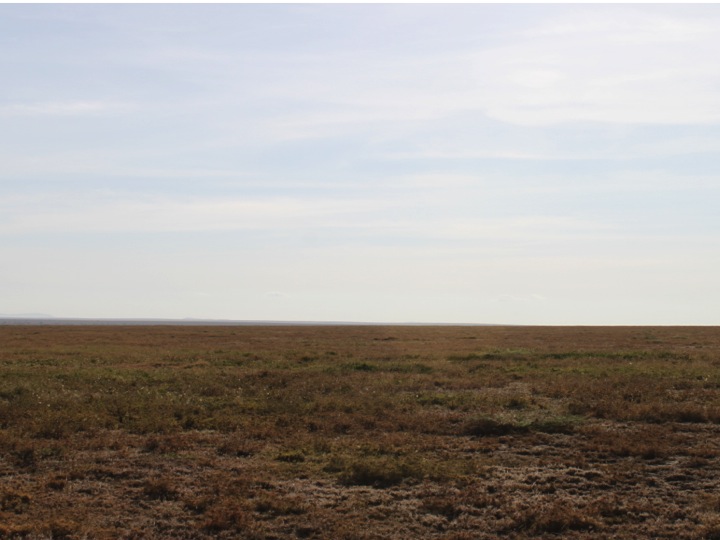
I’ll write more about avoidance and habitat another day. In fact, I’m currently revising a paper for a peer-reviewed journal that addresses how cheetahs and wild dogs differ in the ways they avoid lions – if accepted, it will be the first appearance of Snapshot Serengeti data in the scientific literature! I’ll keep you posted…
 Snapshot Serengeti
