
Get your dead camera, right here!
Remember all the photographs like these?
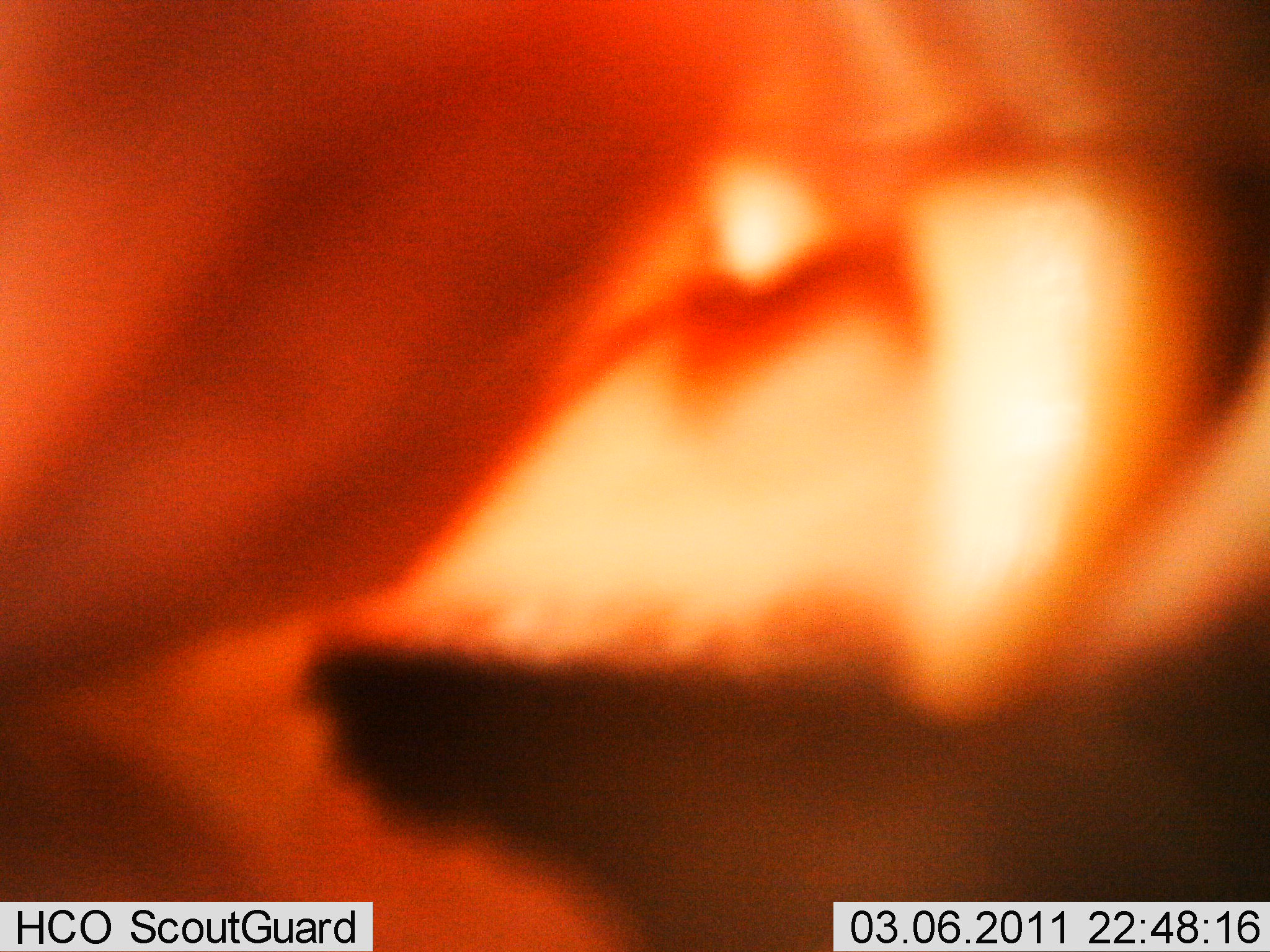
Hyena tooth…
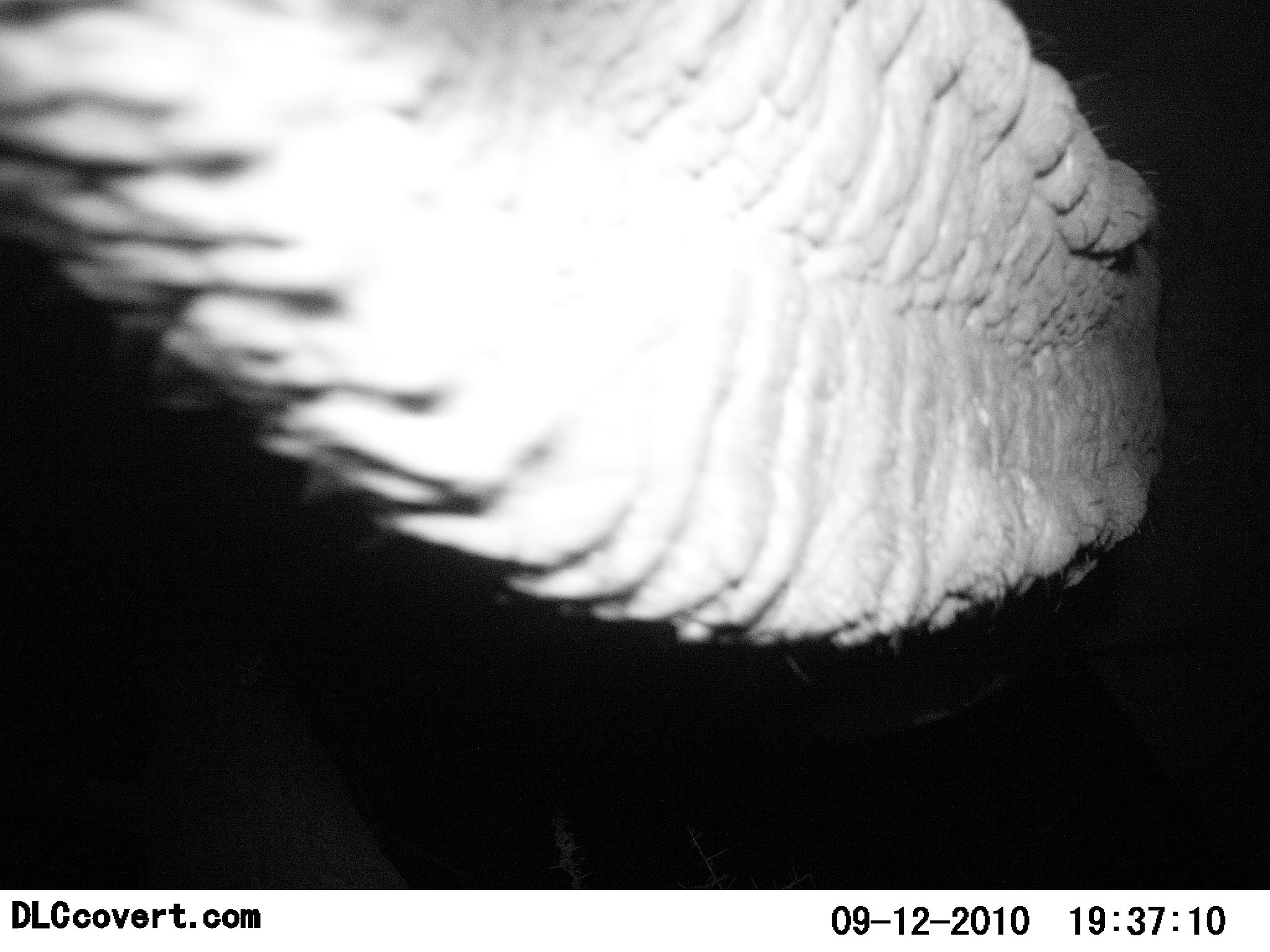
Elephant trunk…
Well, those cameras didn’t survive…

Own this!
And have been up on Indiegogo as one of our “high-end” perks. Well, as we’re down to the wire with 4 days left to raise nearly $15,000, we’re offering dead cameras for a $288 donation. So please tell anyone you think might want some hyena-munched plastic gracing their curio cabinet. It’s pretty cool, and comes with a classic “last picture this camera ever took” photo.
(Don’t worry, if you’ve donated already but really really really want this camera, you can add to your existing donation. And of course, if you’ve already donated more, you’ll get a camera sent straight to your doorstep as well.)
Thank you once again for your dedication to Snapshot Serengeti – for your hard work in classifying photos and for all of your support since we launched the fundraising campaign. We’ve raised enough to get us through almost to November — which is huge. Not only do all of us on the Snapshot team really love what we’re doing (though ask me again next time I’m digging myself out of an aardvark hole), but we also really believe that the scientific knowledge you’re helping us produce with this project is incredibly important – both for general ecology and for ultimately better conserving the Serengeti. So, thank you. And fingers crossed that we’ll be able to keep on bringing the Serengeti to you for months and years to come.
Tune in!
Hi everyone! Just wanted to let you know that Minnesota Public Radio will be doing a short follow-up piece to their December 2012 story tomorrow at 9:50am Central Time. You can listen to MPR live here or tune into the site later — we’ll put up a link once it’s posted.
Also! Check out Margaret’s guest post on the Scifund Challenge blog. The Scifund Challenge is a group of dynamic and dedicated scientists trying to bring science to you through outreach, citizen science, and crowdfunding projects.
Finally, Margaret and I will be at the Ecological Society of America conference all week – so if you’re here too, please come say hi!
Happy Monday 🙂
“Fancy Photographs” perk unveiled at Save Snapshot Serengeti
How would you like to hang this on your wall?
You might recall this stunning photograph from National Geographic’s latest feature story on the Serengeti Lions capturing the dramatic and devastating fight between C-boy and three of the Killers. It’s now one of 4 options for our ‘Fancy Photograph’ perk on our Save Snapshot Serengeti campaign.

C-boy being evicted by the killers.
The National Geographic article chronicles the story of C-boy and his coalition partner Hildur, who were evicted from the Jua Kali pride in 2009 by a ruthless group of four males called the Killers. Ingela Jansson took this photo on what was supposed to be a routine day of lion tracking. I was a new graduate student out in Serengeti for the first time, and in the car with Ingela when this happened. It was at that moment that I realized that endless hours of napping that lions did belied a soap opera life that was both dramatic and deadly.
Being a male lion is tough; males live significantly shorter lives than females, and it’s clear why from this picture. But don’t worry, for those of you out there who want a slightly less violent view of nature, Daniel Rosengren, our resident lion-tracker and world-class photographer, has generously donated the following three prints to choose from as well:
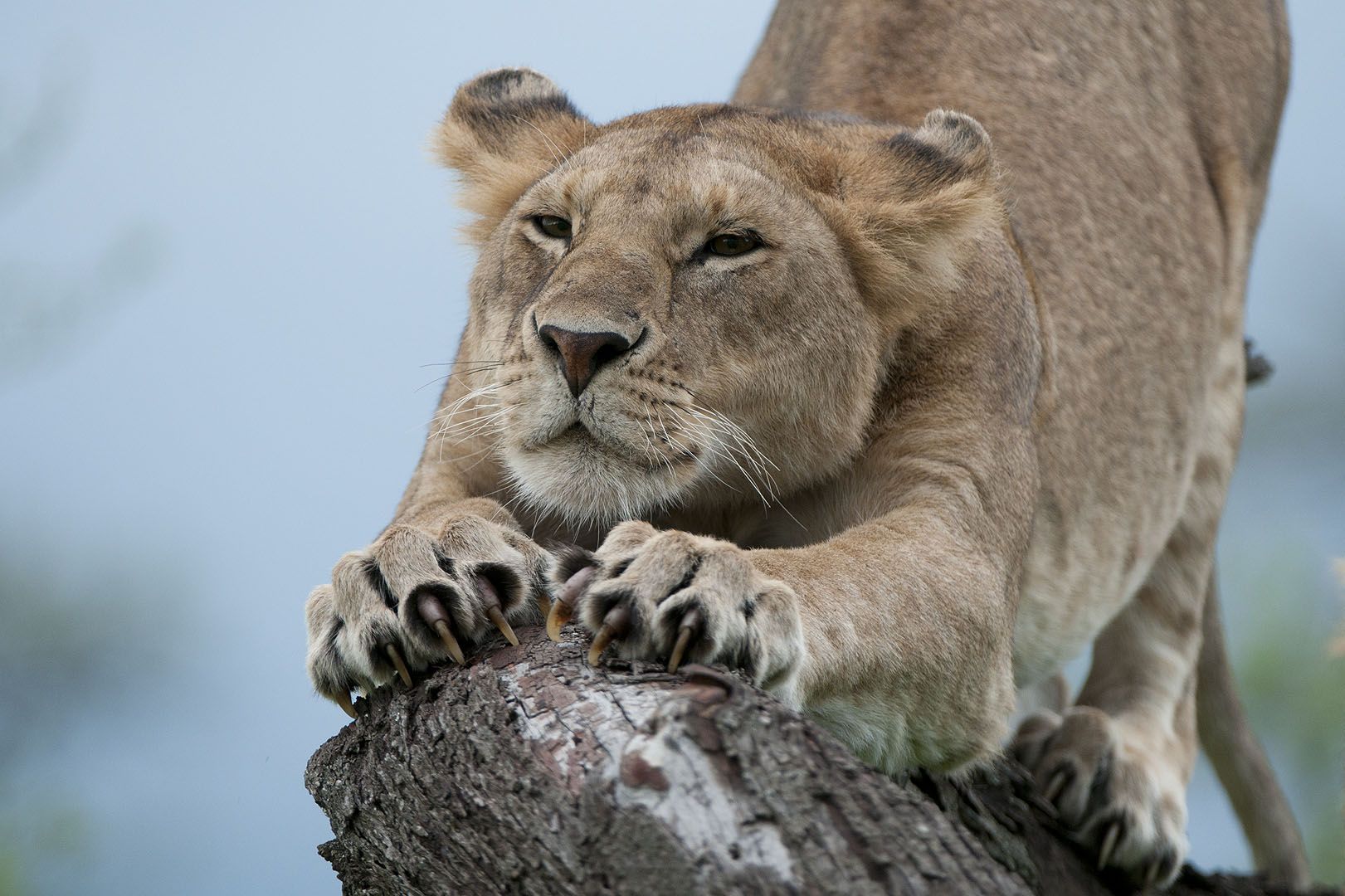
Lioness stretching. Those claws are sharp!
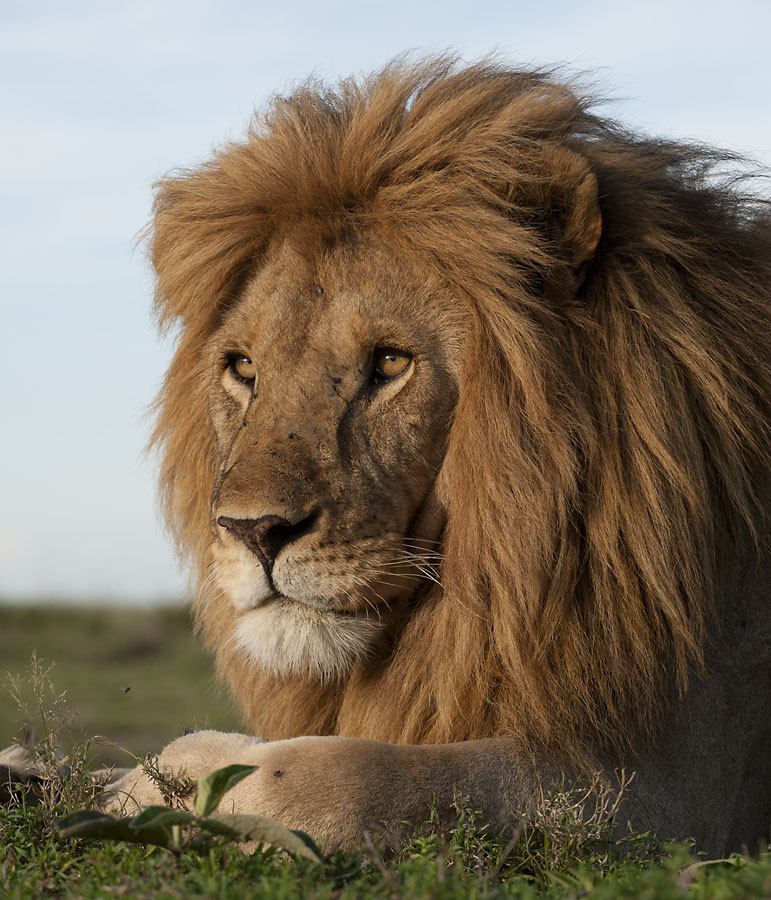
Hildur, C-boys coalition partner.
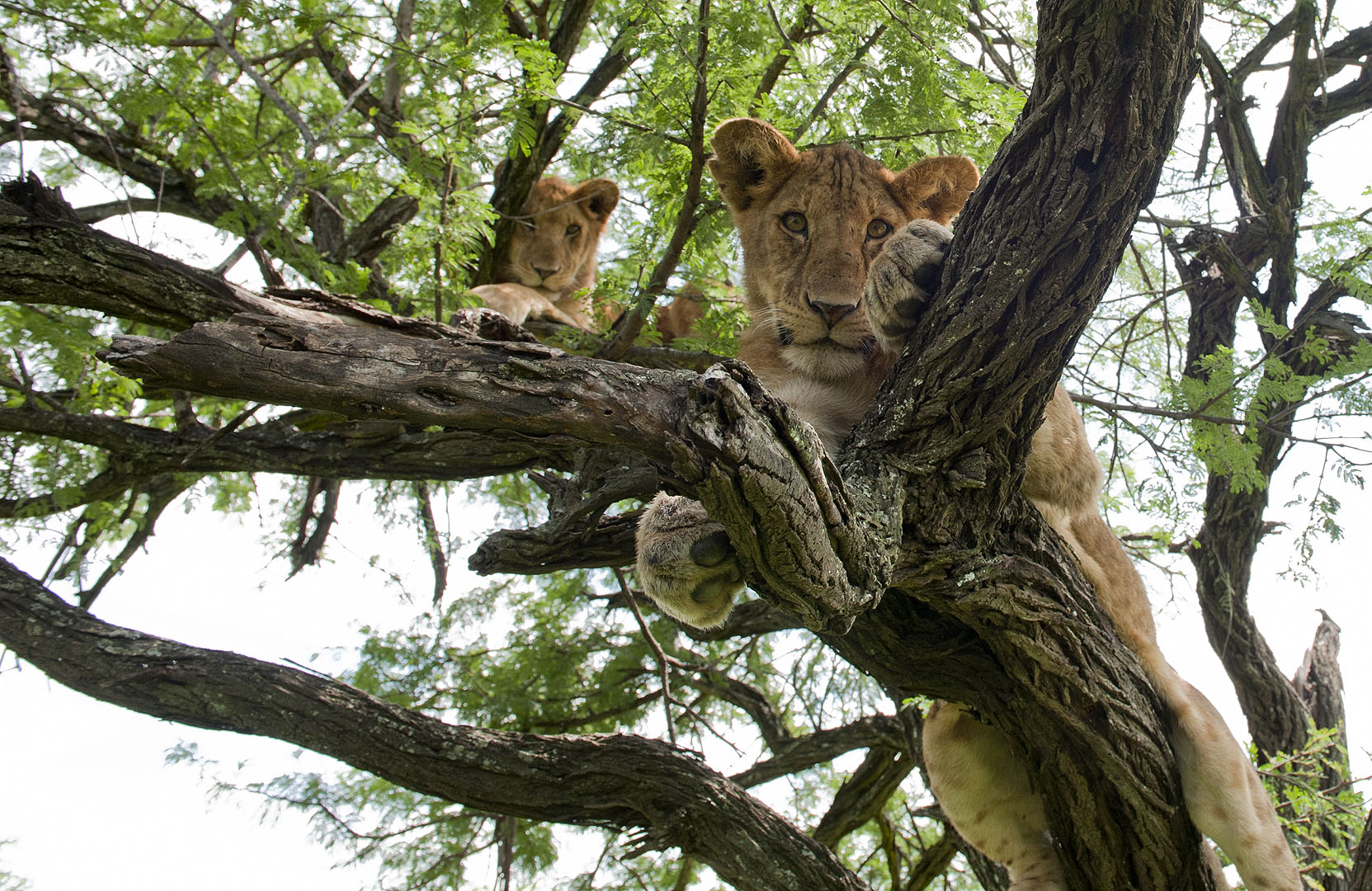
Cubs up in a tree. Who said lions don’t climb?
Please share this news (and the campaign!) with any of your lion-loving friends who might want to hang a piece of Serengeti history on their wall. Thank you all, again, for your dedication and support for Snapshot Serengeti. We on the Snapshot team love doing what we do, and with every picture our camera traps take, we move one small step closer to understanding what makes the Serengeti – and all the animals within it – keep on thriving as one of the world’s most dynamic and iconic ecosystems.
In search of
Hi everyone! We recently discovered that National Geographic, who has just published the big lion feature, might be interested in publishing this Snapshot Serengeti photo:
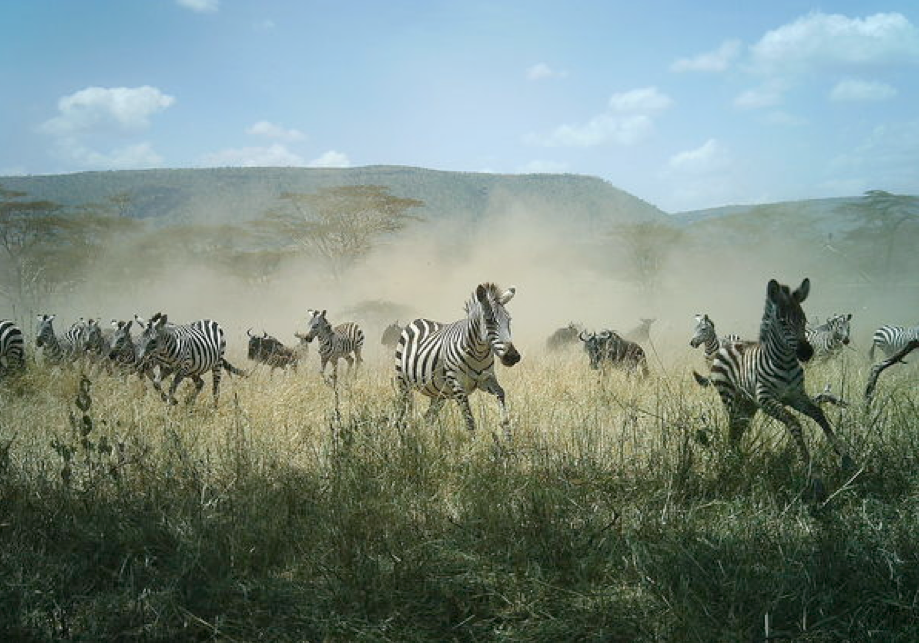
Which would help raise money for the project. Does anyone have it collected on Snapshot Serengeti? We’re trying to track down the url and send NG the full-res version. If so, please let us know!! Thank you!
Photos of the year
Thank you so much to everyone who sent in their favorite photos. We’ve submitted the following 12 to BBC’s photo-of-the-year contest. Of course, there were many, many more we wish we could have used!


and one of my new personal favorites:

In other news, we are *almost* at halfway to our Indiegogo fundraising goal!!!! Thank you all for your support so far! And please don’t forget to check out the meme generator at http://www.SaveTheMemes.org! You can now make a meme directly from the talk pages!
Fave photos?
Calling all camera trap captures!
BBC’s annual camera-trap ‘photo of the year’ contest is drawing a close – and we’re pretty sure Snapshot Serengeti has some winners. So we’re asking for your help to find them!
The contest has three relevant categories:
- Animal Portraits Images taken during the course of research that capture the character or spirit of the animal
- Animal Behaviour Images captured during the course of research that show interesting or unusual behaviour.
- New Discoveries Images that show something new to science, such as a species never before photographed in the wild or outside its known range, or behaviour never before recorded. The caption must make clear what the discovery is.
We can submit up to 12 photos across these three categories. Long-time Snapshot Serengeti moderator lucycawte has already pinpointed a couple of fantastic photos:
…but we’d like your help to find some more!
So send us the subject ID’s or urls of your all-time favorite Snapshot Serengeti pics (via comments here). One of them just might wind up front and center in the next issue of BBC Wildlife or make Snapshot Serengeti the proud winner of a monetary prize to keep the cameras clicking.
And speaking of Snapshot Serengeti funding, I wanted to take a minute to say thank you all who have supported our Save Snapshot Serengeti campaign so far. Yesterday we passed our 20% mark, and we’re marching forward! For everyone out there who loves looking at these incredible photos, please take a look at our campaign — we have some really fun perks that you might enjoy. And whether or not you’re able to make a donation, please help us spread news of the campaign by sharing our link: igg.me/at/serengeti — the more people we reach, the better our chances of bringing you these photos for years to come. Thank you for your support, your effort, and for being as addicted to Snapshot Serengeti as we are!
Season 6: Snapshot Serengeti’s Final Season?
A lot has happened in the Serengeti over the last six months. The wildebeest migration, which appeared towards the end of Season 5, swept down onto the plains in pursuit of nutritious new grass. I improved my hyena-proofing strategies,
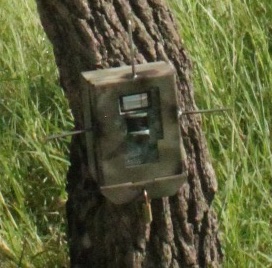
Spikes make the cameras less palatable…I hope….
and Daniel found and collared the long-lost Transect Steady pride.

And, although Season 6 marks my last field season as a graduate student, we on the Snapshot Serengeti team want to keep the cameras running for as long as we can. There is still so much to learn about the Serengeti, and many of its secrets can only be understood by long-term projects that capture both annual variability and unexpected events. The Snapshot Serengeti cameras let us study this incredibly dynamic system in a way that was never possible before – and we’re not ready to stop.
But we need your help. Our NSF funding has run out, and unless we raise enough money to keep the team going, there won’t be a Season 7.
So we’ve launched a crowd funding campaign on Indiegogo to meet our immediate funding needs. And we’re asking for support in any way you can give. We’ve got some fun “perks” in return for your donations, but the biggest perk of all will be having a Season 7 to look forward to.
So, if you too are addicted to pressing ‘play’ on the silly warthog close-ups or collecting images of baboon selfies, please share this campaign with your friends and family.
The more people we reach, the better our chances of meeting our goal and keeping our cameras running…and the better our chances of truly understanding what makes this incredible ecosystem work.

The life of a lion isn’t easy
Hopefully you’ve been enjoying the adventures of the lions that David Quammen has been writing about in this month’s National Geographic. David writes about the dramatic lives of C-boy and Hildur, two very good-looking male lions that roam the Serengeti, and the challenges that they face as male lions trying to survive in the Serengeti. I was in the car with Ingela that day that the Killers nearly destroyed C-boy — it was one of my first days in Serengeti, and one of the many moments that I fell in love with the dramatic lives of the animals there.
There’s a good chance you’ve seen C-boy and Hildur and Killers, as well as all the ladies they’ve been fighting over, in the camera traps. Below is a map of the pride territories overlaid on the Snapshot Serengeti cameras. There are a lot more prides than this, but these are the ones that Nick Nichols and Davide Quammen followed.

SnapshotSerengeti cameras and the lions that David writes about in NatGeo
Jua Kali, where Hildur and C-boy resided in 2009, control just a tiny patch of land in the center of the study area where the Seronera river begins. They spend most of their time in a marshy lowland where those two small tributaries, converge. The marsh has lush grass and standing water, but is just a tiny oasis in the otherwise dry and desolate grassland. It is not the best territory that a lion can have.
After C-boy and Hildure were deposed from Jua Kali, they eventually took over the Vumbi pride. It worked out pretty well for them in the end – the Vumbi’s are not only a bigger pride, but maintain control over the Zebra Kopjes, a suite of rocky outcroppings that provide shade, water, and a vantage point to watch for prey across the open plains. Despite C-boy’s brush with death and his inelegant retreat from power, C-boy and Hildur really haven’t done too badly for themselves.
North of Vumbi, the Kibumbu pride ranges along the Ngare Nanyuki river. When David was writing about our lions, the Killers had recently taken over the Kibumbu pride. Unfortunately, the Kibumbu females had had young cubs fathered by the previous coalition; the Killers would have killed these cubs to bring the Kibumbu females into sexual receptivity. Infanticide is a brutal, but natural part of a lion’s life.
So there it is. The lions that are gracing the pages of this month’s National Geographic magazine are the same ones that you see yawning, sleeping, and stretching in front of the Snapshot Serengeti camera traps. David’s story, and Nick Nichols’ photos, provide an amazing and detailed dive into their lives.
We’re currently raising funds to keep Snapshot Serengeti and the long-term Lion Research Project afloat. Thanks to everyone who has donated so far!
Crowdfunding Snapshot Serengeti
I recently returned from Serengeti with all of my limbs intact and hard drives full of camera photos in tow. The images on these drives comprise Season 6 – the season I welded spiky nails to the cases to discourage hungry hyenas from chomping on them, didn’t get stuck every 3 days for a change, and also my last trip as a Ph.D. student. (Now I’m back in Minnesota trying to make sense of all the data and write my dissertation!) The Season 6 images are slowly making their way through the cloud to the Zooniverse team, and we’re expecting to have them online by the end of the month.
Unfortunately, things are not all butterflies and rainbows for us. In fact, Season 6 will mark a rather dire situation for Snapshot Serengeti. As Margaret wrote back in May, our National Science Foundation funding has run out – and our application for renewed funding was rejected. Unless we raise enough money to keep our Land Rovers limping along, our cameras will turn off, and we’ll lose our secret window into this incredible world.
The good news is that we have a plan. Today we launched a crowdfunding campaign on Indiegogo, our first step in keeping the project going. We are asking people around the world to help us raise money to keep the Snapshot Serengeti cameras clicking for another three months after our funding ends in September. That will get us to the end of the year and give us a Season 7.
So, if you love Snapshot Serengeti and are able to contribute something, we’d love your support. And check out our perks. We’ve got some fun ones you might enjoy! If you’re unable to help out financially, please spread the campaign link around to your friends and family. The more people we reach, the more likely we are to make our goal. The link is
http://www.igg.me/at/serengeti
And meanwhile, happy hunting in Season 5. Thanks!

Meanwhile, happy hunting!
Lions, cheetahs, and dogs, oh my! Part 2.
Last week, we left off with this crazy biological paradox: lions kill cheetah cubs left and right, yet as the Serengeti lion population tripled over the last 40 years, cheetah numbers remained stable.
As crazy as it sounds, it seems that that even though lions kill cheetah cubs left and right, it doesn’t really matter for cheetah populations. There are a number of reasons this could be. For example, cheetahs are able to have cubs again really quickly after they lose a litter, so it doesn’t take long to “replace” those lost cubs. It’s also possible that lions might only be killing cubs that would probably die from another source – say, cubs that would otherwise have died from starvation, or cubs that might have been killed by hyenas. Whatever the reason, what we’re seeing is that lions killing cheetah cubs doesn’t have an effect on the total number of cheetahs in the area.
I think this might hold true for other animals, not just cheetahs. It’s a bit of a weird concept to wrap your head around – that being killed, which is really bad if you’re that individual cheetah, doesn’t actually matter as much for the larger population – but it’s one that seems to be gaining traction among ecologists who study how different species live together in the natural world. Specifically, ecologists are getting excited about the role that behavior plays in driving population dynamics.
Most scientists have studied this phenomenon in predator-prey systems – say, wolves and elk, or wolf spiders and “leaf bugs”.

Wolf spider. Photo from Wikipedia.org.

“Leaf bug” from the Miridae family. Photo from Wikipedia.org.
What scientists are discovering is that predators can suppress prey populations not by eating lots of prey, but by causing the prey to change their behavior. Unlike many spiders, wolf spiders actively hunt their prey – sometimes lurking in ambush, other times chasing their prey for some distance. To avoid being eaten, leaf bugs may avoid areas where wolf spiders have lots of hiding places from which to stage an ambush, or leaf bugs may avoid entire patches of land that have lots of wolf spiders. If these areas are the same ones that have lots of mirid bug food, then they’ve effectively lost their habitat. Sound familiar?
Back to Africa – what does this mean for wild dogs and cheetahs? Interestingly enough, lions do not displace cheetahs from large areas of the Serengeti. We’ve discovered this in part from historic radio-collar data that was collected simultaneously on both species in the late 1980’s. Below is a map that shows average lion density across the study area. Green indicates areas with higher densities. The black “+” symbols show where cheetah were tracked within the same study area. They are overwhelmingly more likely to be found in areas with lots of lions. This is because that is where the food is – and cheetahs are following their prey, regardless of the risk of encountering a lion. The Snapshot Serengeti data confirm this – cheetahs are way more likely to be caught on cameras inside lion territories.
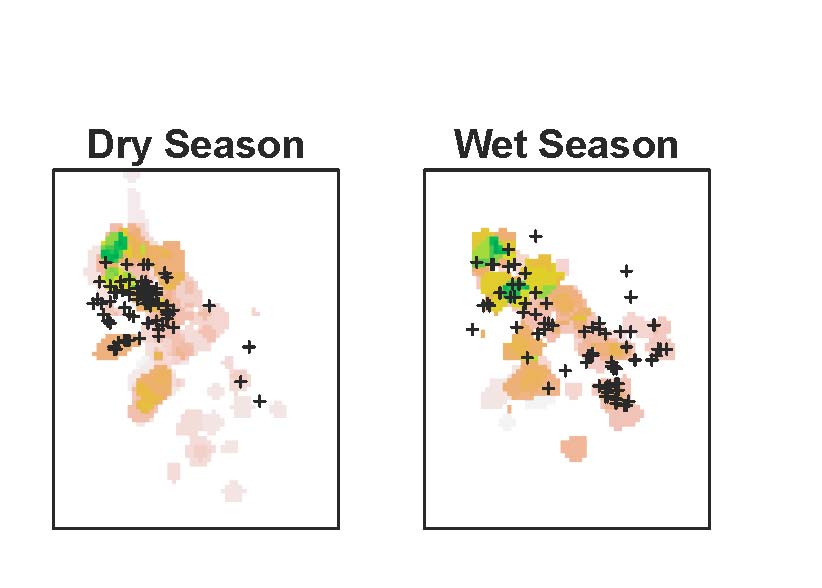
Lion density is mapped per 1km x 1km grid cell. High density areas shown in green, lower in pale orange/gray. Cheetah locations are the black +’s.
Unfortunately, we don’t have radio-collar data on the Serengeti wild dogs from the 1980’s. But we do have radio-collar data for the wild dogs that have been living in the larger Serengeti ecosystem for the past 8 years. As you can see in the map below, wild dogs regularly roam within just 30km of the lion study area. But they don’t settle there – instead, wild dogs remain in hills to the east of Serengeti – where there are local people (who kill wild dogs), but very few lions.

Other researchers in east and southern Africa are starting to pick up on the same patterns in their parks. From Tanzania, to Botswana, to South Africa, researchers are finding that wild dogs get kicked out of really large, prime areas by lions…but that cheetahs do not. What they’re finding (since they have all these animals GPS-collared) is that cheetahs are responding to lions at a very immediate scale. Instead of avoiding habitats that have lions, cheetahs maintain a “safe” distance from the lions – allowing them to use their preferred habitats, but still minimize their risk of getting attacked.
Carnivore researchers are only really just beginning to explore the role of behavior in driving population-level suppression, but I think that there’s good reason to believe that large scale displacement, or other behaviors, for that matter, have greater effects on population numbers of cheetahs and wild dogs, as well as other “subordinate” carnivores – not just in African ecosystems but in systems around the world. It’s a new way of thinking about how competing species all live together in one place, but it’s one that might change the way we approach carnivore conservation for threatened species.
 Snapshot Serengeti