
Not a tame lion

Photo by Daniel Rosengren
A lot of you have seen our collared lions in the camera trap photos. No, they’re not tame – they’re radio-collared. Since 1984, the Serengeti Lion Project has used radio-telemetry to monitor these big cats (See Craig’s post for some Lion Project history).
Now, no matter how lazy the lions appear to be, they can move rather quickly when they want to. So to collar a lion, a Serengeti veterinarian immobilizes the lion with a dart gun; while the lion is immobilized, we take measurements and collect samples to monitor her health. We make the collars snug enough so they don’t get caught in vegetation, but loose enough to be comfortable whether the lion is standing, moving, or (more likely) sleeping.
Once the lions are collared, we still have to find them on a regular basis. Our cars are equipped with a giant antenna (we to learn to “drive in 3D”) that picks up the collar’s signal. We catch the direction by driving in a circle – the signal is loudest in the direction of the collar. However to extend the life of the batteries, we have the signal strength turned down fairly low – we can only hear the collars from an average of 5-10km away on flat ground – so we spend a lot of time driving to the top of hills to capture a signal. We spend a lot of time driving, period.
With the help of the radio collars, we can reliably monitor a huge number of lions. We currently track 24 different prides, each with one collared female. Lions live in fission-fusion societies – they’re usually found in dynamic subgroups of two to seven individuals, all coming together only on occasion, such as if there’s a big meal to be had. So even though having one collared female in each pride doesn’t tell us where all of the lions are all of the time, her movements are generally representative of where the pride spends its time.
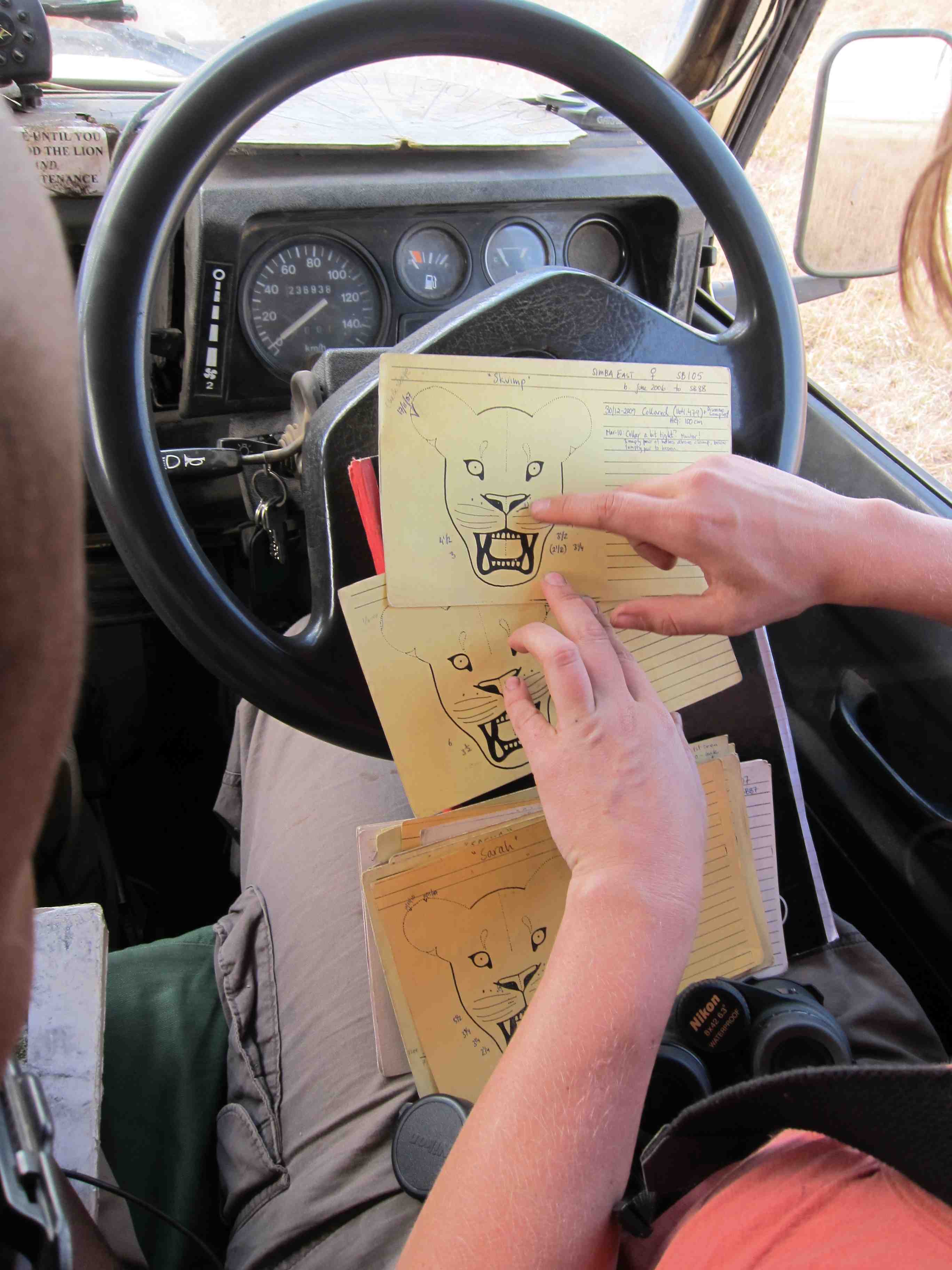
The information generated by radio-tracking the lions is…pretty incredible. It means we can find our lions even when they’re in dense areas with poor visibility, or outside of their normal territories. The lions are very habituated to vehicles, especially the Lion Project cars, and we get right up close to identify individual lions based on their unique “whisker spot” patterns.
And with the regular sightings that the radio-collars let us gather, we’re able to map pride territories, and study how these change under different environmental conditions:

Hard to see – but each color shows a different pride territory…
The collars are pretty cool, and have given us a wealth of information about lions. Now the camera traps are letting us learn about all the many other species in Serengeti.
Grant Proposal Writing
We’ve recently been working on a grant proposal to continue our camera trap project past 2012. Grant proposal time is always a little bit hectic, and particularly so this time for Ali, who, while running around Arusha to get research permits and supplies and get equipment fixed, has also been ducking into Internet cafes to help with the proposal. This proposal is going to the National Science Foundation, which has funded the bulk of the long-term Lion Project, as well as the first three years of the camera trap survey.
The proposal system is two-tiered. First we submit what is called a “pre-proposal” – a relatively short account of what we want to study and why, along with researchers’ credentials. This is the proposal that’s due today. Over the next six months, NSF will convene a panel to review all the pre-proposals that it receives and will select a fraction of them to invite for a “full proposal” due in August. If we get selected, we will then have to write up a more extensive proposal, describing not only what and why we want to do this research, but also exactly how we’re going to do it and how much money we require. Then another panel is convened to review these proposals, with the results reported in November or December.
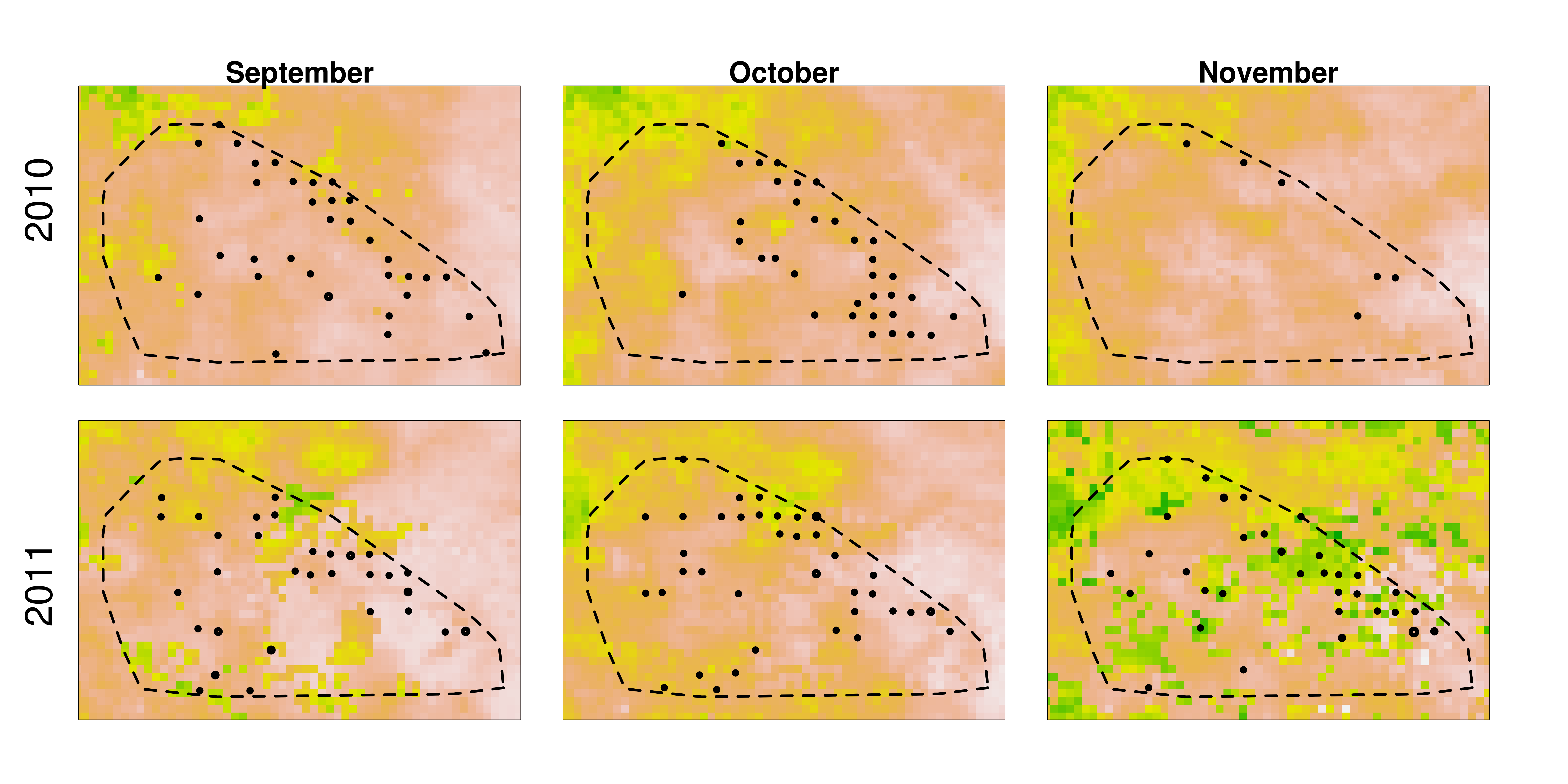
Proposals are always helped by “preliminary data” – that is, data that’s not yet ready for publication, but gives a hint at a research study’s power. So we’ve taken the Snapshot Serengeti classifications for Seasons 1-4, run a quick-and-dirty algorithm to pull out images of wildebeest and hartebeest, and then stuck the results on maps, grouped by month. The size of the circles shows how many wildebeest or hartebeest were seen that month by a camera. The background colors show ground vegetation derived from satellite images, so green means, well, the vegetation is green, whereas yellow means less green vegetation, and tan means very little green vegetation.

Wildebeest in the dry season (Season 1 and Season 3 on Snapshot Serengeti)
Hartebeest in the dry season (Season 1 and Season 3 on Snapshot Serengeti)
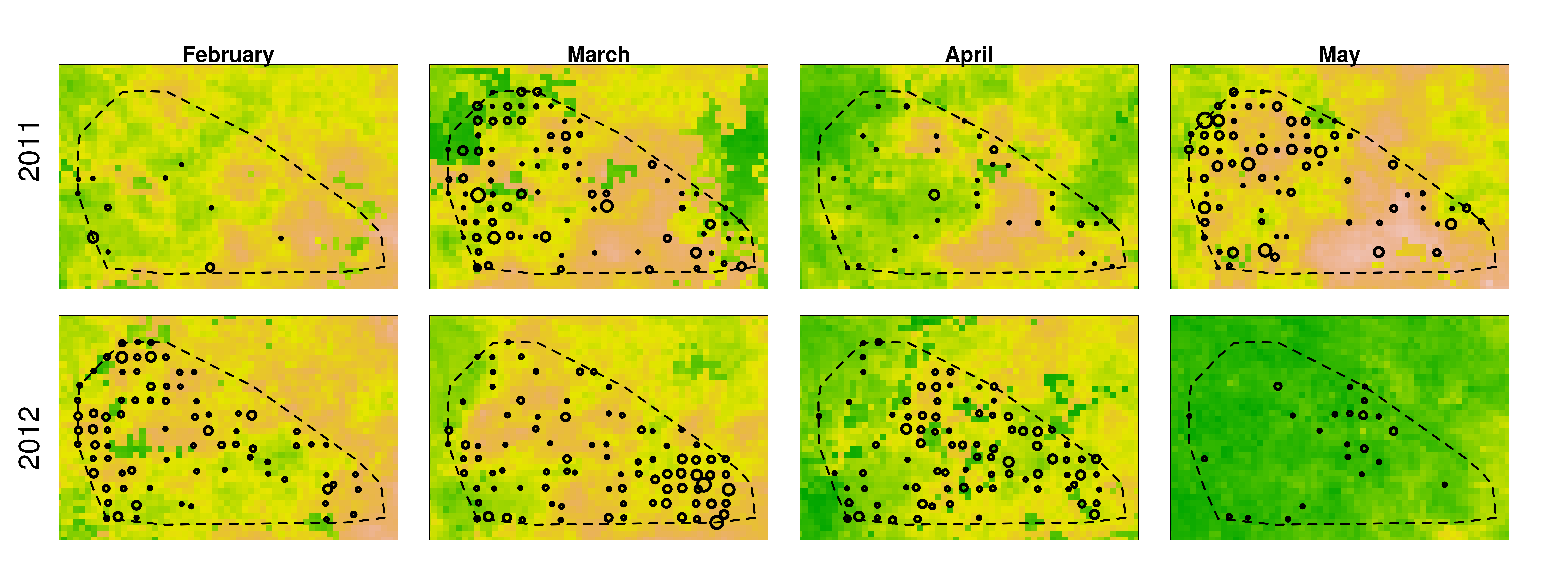
Wildebeest in the wet season (Season 2 and Season 4 on Snapshot Serengeti)
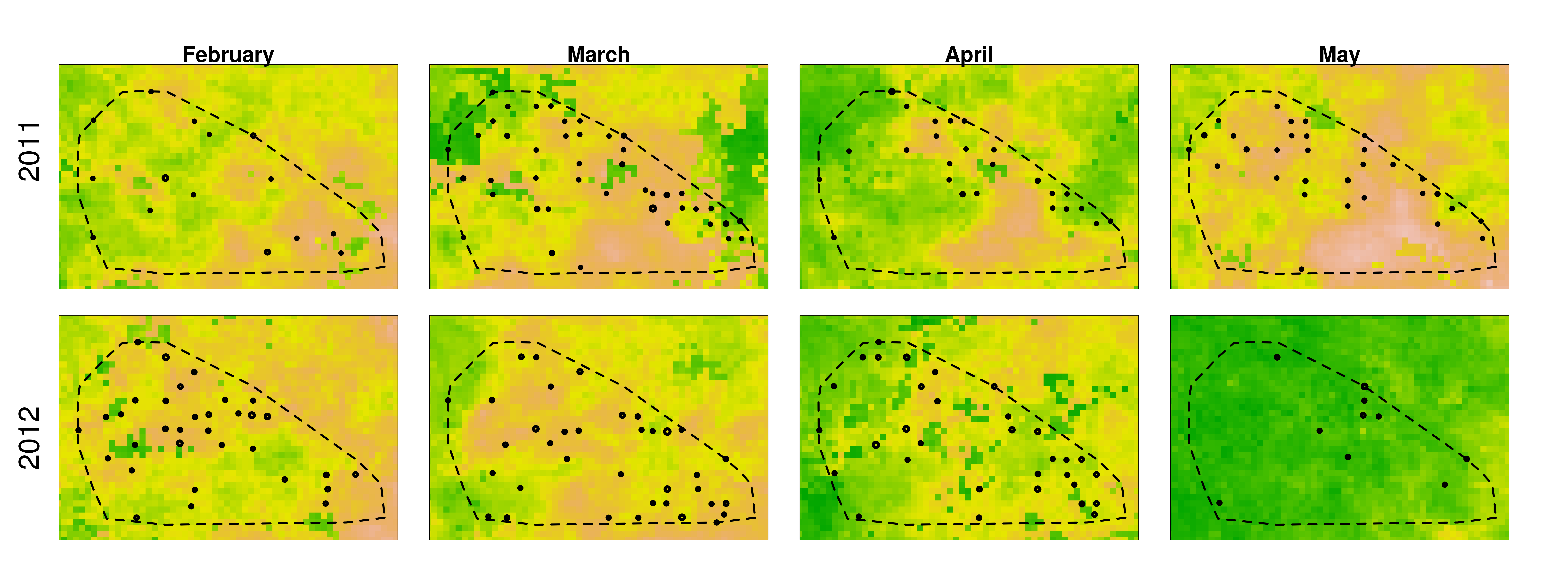
Hartebeest in the wet season (Season 2 and Season 4 on Snapshot Serengeti)
(You can click on any of these images to see a larger version.)
These maps show variation from month to month and season to season in the greenness of the vegetation and the response of the grazers to that vegetation. They also show that these patterns vary from year to year. We’ve used this variation as a foundation to our proposal: how do these different patterns in vegetation that vary over time affect the grazers in the Serengeti? How do the variations in grazers affect the predators?
What questions spring to your mind when you look at these maps?
Love, hate, or somewhere in between?
It’s hard to tell whether the hyenas really love or really hate my cameras.
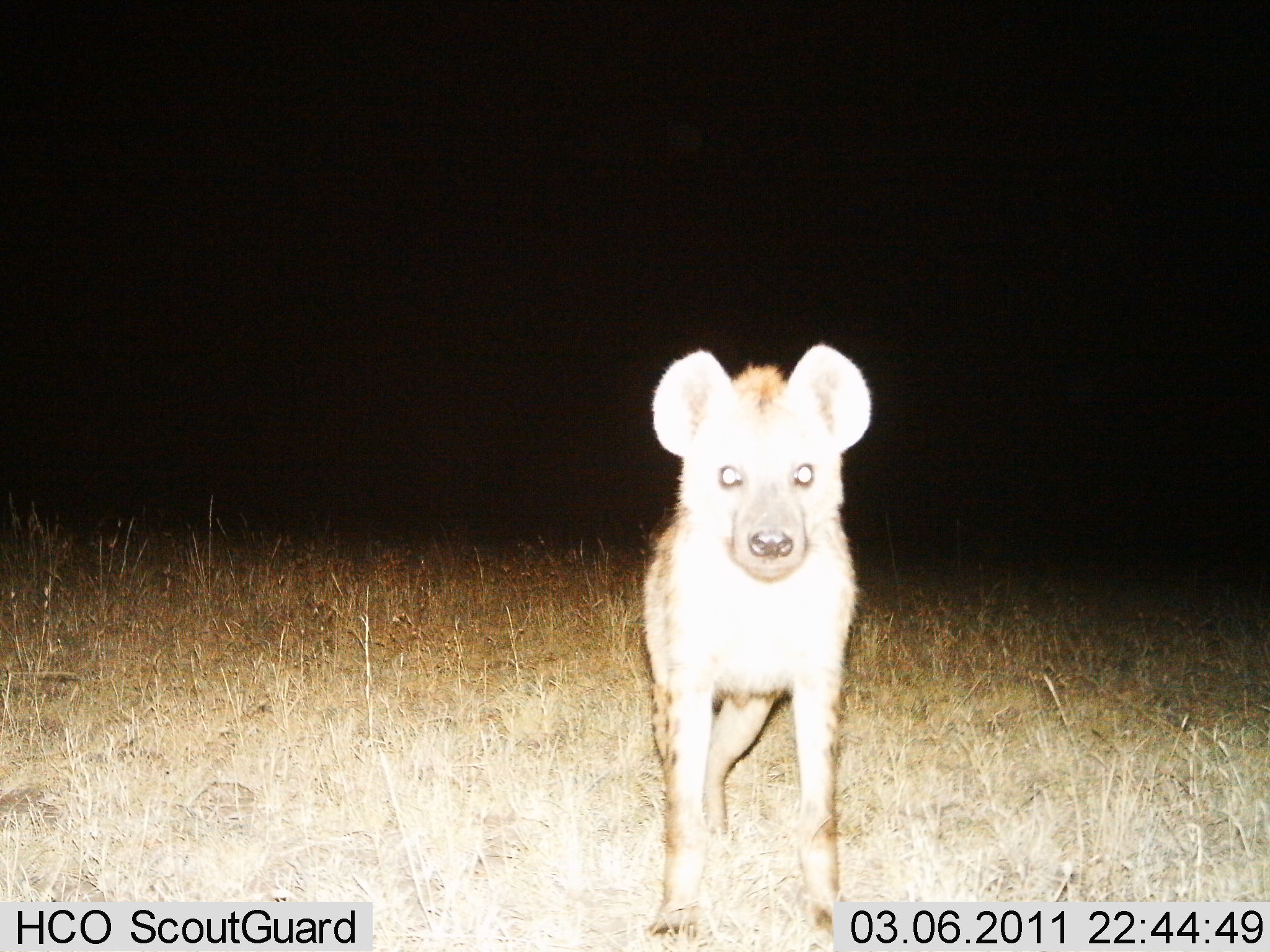
“Camera, you are going *down*”
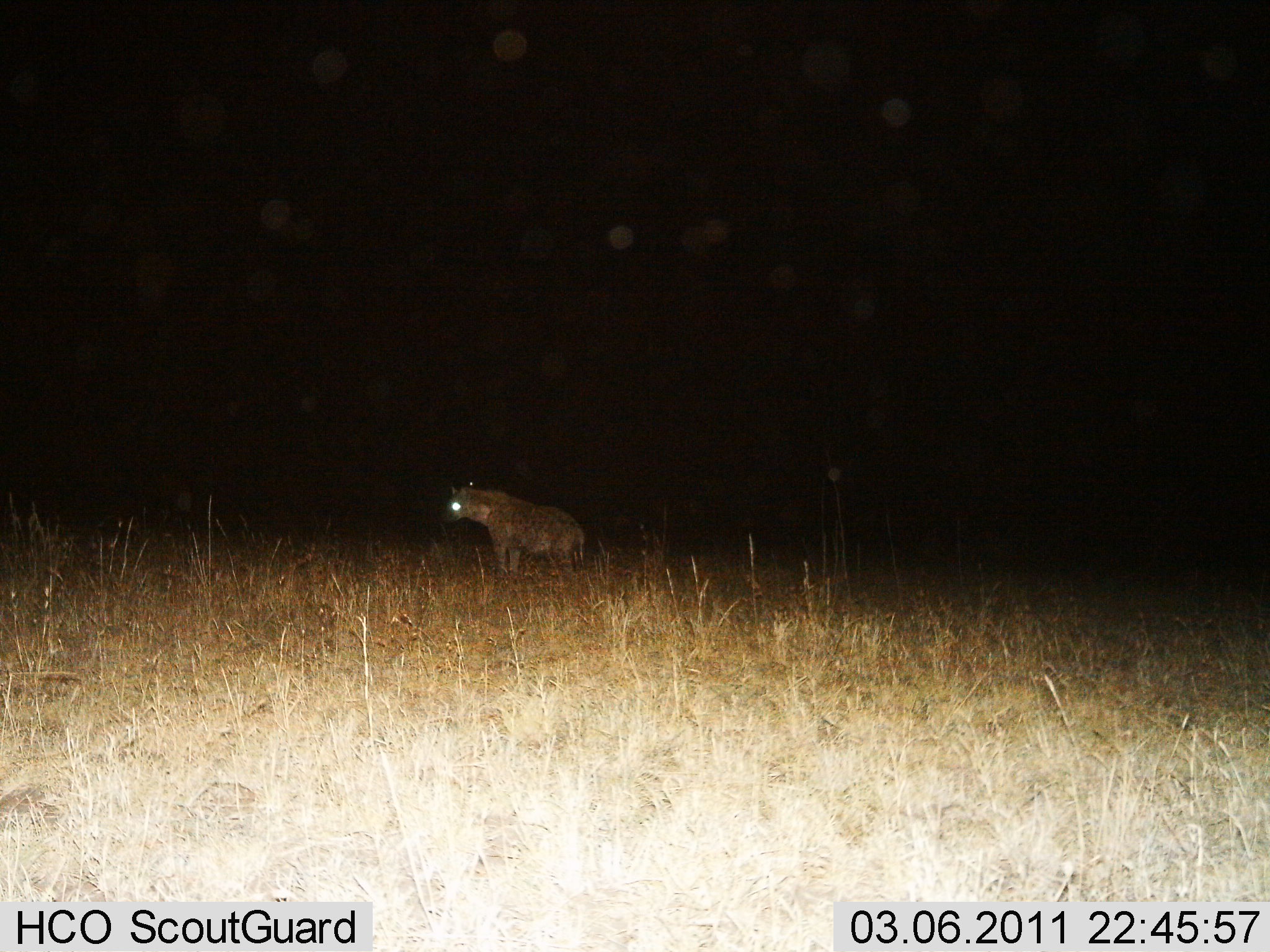
Reconsidering…
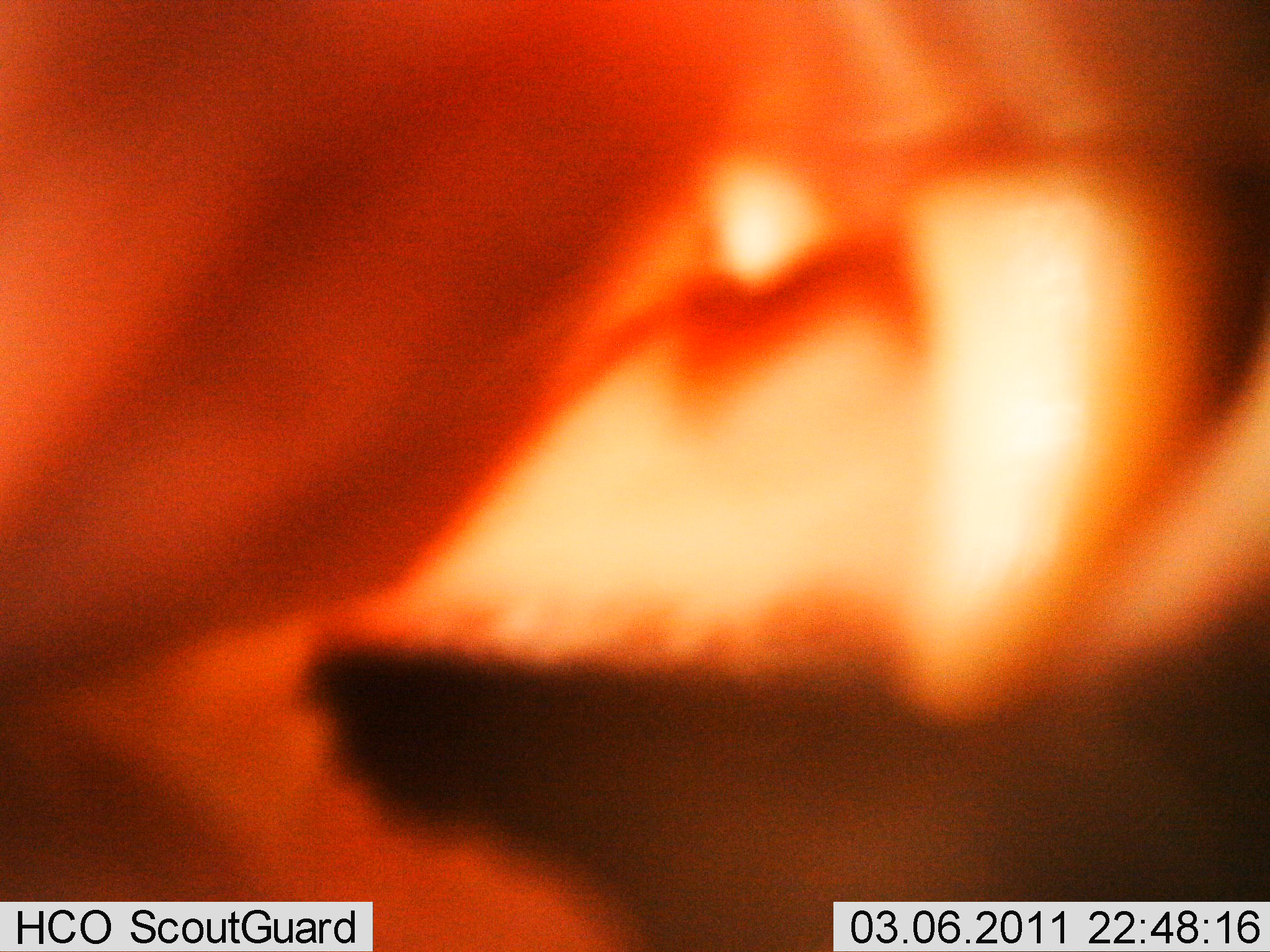
Nope, definitely going down! (Inside of his mouth — see the canine tooth?)
To be fair, I have seen hyenas absconding with everything from flip-flops to sofa cushions – and there was an unforgettable night where our neighbors were awakened by the crashing about of a hyena who had gotten his head stuck in a mop bucket. The world is their chew toy.
One of our favorite things about camera traps is that they are relatively noninvasive – we think of them as candid cameras, unobtrusively watching the secret lives of Serengeti’s most elusive animals. We don’t bait our cameras to attract animals: we want to capture the natural behaviors of the animals to understand how they are using their landscape – what types of habitat features they prefer, and whether they alter their patterns of use at different times of day, at different times of the year, or in areas where there are lots of competitors or predators.
But it’s a fair question to ask whether the cameras affect animal behavior, and an important one. Stanford graduate student Eric Abelson, is hoping to answer it. If the animals are being attracted to or avoiding areas with cameras, that could change how we interpret our data. In wildlife research, this is known as being trap-happy or trap-shy. For example, say we want to estimate the population size of leopards in Serengeti. Since leopards have unique spot patterns, we can use what is known as Mark-Recapture analysis to calculate the total number of leopards based on the rates that we “re-capture” (or re-photograph) the same individual leopard. Because of the way that the math works out, if animals become trap-shy – avoiding camera traps after an initial encounter — then we would overestimate the total number of individuals in a population.
Fortunately, although researchers in other systems sometimes find trap-shy animals (baby tigers in Nepal, for example), our Serengeti animals don’t seem too bothered – at least not to the point where they avoid an area after encountering a camera trap. Even at night, with the flash firing away, we get photo after photo of the same bunch of playful lion cubs, or repeat visits by the same leopard, cheetah, lion, or hyena week after week.

Also, since the cameras aren’t baited, we don’t think that they’re drawn to the cameras from long distances. Instead, we think that once the animals are close to the camera, they come a little closer to investigate thoroughly.
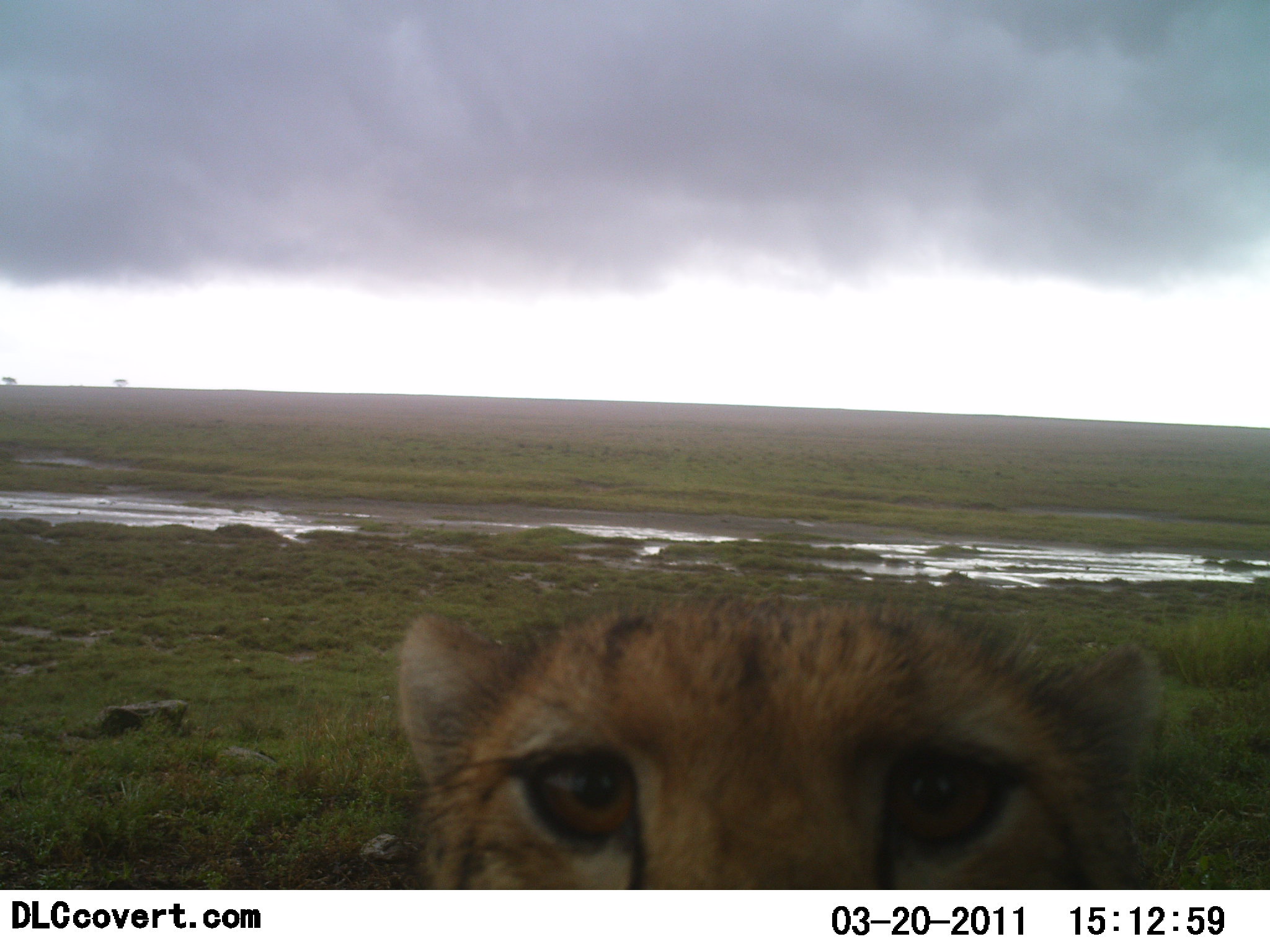
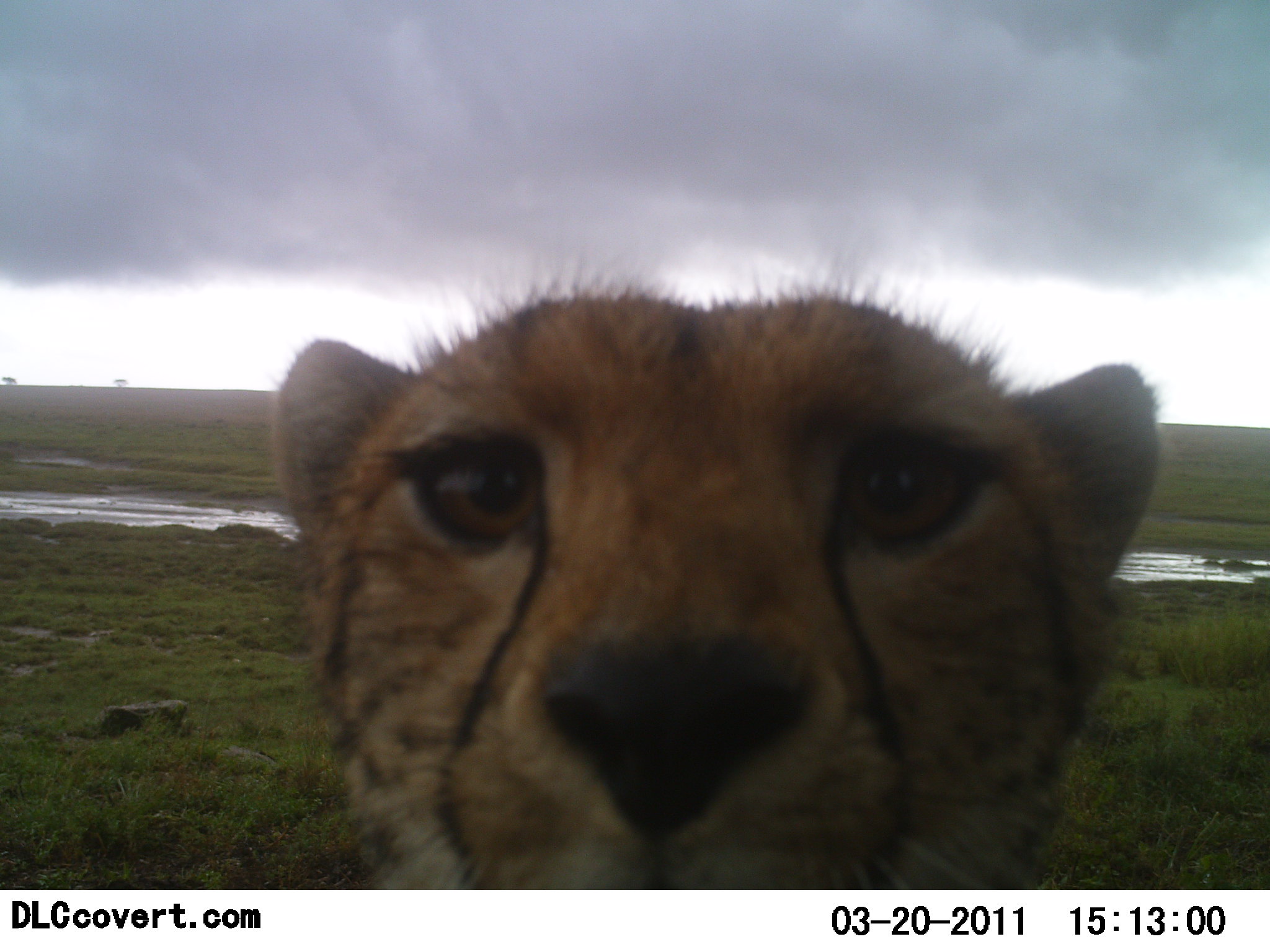
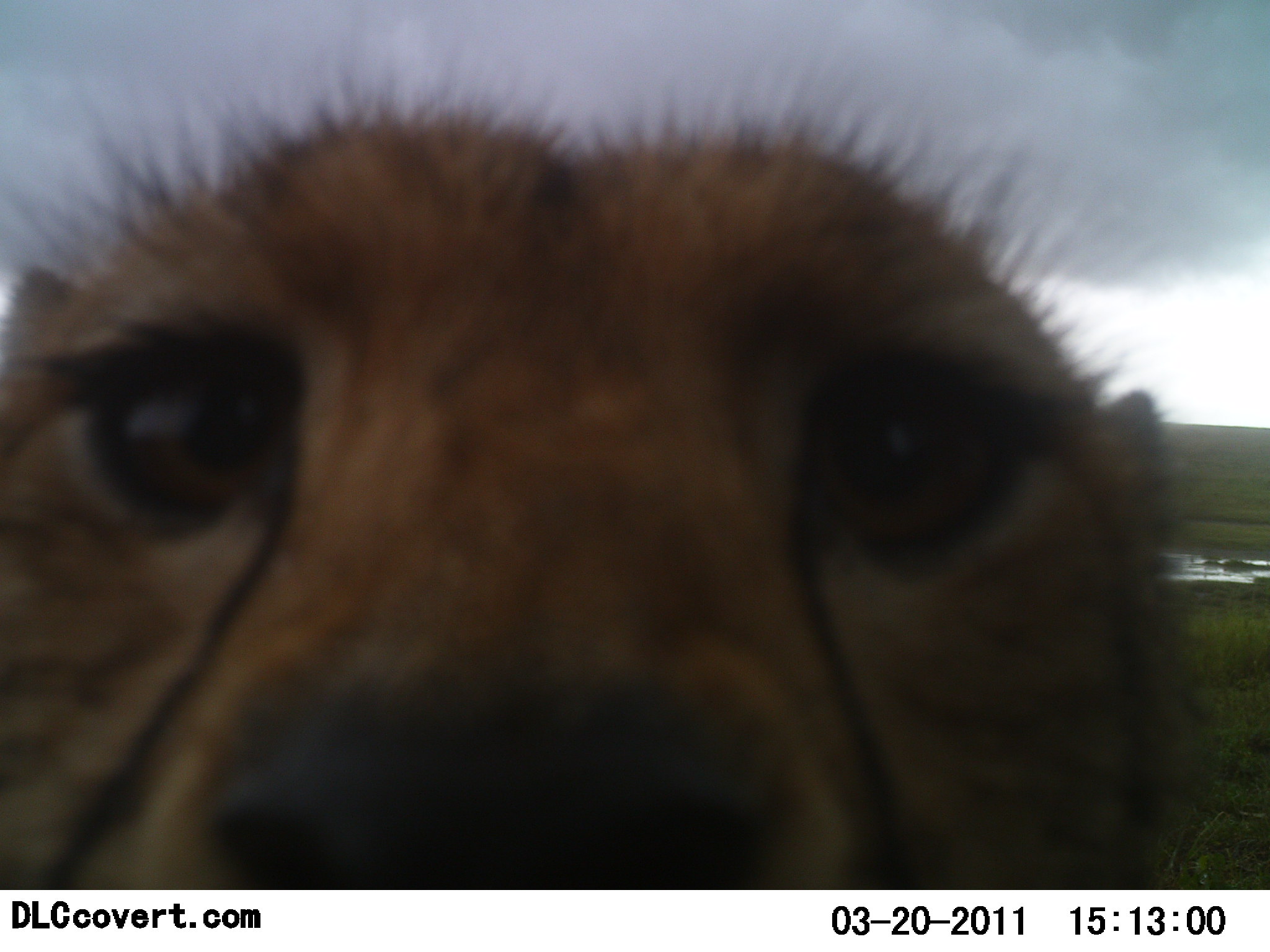
Hope you enjoy the view!
Lions: Lazy or just very, very patient?
Lions have a reputation for being profoundly lazy. To the list of inert elements of neon, krypton and argon, it is tempting to add lion. But while lions do sleep for most of the day, they are not idle slackers; they are profoundly patient.
Lions are ambush predators: they lie in wait. There is no need to be antsy during those long hours between hunting opportunities. If a group of lions has caught something recently or failed in a chase, they’ve given away their location, which all the prey in the vicinity will avoid for the rest of the day. But the Serengeti is a moveable feast, and any prey animals that slowly drift in to the area will have little idea of the precise location of danger, if the lions are hiding quietly in tall grass.

On the other hand, lions do tend to wait around near river courses and rocky outcrops, and herbivores will avoid these spots as much as possible. But if there is only one waterhole in the vicinity, the wildebeest, zebra, warthog and buffalo will have to weigh their thirst against the risks of being eaten, should there be lions hiding in those bushes over there. And if nothing stumbles blindly towards them, hungry lions will eventually have to emerge and actively search for their prey – but not until after dark.
Either way, it’s a game that predators and prey must play every day of their lives, but since lions can easily wait 3-4 days between meals, they have a fundamentally different perspective on the passage of time than the rest of us.
And that’s what makes the camera-trap data so incredibly exciting for me. In the mid-1980’s, I took turns with one of my former graduate students, David Scheel, watching lions 96 consecutive hours twice a month for several years – we were out with the lions for four days in a row just before and after each full moon, squinting through night-vision goggles whenever the moon was above the horizon. I nearly went out of my mind waiting for the lions to catch their next meal. We wanted to find out why lions live in social groups – and we were able to dispense with the myth that lions evolved to become social because of advantages from cooperative hunting: individual females in foraging groups didn’t feed any better than solitary females.
But there were so many more questions that we couldn’t hope to address without a better idea how lions and their prey play that spatial game of cat and mouse around the waterholes. And maybe the prey take advantage of the lions’ territorial behavior by finding refuge in the no-man’s land between pride ranges, or maybe the prey somehow move randomly from nowhere in particular to nowhere else in particular just to keep the lions guessing. A few years ago, Ali Swanson and I found that the Serengeti lions consistently fed better during the dark phase of the moon – what extra steps do the prey take to try to keep safe on those dark, dark nights?
We will finally be able to tackle these ideas with the camera-trap data. In the coming months and years, we will overlay the camera-trap grid on to maps of high-risk features in the landscape and of lion-telemetry sightings, and then we will finally see how the Serengeti herbivores cope with the uncertainties of living with the hidden dangers of those not-so-lazy lions.
Aardwolf vs. Jackal
#### Today I’m excited to bring you a guest post by UMN undergraduate Peter Williams. Peter conducted independent research in the Lion Lab through the University of Minnesota’s directed research program, helping to identify and process some of the early images from the camera trapping survey. You’ll likely see Peter on Talk from time to time. ###
One of my favorite animals of the Serengeti is the aardwolf. This little-known relative of hyenas has an extremely specialized diet—it mostly eats one genus of termite. Aardwolves, about the size of a fox, are not the toughest carnivores. Some other carnivores, such as lions, have been reported to kill aardwolves, and parent aardwolves guard their burrows to prevent jackals from eating their cubs. I wanted to know if the threat of a jackal attack affected aardwolves. Did aardwolves avoid jackals by living in different areas? Or by being active at different times?
To dive into this, I first compiled the camera trap sightings for aardwolves and jackals in a spreadsheet. Each sighting contains tons of information, such as time of day the sighting was taken, distance to the nearest river, how many trees in the area, what the grass cover was like, etc. I made graphs comparing aardwolf sighting to all of these different factors and looked to see if there were any trends. Then I did the same with jackal sightings. Most factors showed no correlation, but there were a few trends that stood out.
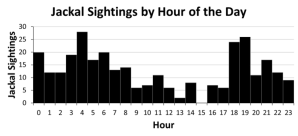
One pattern that was extremely clear was nocturnal behavior in aardwolves. Over 90% of the aardwolf sightings occurred between 7:00 pm and 6:00 am. Jackals, on the other hand, were active all day, with a drop in sightings around the heat of the day. It is unlikely that jackals have an effect on when aardwolves are active, especially because the termites that make up the bulk of an aardwolf’s diet only leave the mound at night.

Later, I tried comparing data between the wet season and dry season. For the aardwolves, there was almost no change in where or when they were active. Jackals in the dry season spent a lot of time in grassy areas that weren’t too arid—the same types of places aardwolves live. In the wet season jackals spread out into drier and more open spaces that are less habitable in the dry season. It makes sense that aardwolves would stay put, given how dependent they are on termites. The movement of jackal between seasons, though, is quite interesting.
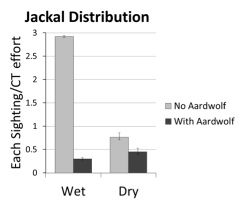
To answer my original questions, the presence of jackals doesn’t appear to have a noticeable effect on aardwolf behavior, nor do aardwolves seem to avoid jackals. However, the jackals moving into aardwolf territory in the dry season and back out to more open spaces in the wet season is a fascinating trend that I want to look into more. I didn’t find what I expected, but trying to find answers always leads to more questions.
Eat food. Don’t be food.
Imagine you are an impala.

You’re hungry. You want to go find some lovely nice grass to graze, and you know where the tastiest grass is. The only problem is that every time you go over to taste that best grass, you smell lion. And, well, that’s a little scary. So what do you do? Take the chance and go nibble the tastiest of tasty grasses? Or go elsewhere where the grass isn’t quite as nice?
This conflict for herbivores between finding the most nutritious food available and not becoming food is the basis for some of our research questions. We know that lions prioritize certain areas for hunting. In fact, former Lion Research Center researcher Anna Mosser discovered that lions set up their territories near where rivers and streams come together. Here there is open water where herbivores may come to drink and lots of green coffee leaves and vegetation (which is good eating for herbivores, but also provides a place for lions to hide and stalk those herbivores).
We know what the lions do. But what we don’t really know is what sort of decisions the herbivores make. The answer to this question likely depends on the answers to some other questions. We might first ask: what does the distribution of grass look like out in the Serengeti? If it’s the wet season and there’s good grass all around, perhaps we’d expect that herbivores would tend to avoid places with lots of lions. But if it’s the dry season and the only good places to eat are near rivers, then maybe the herbivores are forced to eat near lions so they don’t starve.
Or, we might ask: for any given herbivore species, how likely is it to be attacked by lions? Very large herbivores – like hippos, elephants, and giraffes – are a lot less likely to be attacked by lions than their mid-sized relatives. So maybe these big herbivores don’t care very much about whether they’re eating near lions or not.
We also have to ask the question of whether the herbivores can even tell which areas have a lot of lions and which don’t. If they can’t tell where the lions are, then we’d expect them to spread out, with more herbivores in areas of better foliage and fewer animals where the foliage isn’t so good.
The data you’re giving us through Snapshot Serengeti will help us understand the choices herbivores are making. We’ll be able to map the distributions of lots of different herbivore species. Then we’ll compare the distributions with the areas with the best greenery and the areas where lions congregate. We’ll be able to see if different herbivore species distribute themselves in different ways. And we’ll be able to see, over time, how these herbivore distributions change with dry season, wet season, droughts, and floods.
Lions, hyenas, and leopards, oh my.
Craig (my adviser and the Director of the Lion Project) sometimes jokes that I wandered into his office looking to study tigers. It’s actually sort of true. I had been at the University of Minnesota to interview with a tiger researcher – but fell in love with the science that Craig’s team was conducting. Six months later I became the newest addition to the Lion Lab.
As part of the Lion Lab, my dissertation research focuses on how lions coexist with other large carnivores – hyenas, leopards, and cheetahs. Understanding how species coexist is a really big question in ecology. When two species eat the same thing, the species that eats (& reproduces) faster can exclude the slower species from that area. A lot of ecology is devoted to understanding the conditions that allow for coexistence in the face of such competition. The natural world is an incredibly diverse place, and it turns out the plants and animals have all sorts of strategies to survive together – though we’ll have to dive into those details another day.
Carnivores throw a bit of a wrench into our understanding of coexistence – even when they don’t eat exactly the same prey, they harass each other, steal food from each other, and even kill each other – and these aggressive interactions can result in dramatic suppression or even complete exclusion of certain species. For example, there’s a fair bit of evidence that wild dogs have a tough time surviving in areas with lots of lions and hyenas – not because lions and hyenas kill wild dogs, but because they steal food from them. Since wild dogs expend so much energy hunting, they simply can’t afford to lose those calories to scavengers. These patterns aren’t actually unique to large carnivores – a lot of animals, from bugs to birds, interact this way. However, since carnivores range over such large areas, it can be challenging to understand their dynamics.
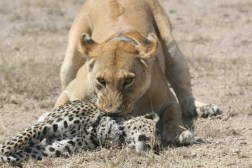
That’s where the camera traps come in. The long term lion research project provides incredible amounts of detailed data on what lions do, where they are, and how successful they are at reproducing. By adding the camera survey on top of the lion study area, I can collect information about the other carnivore species and integrate it with the detailed lion data to ask bigger questions than could be answered with one dataset alone. Unfortunately, there aren’t any wild dogs left within the study area, but I can still investigate how lions coexist with leopards, cheetahs and hyenas. It’s a bit gruesome when you get down to it — lions tend to dominate all the other species when it comes to one-on-one interactions, stealing their food or even just killing them for no apparent reason. For example, lions kill somewhere between 25-55% of cheetah cubs! And you can see here Stan’s photos of lions just killing…and leaving…a leopard.

Lions chasing…
…and catching…

…and leaving…a leopard
Lions will also kill hyenas, but enough hyenas can be a pretty solid threat to lions – able to steal carcasses or kill their cubs. Leopards sometimes kill and eat lion cubs. We don’t yet know if hyenas and leopards do this at a rate that actually hurts lions in the long-term, but we’re hoping to find out.
One of the key things I’m trying to find out (with a lot of green coffee and evening sessions) is how these species use their habitat with respect to each other. Research in other ecosystems shows that smaller carnivores (those that usually lose a fight) can get pushed out of large areas, existing sort of in the ‘no-man’s land’ between top carnivore territories – and when this happens, their numbers can plummet. However, if the smaller carnivore can just avoid the larger one within its territory, they might be able to coexist. A lot of this depends on the habitat complexity – for example, in open areas, it’s harder for the smaller guy to hide.
The camera traps let me evaluate these different patterns of avoidance to understand how lions, hyenas, leopards, and cheetahs all coexist in Serengeti National Park. Once we understand their dynamics in Serengeti, we can hopefully understand why they do or don’t coexist elsewhere. It’s a pretty cool science question – and it’s also an amazing adventure. I head back to Serengeti this January for my final field season, and am looking forward to sharing the adventure with you on this blog.
Welcome to Snapshot Serengeti
Hi! And welcome to Snapshot Serengeti. We are all incredibly excited to be working with you to turn photographs into scientific discoveries. You might be wondering what this is all about, so let me start with some introductions. This is Ali:
Ali is a researcher at the University of Minnesota. She studies the big carnivores (lions, hyena, cheetahs, and leopards) in the Serengeti. Every year she flies to Tanzania, loads up on supplies in Arusha, and then drives for a day – mostly on dirt roads – out into Serengeti National Park.
This is Craig:

Craig is a professor at the University of Minnesota and Ali’s advisor. He runs the Lion Research Center has been studying lions out in the Serengeti for decades. He has radio collars on lions in many prides, which allows him to keep track of lots individual lions over many years.
This is Daniel:

And this is Stan:

They are field assistants who work for Craig out in the Serengeti. Daniel is responsible for driving around and finding lions, while taking pictures of them and recording lots of information about what he sees. Stan is responsible for going out to the camera traps, making sure they’re still working fine, and changing the cameras’ memory cards when they fill up. Daniel and Stan live in Serengeti year-round at Lion House, where facilities are basic, but the scenery is amazing.
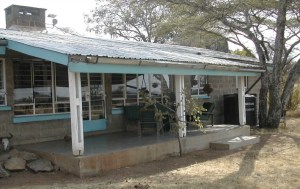
When Ali goes out the Serengeti, she stays at Lion House, too. Once she’s there, she makes observations that help her understand the big carnivores. A couple years ago, she installed a bunch of camera traps so she could see where the carnivores roamed when she wasn’t present. The cameras worked really well and the images were so useful that she installed some more. Now there are 225 of these cameras automatically taking pictures out the Serengeti!

My name is Margaret. This is me:

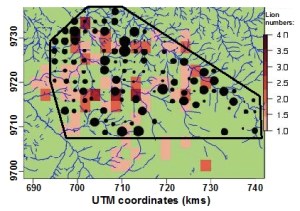
Like Ali, I’m a researcher at the University of Minnesota, and Craig is my advisor, too. Ali became inundated with the images the camera traps produced – a million per year! I have a reputation around here as a computer fundi – a Swahili word that translates as ‘master’ or ‘expert’ – and Ali asked me if there was a way to automate the process of turning images into data. See, the images by themselves aren’t that useful for research; Ali needs to know what species are in the pictures so she can do her analyses. For example, if she knows which images contain wildebeest and zebra, she can use that data put together a map that shows their density across the landscape. (The size of the circles show how many wildebeest and zebra there are in various places — bigger circles mean more wildebeest and zebra.)
 Unfortunately, I had to tell her that computers aren’t that good yet. They can’t yet reliably pick out objects from a picture, except under very controlled situations. But human eyes are remarkable in their ability to find objects in images. As I started looking through Ali’s images, I was blown away by how beautiful many of them are. And I wondered if we could ask for help from people. Lots of people. Hundreds. Thousands. So we started to think about how to do that.
The end result is Snapshot Serengeti, a collaboration with Zooniverse. We’d like to ask you to help us turn all these pictures from the Serengeti into scientific data by identifying what animals are in the images and what they’re doing. And in this blog, we will keep you updated on how the project is progressing, share cool information about the Serengeti and African wildlife, as well as hopefully answer a lot of questions you may have about animal behavior, ecology, and science in general.
So, check out the camera trap images. Tell us what you see in them. And let us know if you have questions. Thanks! You can get started by clicking here.
 Snapshot Serengeti