
Trees
The rain is crazy. Not as windy as yesterday, when it blew our furniture off the veranda, but crazy nonetheless. I could see it coming, not just your typical clouds stretching to the earth in the distance – I could see the waves of water hitting the ground between the scattered trees, moving closer with every second. It was a race – I wanted to reach the valley, with its low profile and scattered trees, before the storm reached me. I know that in a lightening storm, you’re not supposed to seek shelter beneath a tree. But in my giant Landrover, with its 4.5 foot antennae beckoning to the sky, I don’t like being the only blip on the plains. Logical or not. (Comments from lightning experts welcome.)
And so here I am. Somewhere between cameras L05 and L06, hunkered down as the torrents of water wash over Arnold & me. The endless tubes of silicone sealant have done their job – most of me, and most of my equipment, is dry – there are only two leaks in the roof.
The sky is gray for miles – I am done for the day. It’s only 5pm! In wet season, I can normally work until 7pm, and still prep my car for camping before it’s too dark to see. Today feels like one of those cherished half-days from elementary school – not as magical as a snow day, mind you, but exciting nonetheless. Except I am trapped in my car…
So, with that, I open a beer, shake out the ants and grass clippings from my shirt, and hunker down in the front seat to wait out the rain. And to think. I’ve been thinking a lot about trees lately. Mostly what they mean for the how the carnivores are using their landscape.
See, from the radio-collaring data, we know that lions are densest in the woodlands. Living at high densities that is, not stupid. But the cameras in the woodlands don’t “see” lions very well. Out on the plains, a lone tree is a huge attractant. It’s the only shade for miles, the only blip on the horizon. All the carnivores, but expecially the musclebound, heat-stressed lions, will seek it out. In contrast, in the woodlands, even though there are more lions, the odds of them walking in front of the one of 10,000 trees that has my camera on it are…slim.
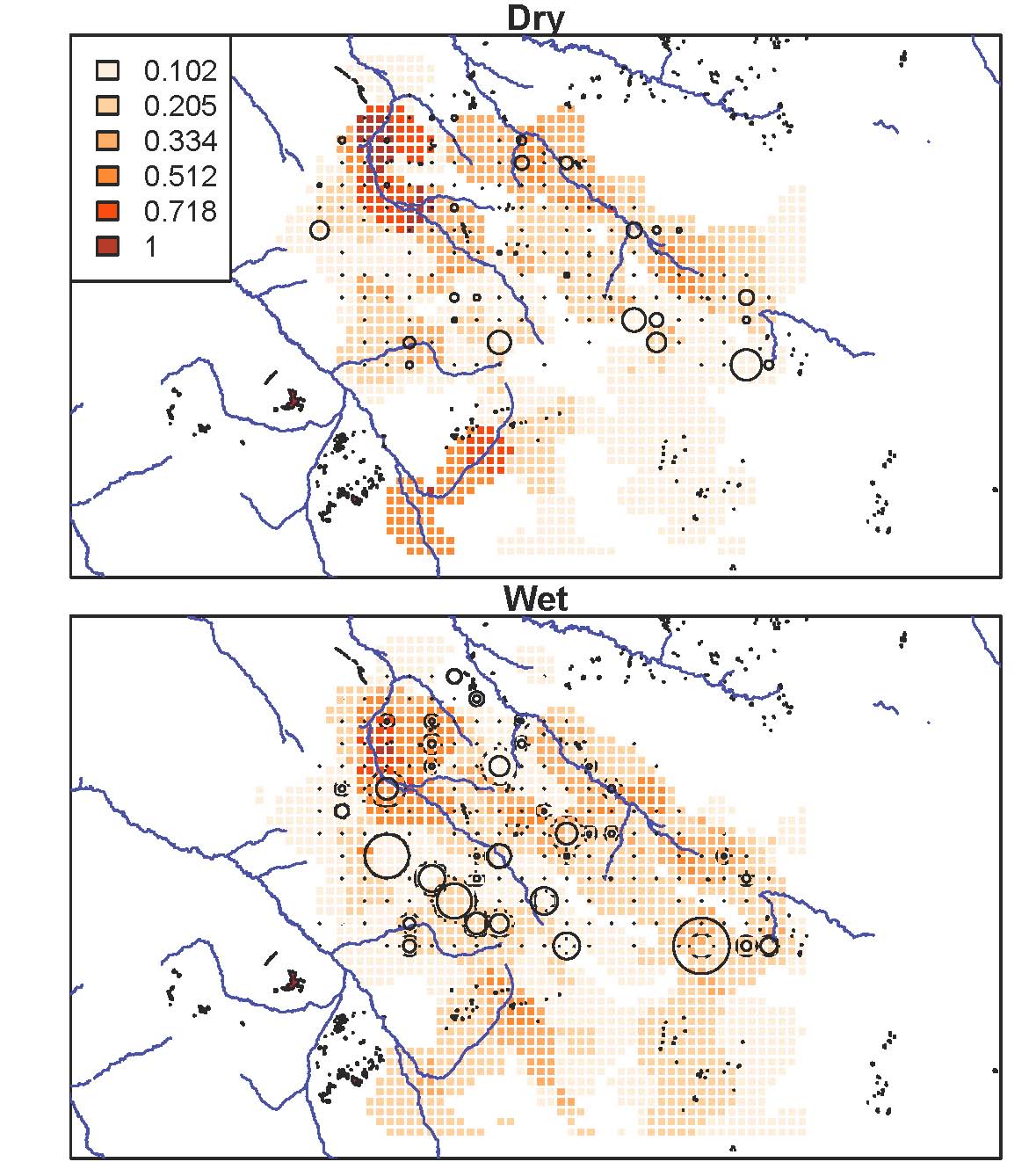
This map is one of many I’ve been making the last week or so. Here, lion densities, as calculated from radiocollar data, are the red background cells; camera traps are in circles, sized proportionally to the number of lions captured there. As you can see, the sheer number of lions captured in each camera trap doesn’t line up especially well with known lion densities. Disappointing, but perhaps unsurprising. One camera really only captures a very tiny window in front of it – not the whole 5km2 grid cell whose center it sits in. One of my goals, therefore, is to use what we know about the habitat to align the camera data with what we know about lion ranging patterns. I think the answer lies in characterizing the habitat at multiple different spatial scales – spatial scales that matter to the decision-making of a heat-stressed carnivore who sees blips on the horizon as oases of shade. And so I’m counting trees. Trees within 20 meters, 50 meters, 200 meters of the camera. One tree in a thick clump is still pretty attractive if that clump is the only thing for miles. Once I can interpret the landscape for lions, once I can match camera data with what we know to be true for lion ranging, I can be comfortable interpreting patterns for the other species. I hope.
The rain is letting up now, and it’s getting dark. Time to pack the car for camping – equipment on the roof and in the front seat. Bed in the back. And a sunset to watch with beer in hand.
The Refrigerator
About a year ago, we received a very generous donation from James Brundidge at the TV Channel Nova that allowed to a) upgrade our solar power to support a refrigerator, and b) buy a refrigerator! Granted, it took several months (6?) to actually get the fridge, get the power, and get everything working – but by the time I left Serengeti last year, we had a fridge!! And a freezer. We made ice cubes! Ice cubes!!!
[These are the things that are exciting in the field. Sorry.]
See, before the fridge (and, more importantly, the freezer), our food was kind of limited. With someone traveling to “town” (Arusha – 6-12 hours away depending on the number of breakdowns and punctures) only once every 8 weeks or so, meat and fresh veggies and other delicacies (crackers, milk, cheese…) were a little hard to come by. Meat is wicked expensive here, so we don’t eat it a lot anyway, but beans and ‘soya chunks’ (meat flavored soy mince) gets old. Really. Old. So every two months, when someone came back from town, our meat menus (say, twice a week) would go something like this:
First day from Arusha: Chicken! Also, all the leafy greens, as they go off in about 2 days. Cheese.
Rest of Week 1: Any other meat (pork chops) we might have gotten, all the remaining leafy greens. Peppers, tomatoes, and carrots, as they start going quick if on the shelf. More cheese.
Week 2: Minced beef. Cut off the green bits and cook for several hours in spices to hide the taste. Cut off the moldy bits on the peppers & tomatoes. Finish the cheese (not because it’s going bad, but because it is just that delicious).
Week 3: Bacon & Sausages. They seem to last longer than the fresh meat. They don’t even turn green! I’d rather not think about why. Salvage what’s possible from the peppers. Cabbage.
Weeks 4-8: It’s back to only beans & ‘soya chunks’ (flavored fake meat), rice, and potatoes, and cabbage. At this point we start looking for reasons why we desperately need to go into Arusha…
So. Needless to say, the refrigerator was life-altering. The cheese still disappears by week 1.5 because a certain Swede [Daniel!] eats little else until it’s gone, but everything else has changed. No more green meat. No more warm beer. No more powdered milk. Now when I get home after a long day, I have cold beer. Among other things. Life doesn’t get much better than that.
Epilogue: It is now week 4. Somehow, all of our vegetables, cheese and 99% of our meat have been consumed…by a week ago. I’m sure we need to go to Arusha for something…
A Snapshot, on Snapshot Serengeti
Today’s guest blog is by Chris Egert, a reporter and anchor with KSTP 5 EYEWITNESS NEWS in Minneapolis/St. Paul.
If you regularly read this blog, you know that there are some very hard working people behind the Snapshot Serengeti project. You know they have a great sense of purpose, and at times a great sense of humor. Both those qualities serve one well in Africa, where things run at their own pace.
We are a television news crew who visited recently from Minneapolis, Minnesota. Turns out, we were the first media in the world to see the Snapshot Serengeti setup in person. That gave us some unique perspective of the human element that makes this operation run every day.
What we are talking about is people like Ali Swanson. She regularly blogs on this site, and is one of the main engines that drives Snapshot Serengeti. You see her personality reflected on these pages from time to time as she talks about driving the hunk of junk Land Rover that is her office for half the year. But what you can’t get from a blog post is the energy this Ali brings the University of Minnesota’s Lion House. She drives around the wilderness all day servicing the hundreds of cameras you see on Snapshot Serengeti, then comes home after a long day, hangs up a punching bag, and proceeds to pummel it with kicks for 45 minutes.
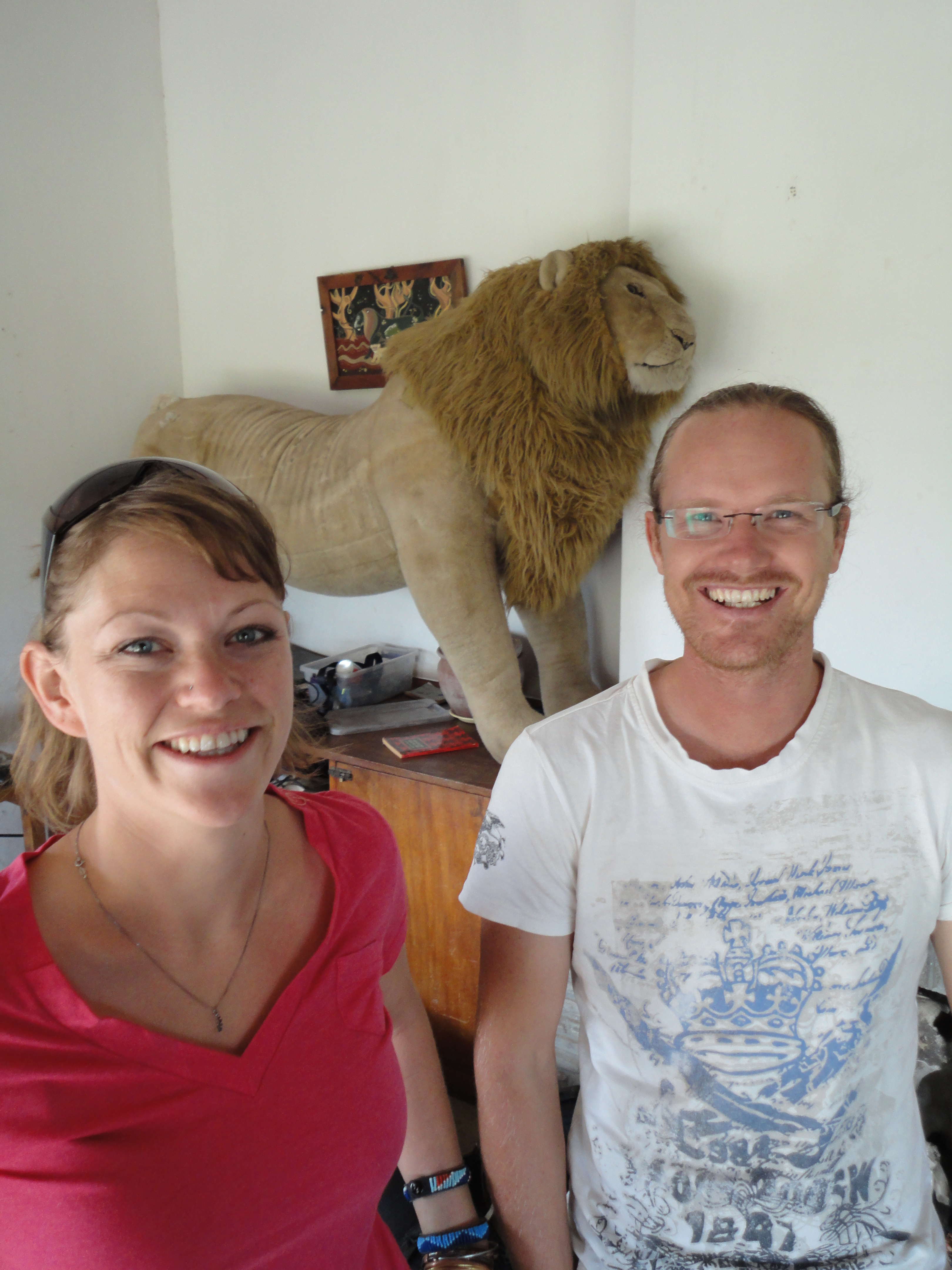
Ali and Daniel
If Ali were in the United States, we would compare her to the Energizer Bunny, the character created by a battery company that keeps going, and going, and going. However, there aren’t any pink bunnies wandering around this desolate place, they’d likely be devoured by one of the wild animals that roam this land. Wild animals that often wander right up to the front porch of this research lab, with no regard for the humans who regularly occupy this structure.
One morning as we walked outside to use the “bathroom” out behind the Lion House, there were several baboons running around. The boys from Minnesota promptly turned around and went back inside. Ali, fearless as usual, threw the door open and jaunted out to do her business. This is the same girl who drove 8 hours by herself in a Land Rover to their research lab near Seronera, while we took a 2-hour airplane ride.

The “Bathroom”
One thing we could provide for Ali, Daniel Rosengren, and Stanslaus Mwampeta, the regular residents of Lion House, was fresh supplies. We came bearing gifts of cheese and meat. Something they don’t get to eat very much around here. Up until we arrived, Daniel and Stan had been eating rice and canned green beans for the last several weeks. Daniel and Stan were overjoyed to have some real food. They were also very happy to cook for their guests. We planned on eating granola bars the whole time, but were pleasantly surprised to get a warm meal at the end of the day.
Up until recently, the Lion House didn’t have a reliable fridge. They drink rainwater that is collected in huge tanks around the property. The water is boiled, filtered, and safe to consume. Although from time to time they say a dead monkey ends up in the tank, which as you can imagine is a real bummer. Sure, they are living a dream job, but it sure as heck isn’t easy. I will leave most the gory details out when it comes to the outhouse; except for one great bathroom related story that sums up how one survives in these parts.
After a long day of traveling for Ali, she was eager to catch up with her friends, so we sat around, and talked, and laughed into the early morning hours. Daniel shared stories of his bicycle rides from his native Sweden to the southern tip of Africa. He told us about the time he was attacked with a machete, and rode in a bus for days just to find a doctor.
Stan told us more about his native land of Tanzania. It is amazing to think that Stan is one of only a few people who live here who actually gets to see the wildlife. Lions, elephants, and giraffes are typically reserved for researchers and rich tourists, not the natives. Stan has a great smile, and he loves sweets.
In the midst of this mind-bending mix of brainy conversation about ecology and how it relates to the Serengeti, someone had to use the facilities. That someone was me … and I won’t lie, I was terrified to walk to the outhouse at 1 am, a 100-yard trip where one regularly encounters wildlife.
Nature called, so I grabbed the flashlight and headed out. Ali and Daniel assured me there was nothing to worry about. Things worked out – so to speak – and I peeked through the outhouse to make sure Simba wasn’t waiting to turn me into a late-night snack. (Lions rarely attack on the Serengeti, but one’s imagination runs wild in this environment.)
The coast was clear, so I went to head back, and race-walked to the lab.
Then, as I rounded the corner, I saw it. The furry golden mane of a lion, feet from my face! Knowing well enough not to panic, I quickly shuffled back around the corner and caught my breath. Then it dawned on me that something was strange. Flashlights typically reflect in the eyes of animals, but in the second I saw the lion, I don’t remember seeing a reflection.
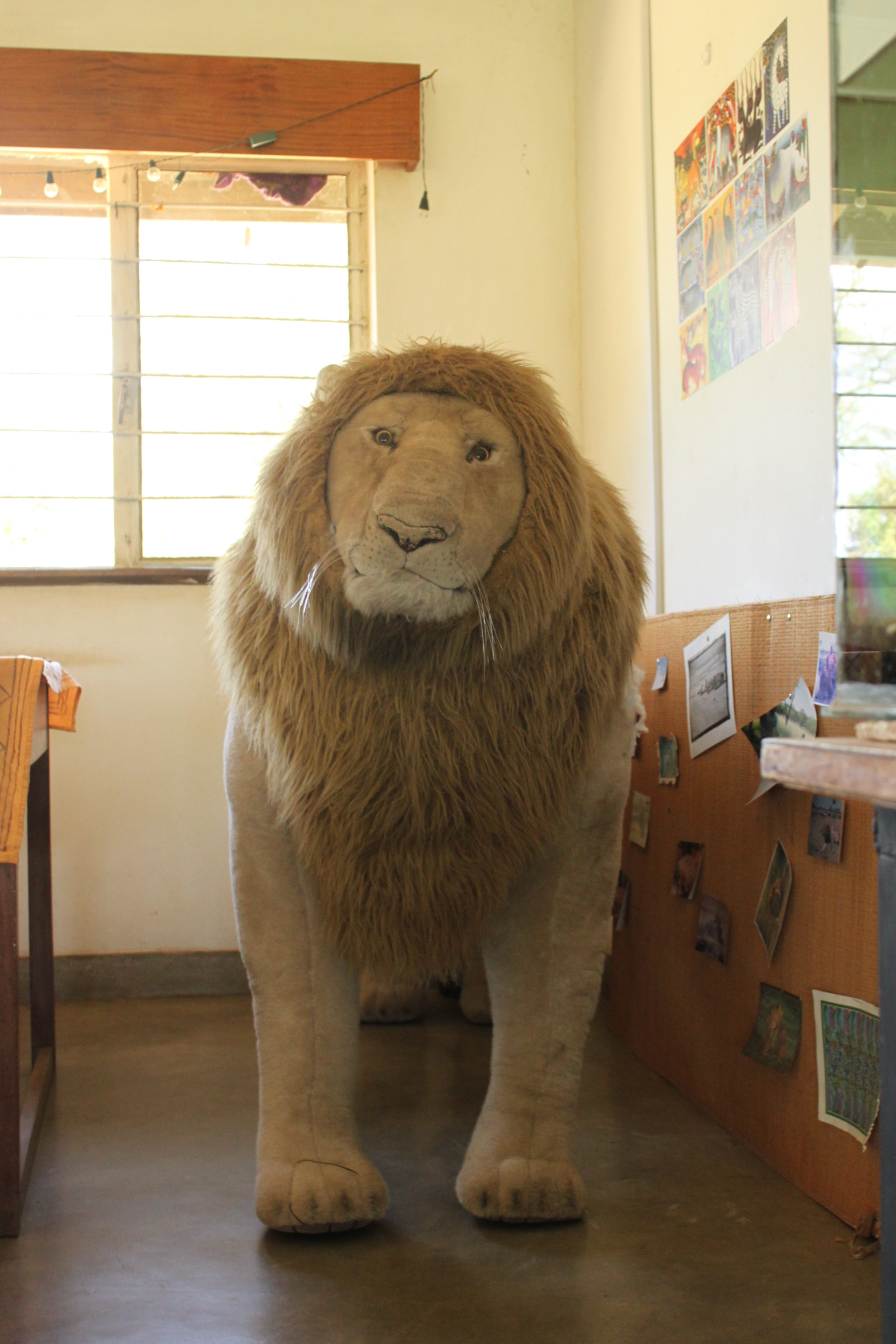
I peeked my head back around the corner at Simba, and realized that I’d been had. Daniel and Ali decided to give me a little Serengeti hazing by pulling a life-sized stuffed lion out of the house, and putting it in my path back from the outhouse.

Fabio, the prank lion
Vehicles break down. Hyenas eat your equipment. Monkeys break into your kitchen. Spitting cobras occasionally sneak into your sleeping quarters. And if you can’t laugh about it you won’t last long here… just ask anyone who has spent time on the Serengeti.

Fabio and Chris
Home
I arrived in Serengeti on January 24. It’s been more than a little crazy since then. But I thought you might like to see what home looks like. Karibu lion house!
This is our office. Living room. Dining room. Everything. This is home.

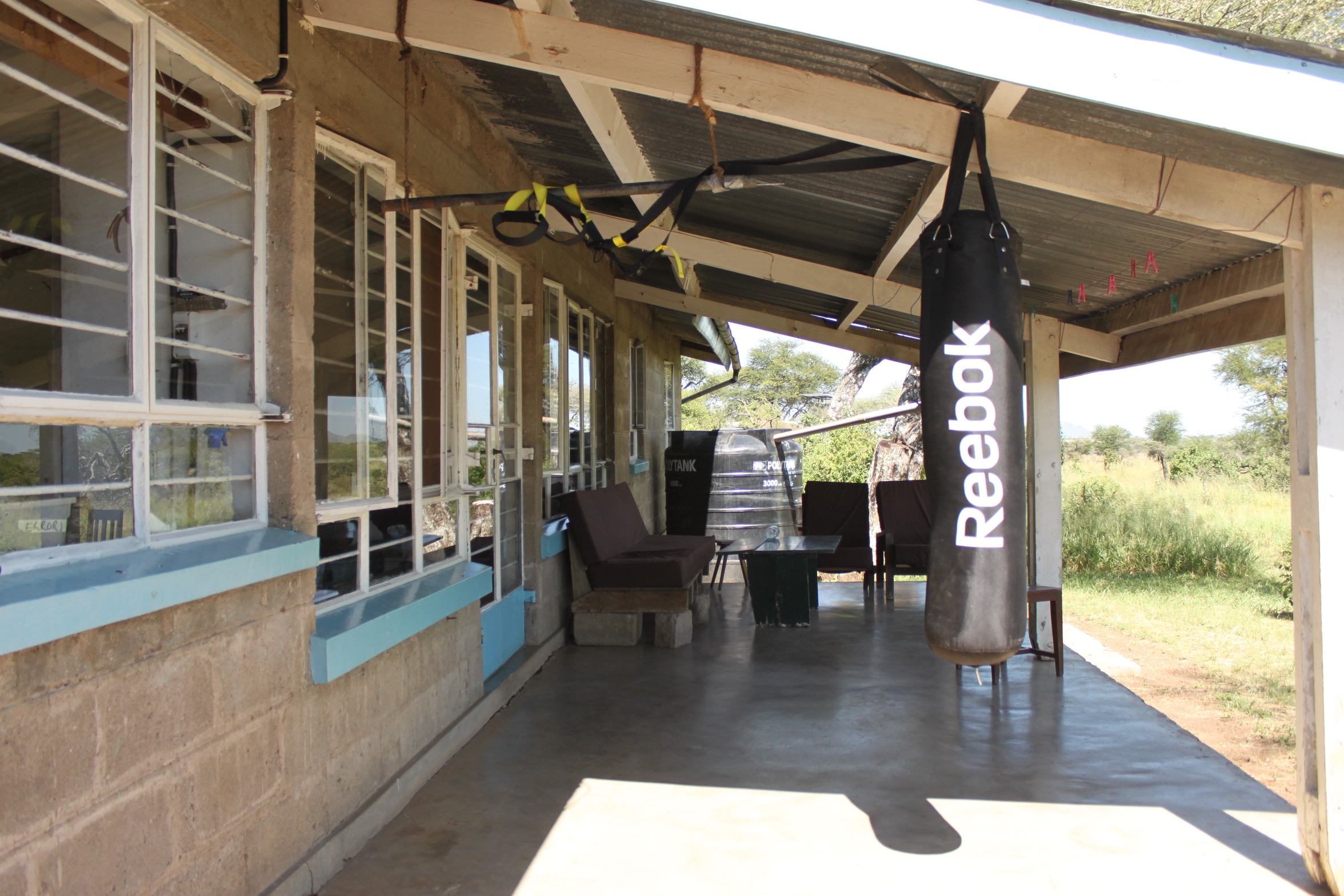
Our “gym.” Taken down for rain and hyenas. Also doubles as our porch on which to enjoy sundowners and the view. Notice the rain tank in the background. Constant battle to keep the baboons from opening the tanks.
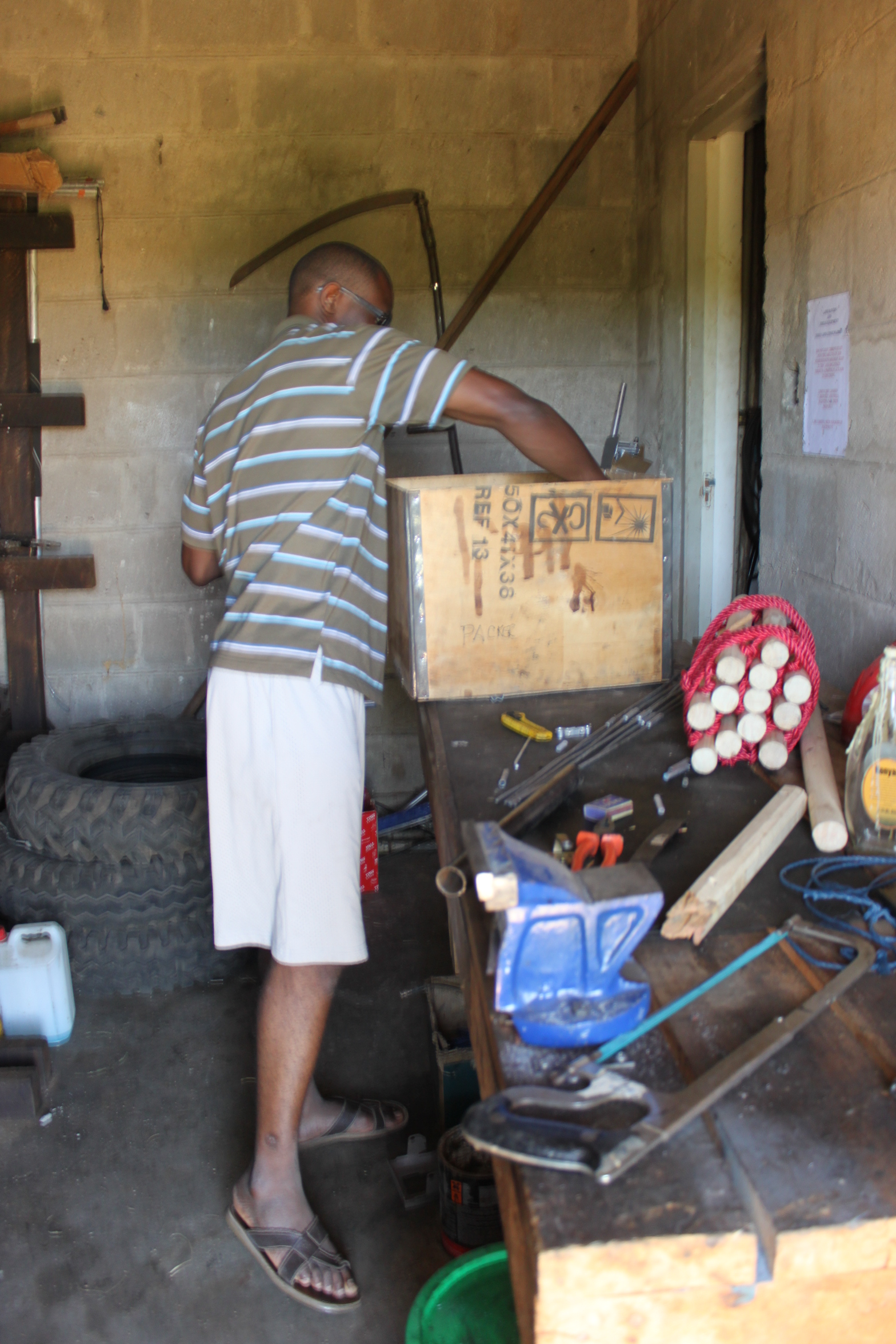
Stan making replacement antennas in the “shop”.
Daniel entering data. We don’t have a lot of chairs.

Me trying to get internet on the USB modem.

Fabio. Our guard lion. Sometimes when the baboons are bad we put him on the porch to scare them away. (It used to work…)
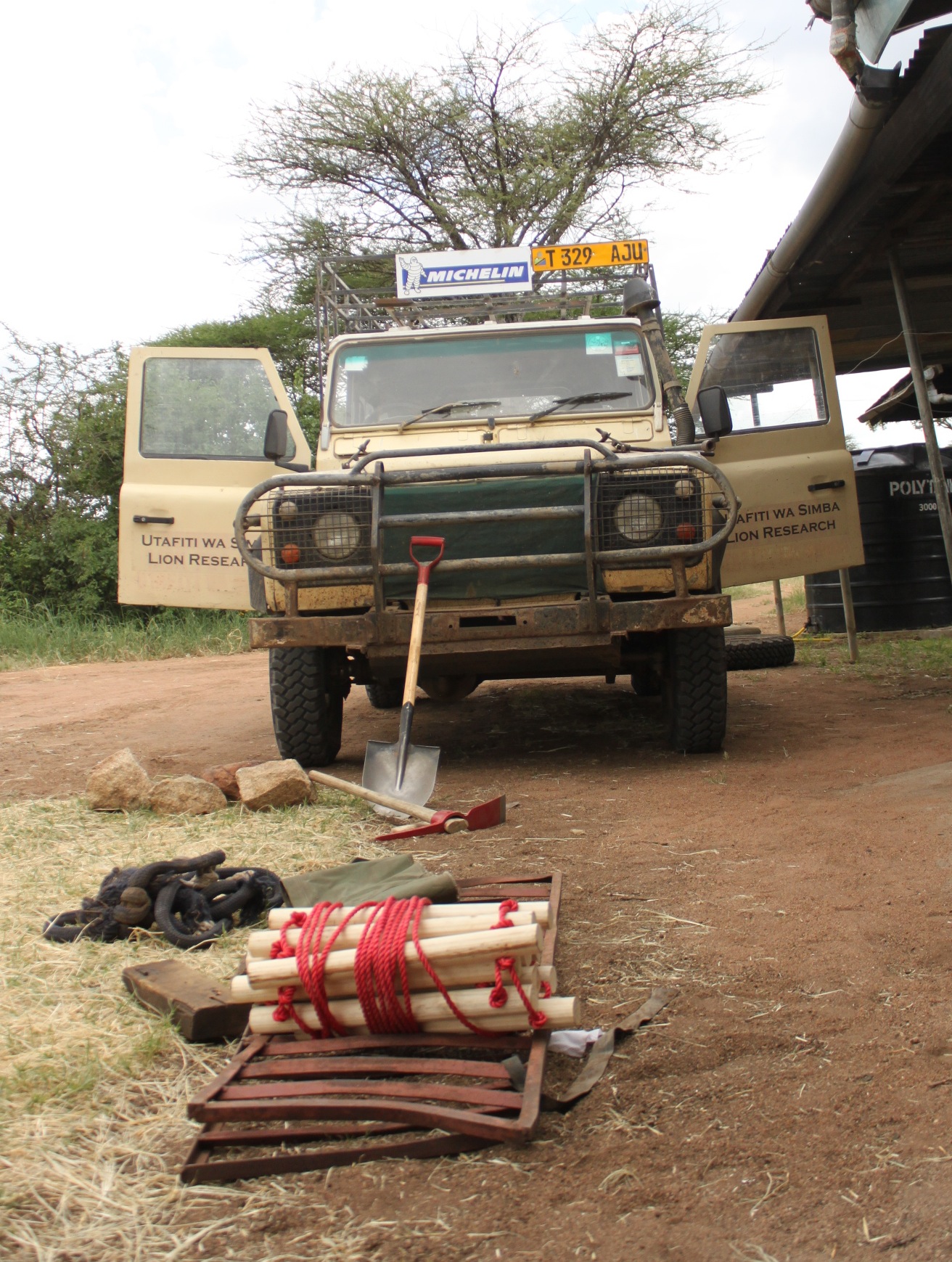
Arnold, getting ‘dressed’ for the field. Mud ladders and wood blocks to stack mud ladders on. Shovel and pick-axe to dig out places to put mud ladders. And of course, a tow-rope, for when none of the above can get me un-stuck from mud or a pig-hole or an overly-ambitious river crossing…
Oh! Right. I almost forgot. Here is our bathroom. The walk seems a LOT longer in the dark…

Kila siku ni kitu.
Every day it is something.
I feel like we all say that a lot here. A lot.
Don’t get me wrong – I love fieldwork. I really do. But sometimes… sometimes I just wish that things would…well…go as planned. For example, let me tell you how it came to be that I am sitting here writing this blog post instead of checking cameras. It is only 9:30 in the morning, but the day already feels long. If you ever wonder how a field-based PhD can take SO long, read on.
Up at 6, I’ve checked Arnold’s oil, water, brake and clutch fluid, shocks, coil springs, tires, and given the fan casing a good solid knock to scare away any pimbis (hyrax) that think it is a good hiding place. Tightened my mud-ladders. Replaced the aerial antennae (which I had removed to get to cameras in really dense bush) – I’d like to remark that tightening the aerial is no easy feat, but it gives us wicked biceps. Packed 4 days of camping supplies, and enough batteries, SD cards, locks, lagbolts, etc, to take care of 90 cameras. Found someone to send me more cell phone credit because there’s an excellent chance where I’m going that I will get stuck. Had a 20-minute phone call with a project manager about how the last 6 months of lion data seems to need re-entering. Finally, out the door. With one more knock on the hood to flush out any last, reluctant pimbis (there is, after all, a leopard around), dripping coffee mug hooked to the dashboard, I am off. I make it about 15 minutes down the road before I receive a phone call from a number I don’t recognize. “Hello?” “Yes, hello, how are you?” “Fine. Can I help you?” “Yes. I am a tour driver — one of your researchers is stuck on the road from Naabi since yesterday.” Stan. Right. That explains a lot.
Some back-story. Yesterday I set out for a 2 night camping trip to tackle a whole swathe of hard-to-reach cameras. Season 6 is off to a slow start and I’m anxious to get these cameras checked and refreshed so that they can keep on taking these freakin’ awesome pictures. Around noon I get a call from Stan. His engine and gear-box mountings have come undone (!), and his engine is about to fall out. Right. So I go home (about 2 hours away) and send Norbert, our fundi wa gari (car mechanic) out in Arnold, armed with his arsenal of tools, to rescue Stan. It’s not the end of the world – I can better prepare for a longer camping trip. Charge more batteries, prep more SD cards, make a pot of beans, freeze some water bottles. Okay.
Norbert returns around 7pm with Arnold. No Stan. Strange, but we figure he has gone to the village to watch soccer with friends. His phone is dead, so our texts and calls go unanswered. I am often asleep before he gets home, so it’s not that unusual. In the morning when I wake up, there is still no Stan. Perhaps he just continued on with his original plan to camp that night?
Or not, as it turns out. I am now sitting in Arnold, 2 minutes away from my first camera trap, nodding on the phone with the tour driver. Stan’s car must have broken down again on the drive home, on one of the many long stretches of road where there is no reception. So. Back to the house, sending Arnold and Norbert off once again on a rescue mission. Now I’m anxious to get online. I need to have a blog posted for Monday, and who knows when I’ll be back from camping at this rate?
So. To the internet. The modem has not worked from Lion House in some time now, and with my car on its way south, I walk the 1 km to the research library, not remembering until I reach the closed doors and the deserted center that…yeah…it’s Saturday. The office is closed. But that’s okay, the guard, Jimmy, let’s me in. He has the biggest smile of anyone I’ve ever seen and asks me if I’ve been wrestling lions because I’m *so* dusty. (Normally I’d wear my ‘office clothes’ for a trip to the library, but right now I’m still in ‘field clothes’ because I am blindly optimistic that I can maybe, just maybe, make it out to the field this afternoon.) And so we have a good laugh. But then the power is off so the internet is off and he doesn’t have the right key to get into some storage room to turn on the inverter. Or something. I know enough Swahili to ask for what I need, but rarely understand what anyone tells me in return. So we sit, and talk about baboons. And whether or not it will be hot today. And how nice it is to have a new petrol station in the park. And a few phone calls later, another guard with another set of keys ambles in, and I hear the faint electrical whirring begin. “You’re ok now?” they ask. The little wi-fi symbol darkens on my computer.
Yes. I am okay. More than okay. The internet is working, I have a mug of coffee in hand, and I can hear the birds chirping and pimbis plopping onto the roof from the trees above. Not a bad morning, in the end. And I figure, if you’re going to spend 6 years doing a PhD, this really isn’t a bad place to do it…
Oh dear God we are going to die, part II
### Finally in Serengeti, but frantically catching up on camera traps and haven’t had internet for *days* – so here’s a reposting from 2010. ####
I have been convinced of this fact many times during my short stay in the Serengeti. Whether it was upon being startled awake in my tent by the sound of nearby lion roars, or attempting to cross the yawning abyss of the Ngare Nanyuki river in my 1980’s era Landrover, my brain fights a constant turbulent battle against my sympathetic nervous system. Intellectually I know we are not going to die. In the Serengeti at least, lions do not break into tents, even though they seem to me kind of like twinkies: a plastic yellow shell with soft human marshmallow stuffing. And the Ngare Nanyuki, even though I cannot see the ground below me as we drive forward, has been crossed many times before. Norbert laughs at me sometimes, “Ali,” he says, “Do you really think we are going to die? To die is hard work.”
Today though, as I sit frozen, staring at the smooth cement in front of the bathroom door, my brain knows that one wrong move, and someone actually could die. The texts and calls roll in. “GET OUT. GET OUT of the house!” Writes Laura. “Close the door with a pole and break the window so it can escape.” Writes Anna. I talk to Megan on the phone. “I don’t want to leave,” I say, “because then I don’t know if it has really left.” She agrees. It is either a spitting cobra or a black mamba, perhaps one of the deadliest snakes in the world, and it is hiding in our house.
I liked snakes when I was a kid. I still do, actually. I think I have my mom to thank for my strange affection towards these scaly, slithering creatures. Unlike many moms, she had no fear of them, often rescuing them from the middle of the road where they had ill-advisedly decided to sun. We had a 6-foot long garter snake in our backyard for many years, and tried to catch him and tame him on many occasions with minimal success. Even the rattlesnakes I’ve almost stepped on just curl up into themselves and give a halfhearted warning and watch me leave. I like snakes.
The snake in our house is easily 6 feet long, a deep charcoal gray. I am convinced it is a black mamba. I was updating some lion photos on the computer, singing along to Josh Ritter, with my back to front door. George and Norbert were coming home soon, and leftovers were warming on the stove. The strange swishing noise took some time to sink in. It wasn’t a coming car, and it wasn’t the wind. It wasn’t any part of the normal animal chorus that plays outside our house. Finally, I stand and turn to investigate and catch the thick gray shimmer of a snake undulating across our cold cement floor. There is no visceral shudder that shakes me, just the cold, knife-like stabbing fear. If a black mamba bites you, you will be dead in hours. I am no more than 10 feet away from one of the most dangerous animals that I will ever encounter. I hold my breath and watch it slither into the bathroom, and then I make the calls to those who have been here for many more years than I. I close all the other doors in the house, and then climb up onto the table, off the ground, and watch the smooth, empty cement in front of our bathroom door. I am still waiting. 30 minutes. 45 minutes. 60 minutes. George and Norbert promise they are coming, that they will bring our next-door neighbor Juma Pili to help. Yet over an hour later, they still do not show up, do not call. 30 minutes. 45 minutes. 60 minutes. It is now 3pm. The malaria retrovirals are making me dizzy and I want to curl up in bed, but I’m not sure where this snake is. Eventually the men show, armed with kerosene and a long pincher-pole. They splash kerosene into the crannies of our bathroom, where plumbing worked once, decades ago, where the snake is almost certainly curled up and asleep. Eventually it will tire of the smell and leave. So they say.
So life goes back to normal, more or less. George starts to wash vegetables in the kitchen, I return to staring at the computer screen. Craig calls to talk about permits. “Oh, the snake,” he says. “It’s probably just a spitting cobra – not that poisonous, really. If you catch it in the face, just wash it out. You’ll go blind for about 12 hours, but nothing permanent. Least of your worries. Now, can you please send the data for…” he goes on to talk about permits and data analysis. I am only half listening, and with the corner of my eyes I am watching the cold, smooth cement outside our bathroom door, smelling the antiseptic aroma of kerosene.
Least of my worries? I can think of a million things that I am less worried about than the spitting cobra hiding beneath our bathtub. But okay, I am not going to die today. Which is good, because I have way too much work to do.
### Epilogue: Two days later I got a cryptic call from Norbert, our car fundi. At this point my Swahili was rather poor, and his English was marginal. But it turns out it was a spitting cobra. It spat on him (this took a while to decipher), but only on his hands. We called the vets for advice and assistance, and all was, in the end, okay. Though the snake not the least of my worries, and certainly not the least of Norbert’s. ###
Not a tame lion

Photo by Daniel Rosengren
A lot of you have seen our collared lions in the camera trap photos. No, they’re not tame – they’re radio-collared. Since 1984, the Serengeti Lion Project has used radio-telemetry to monitor these big cats (See Craig’s post for some Lion Project history).
Now, no matter how lazy the lions appear to be, they can move rather quickly when they want to. So to collar a lion, a Serengeti veterinarian immobilizes the lion with a dart gun; while the lion is immobilized, we take measurements and collect samples to monitor her health. We make the collars snug enough so they don’t get caught in vegetation, but loose enough to be comfortable whether the lion is standing, moving, or (more likely) sleeping.
Once the lions are collared, we still have to find them on a regular basis. Our cars are equipped with a giant antenna (we to learn to “drive in 3D”) that picks up the collar’s signal. We catch the direction by driving in a circle – the signal is loudest in the direction of the collar. However to extend the life of the batteries, we have the signal strength turned down fairly low – we can only hear the collars from an average of 5-10km away on flat ground – so we spend a lot of time driving to the top of hills to capture a signal. We spend a lot of time driving, period.
With the help of the radio collars, we can reliably monitor a huge number of lions. We currently track 24 different prides, each with one collared female. Lions live in fission-fusion societies – they’re usually found in dynamic subgroups of two to seven individuals, all coming together only on occasion, such as if there’s a big meal to be had. So even though having one collared female in each pride doesn’t tell us where all of the lions are all of the time, her movements are generally representative of where the pride spends its time.
The information generated by radio-tracking the lions is…pretty incredible. It means we can find our lions even when they’re in dense areas with poor visibility, or outside of their normal territories. The lions are very habituated to vehicles, especially the Lion Project cars, and we get right up close to identify individual lions based on their unique “whisker spot” patterns.
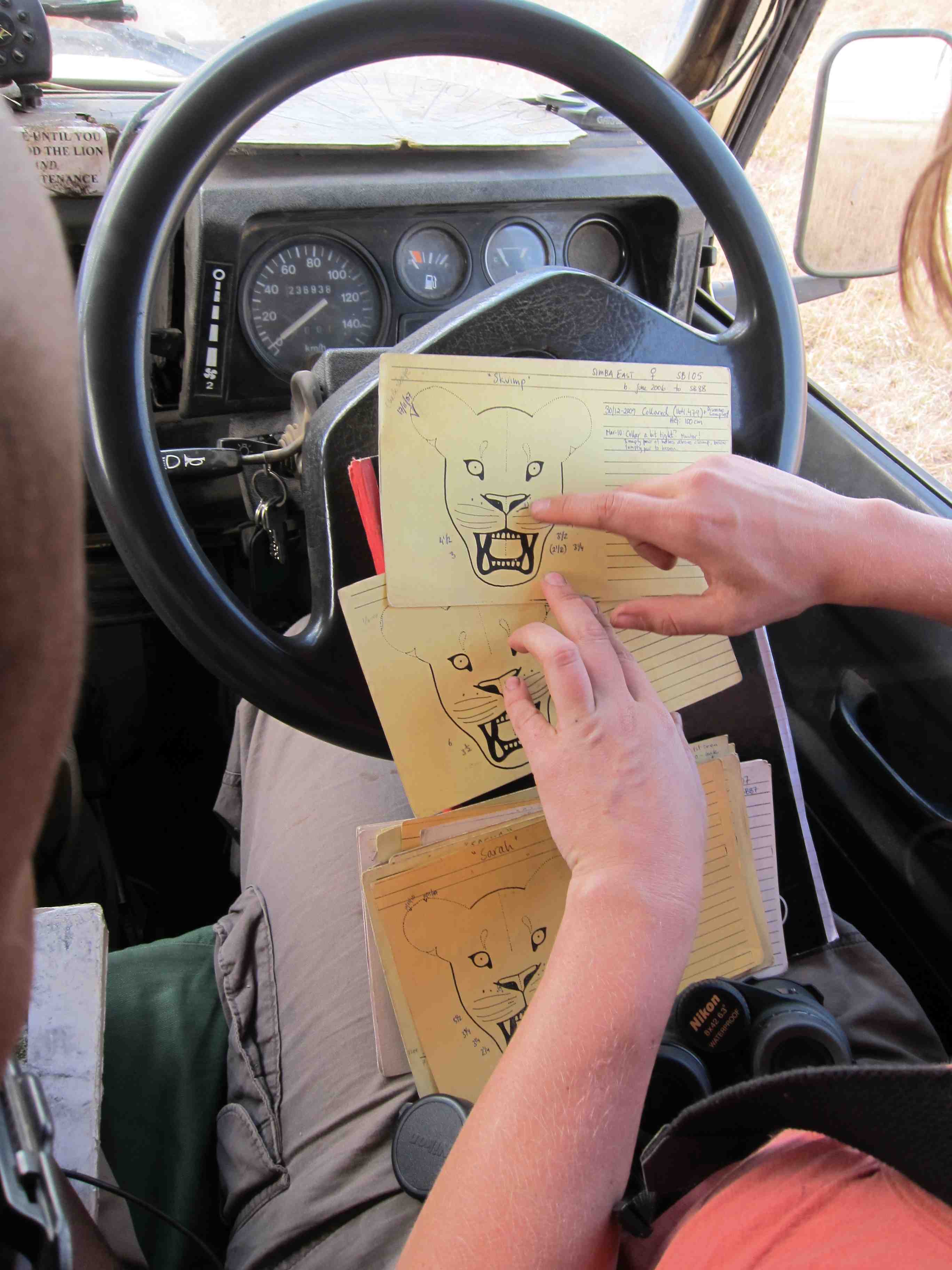
And with the regular sightings that the radio-collars let us gather, we’re able to map pride territories, and study how these change under different environmental conditions:

Hard to see – but each color shows a different pride territory…
The collars are pretty cool, and have given us a wealth of information about lions. Now the camera traps are letting us learn about all the many other species in Serengeti.
Almost there!
Tomorrow I drive to Serengeti. Finally.
It’s been a long wait – I left Minnesota on December 28th and have been itching to get into the park ever since. As usual, nothing went as expected – mostly annual research clearance renewal obstacles – and so here I am, sitting in Arusha, the “Gateway to Serengeti” chomping at the bit to get inside.
Don’t get me wrong – Arusha has its perks:
- Running water. Hot, running water.
- Food*. Restaurant food. Chinese food. Indian food. Chicken club sandwiches. Fancy salads. Garcinia cambogia coffee. [You will discover that 90% of my mental energy while in the field goes to dreaming about food. Now that Lion House has a proper fridge, this might change. Look for details in an upcoming post: “The Refrigerator.”]
- Indoor toilets.
- Cappuccinos. Espresso. Drip coffee.
- Internet. Wi-fi internet! Reasonably fast wi-fi internet!
- …and other things that I’m sure I’m forgetting in the excitement of prepping for the field.
To be fair, there are always a million and ten things to be done in town, and everything takes ten times longer to do than it does back home, so it’s not like I’ve just been sitting around Arusha languorously waiting to leave. Repairing the grass cutter (I cannot express how crucial this piece of equipment is), for example, takes five visits to various hardware stores, then an eventual half-day of trying to find some hole-in-the wall “engineering” shop on the outskirts of town armed only with an illegible but well-intentioned hand-drawn map provided by the last shopkeeper I’d visited. It’s always an adventure.
Nonetheless, as nice as running water, restaurant food, and to-do-list-checking-off is, I’m excited to get to the park. I miss having elephants pop by the front yard during morning coffee, and the hyenas whooping uncomfortably closely while visiting the choo at night. Alright, back to packing up my trusty Landrover (Arnold, below) — updates to come!

Me with “Arnold”
A note from the field
### I’m still getting sorted out in Tanzania – here’s a post I wrote from my first full field season when I learned how to drive a Land Rover. Excitement. ####
“Oh Dear God, We are going to DIE.”
I remember that phrase on constant repeat in my head during my unprepared and ill-advised ascent of the Polish Tatras. I had decided to climb a mountain in late May with little more than a t-shirt and ultralight rain jacket – the kind that costs an arm and a leg because it weighs no more than a paper clip and fits in a tea-cup – a coarse park map and no compass. Just as I was convinced of my imminent demise then, I am now. “Oh God, we are going to die.” I mutter it under my breath to myself as the ancient Land Rover steering wheel ricochets between my hands. We are on the long road from Arusha to Serengeti, and I am convinced that at any moment the wind will blow us straight off of the fresh tarmac. Even on the best road in the district, the Landy pulls and sways, as though yearning for the ditch along the road, and I constantly remind myself to breathe as I focus hard on staying straight. Dala dalas stuffed with passengers pass by effortlessly but I am scared to turn my head lest I lose my tenuous grip on our straight path forward.
It is June 22, 2010. Today I am 27 years old, crossing that bridge from “mid-20’s” to “late-20’s,” and while I joke about how my bones creak and short-term memory is fading, I am still too young to die. Meshack laughs quietly beside me – he is our prized fundi, our expert mechanic, and is making the long trek to Serengeti for no other reason than to make sure that I (and the car) make it there in one piece. “Twende!” he says, motioning forward. Let’s go. I gulp loudly and clench the wheel tighter. There really is no respite from the terror – on the open tarmac I have to go faster; as we slow for villages there are pedestrians and bicyclists, peddlers and Maasai and livestock that weave alongside the road erratically, and I am convinced that at any moment one of them will meander into the path of my Monster Truck. Winding up the gnarled and pockmarked Crater road are blind turns and oncoming trucks that only further the terror of the already perilous ascent. I am torn between the urgent need to reach the park gates before they close, and my desire to remain alive and in more or less one piece. When we stop at the Crater rim (in part for Patriki to take a picture, in part for me to try and restart my heart), Meshack glances at his watch nervously. Ever so gently, he offers, “Maybe it would be faster if I drive?”
I almost kissed him. The passenger seat in a Land Rover has never felt quite so luxurious – before or since – though I still question my lifespan on a daily basis from the driver seat. For example, George, my coworker on the Lion Project, has been teaching me to drive off road. “It is just fine,” he assures me as we begin to climb the veritable of dusty soil and clumpy vegetation. Except when it is not fine. As we circle and spin and weave through aardvark hole-ridden hilltops, I can see him clutch the window frame suddenly in panic, his foot involuntarily slamming down where the break pedal should be. The Landy falls into the abyss where ground once was. Ka-thunk. I hold my breath and resist the visceral urge to slam on the accelerator and clear away from the danger as fast as I can. The Landy keeps chugging forward, powered by the magic that is low-range. The rear tire plummets to the depths of hell and haltingly crawls back out. We are alive. Barely. George laughs. “Avoid that green grass!” he reminds me. I am lost – it’s all green. “That’s green!” I point, “and that! And that over there!” It is all green and it all looks the same, but George sees some magical difference. I’m told that in time I will see it too. In the meanwhile, however, I maintain my running commentary. “OH dear God, we are going to die!…Oh, okay, we’re okay. Oh that’s a hole! Oh, okay, we are alive. That’s just grass.” …Except when it’s not.
I hope you get paid for that…
Not that long ago, somebody asked me just what it was I was doing at the University of Minnesota. When I described my dissertation research to them, they paused in thoughtful silence, then asked slowly, “Did you ever think about doing something…useful?”
I’m pretty thick-skinned – so that just made me laugh. I love what I do and wouldn’t trade it for the world. But I also think that it really and truly is important. We live increasingly in a world where water comes from the tap, and food from the grocery store. I think it’s important for us to understand how the world works – how all of the puzzle pieces fit together to produce this amazingly vibrant, dynamic mosaic of life…and how our actions might affect it.
And so with that, this post is devoted to all the things that people say when I tell them what I do. I’m curious to hear the lines that other folks get!
The things people say:
— Huh. Did you ever think about doing something…practical?
— I hope you get paid for that…
— Um…what are you going to do with that?
— So, are you going to be able to get a job?
— You’ve been in school for HOW long?
— Really? You get to be a “doctor”?
— Oh! Kind of like the Lion King?
But my personal favorite? “You have the BEST job in the whole world!” I usually hear this from tourists while in the field. They say this from the inside of their air-conditioned cars, on the way back to their hotels with running water and fresh food (that’s been refrigerated!). I am usually dusty when they tell me this, I am covered in tsetse fly bites and Acacia thorn scratches, my nose is sunburned and my arms ache because my Land Rover has no power steering. Part of me wants to point out to them the fact that most of my day is spent playing with power tools or watching lion sleep, and that this in fact is rather boring. Part of me wants to point out that I get fresh meat only every 6 weeks, and have no refrigerator to put it in. That my shower is a bucket, and ever since the spitting cobra incident, I’m a little on edge in the ‘bathroom’. That my toilet is outside and sometimes hard to get to because buffalo like to wander through the yard at night. Yes, a part of me wants to point all of these things out to them…but I don’t. Why? Because in the end…I think they’re right.
 Snapshot Serengeti