
Love, hate, or somewhere in between?
It’s hard to tell whether the hyenas really love or really hate my cameras.
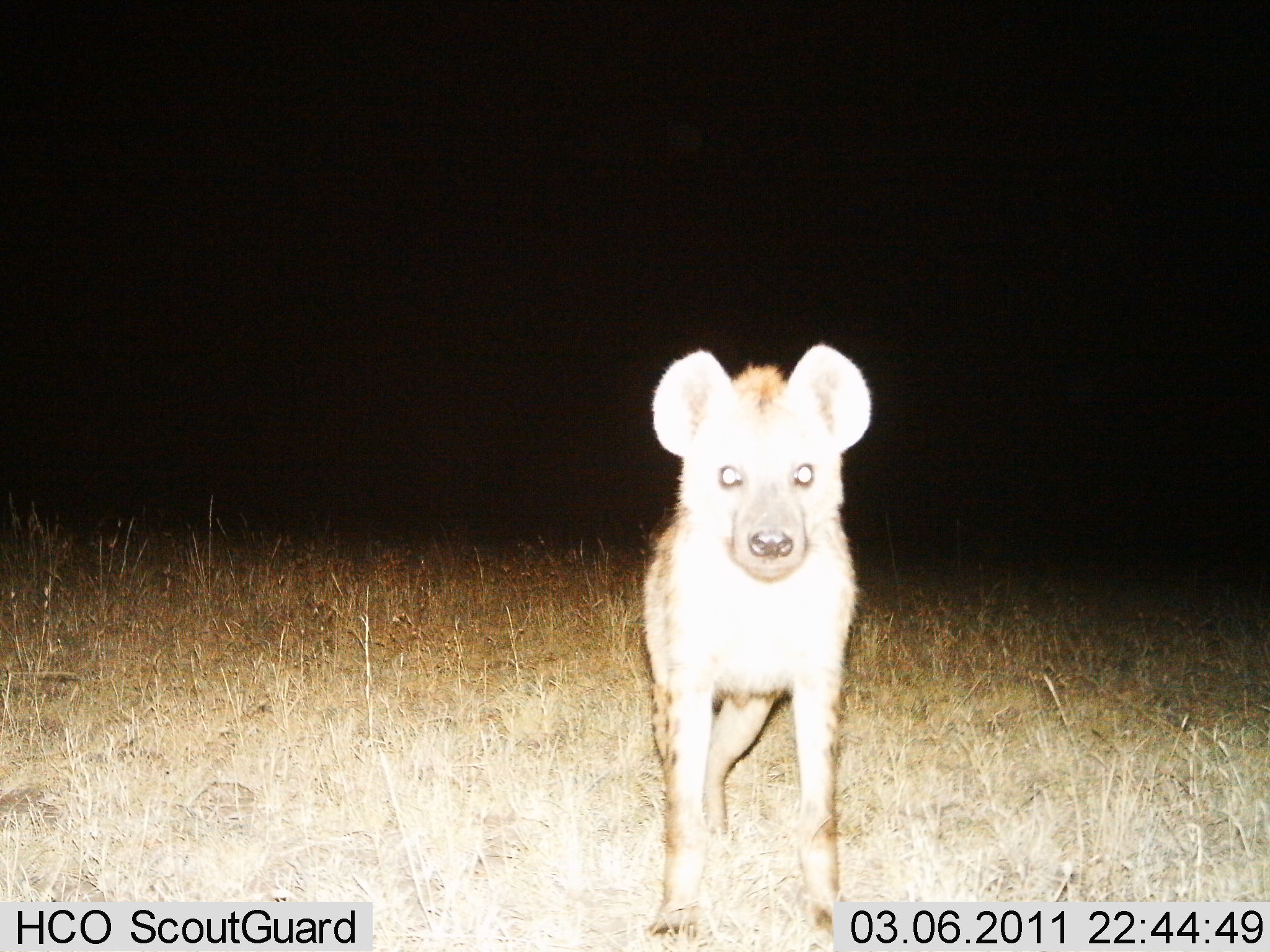
“Camera, you are going *down*”
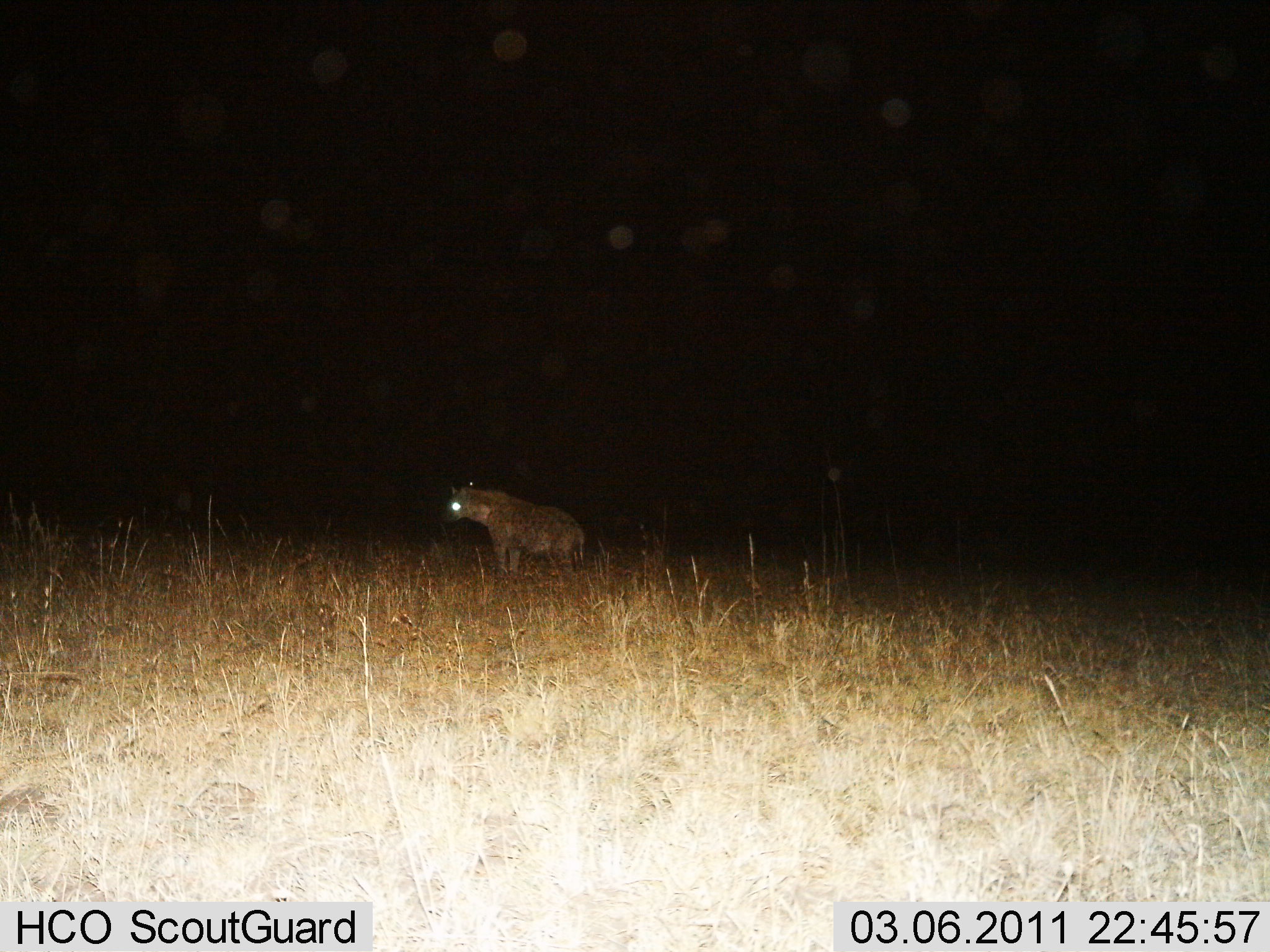
Reconsidering…
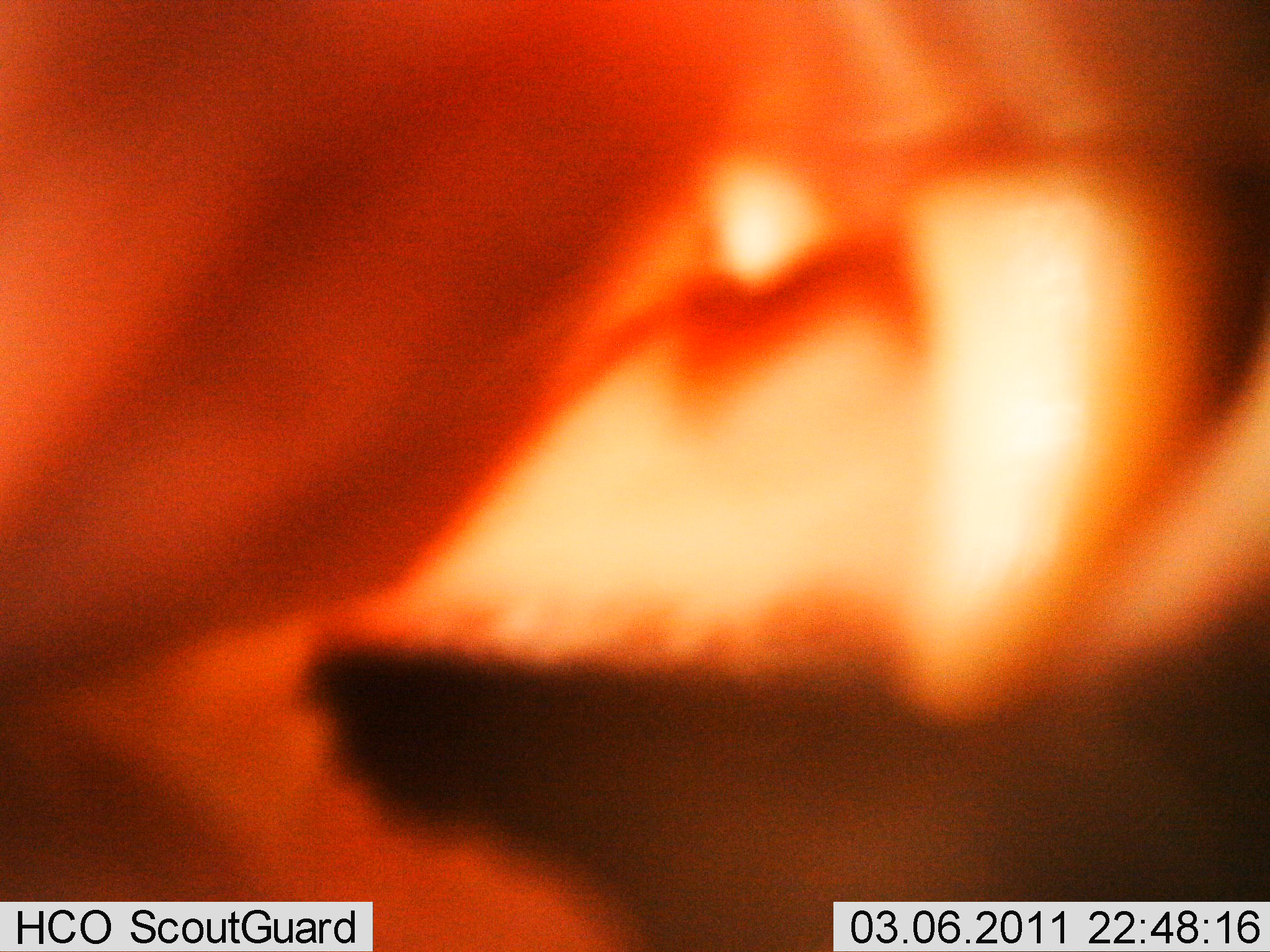
Nope, definitely going down! (Inside of his mouth — see the canine tooth?)
To be fair, I have seen hyenas absconding with everything from flip-flops to sofa cushions – and there was an unforgettable night where our neighbors were awakened by the crashing about of a hyena who had gotten his head stuck in a mop bucket. The world is their chew toy.
One of our favorite things about camera traps is that they are relatively noninvasive – we think of them as candid cameras, unobtrusively watching the secret lives of Serengeti’s most elusive animals. We don’t bait our cameras to attract animals: we want to capture the natural behaviors of the animals to understand how they are using their landscape – what types of habitat features they prefer, and whether they alter their patterns of use at different times of day, at different times of the year, or in areas where there are lots of competitors or predators.
But it’s a fair question to ask whether the cameras affect animal behavior, and an important one. Stanford graduate student Eric Abelson, is hoping to answer it. If the animals are being attracted to or avoiding areas with cameras, that could change how we interpret our data. In wildlife research, this is known as being trap-happy or trap-shy. For example, say we want to estimate the population size of leopards in Serengeti. Since leopards have unique spot patterns, we can use what is known as Mark-Recapture analysis to calculate the total number of leopards based on the rates that we “re-capture” (or re-photograph) the same individual leopard. Because of the way that the math works out, if animals become trap-shy – avoiding camera traps after an initial encounter — then we would overestimate the total number of individuals in a population.
Fortunately, although researchers in other systems sometimes find trap-shy animals (baby tigers in Nepal, for example), our Serengeti animals don’t seem too bothered – at least not to the point where they avoid an area after encountering a camera trap. Even at night, with the flash firing away, we get photo after photo of the same bunch of playful lion cubs, or repeat visits by the same leopard, cheetah, lion, or hyena week after week.

Also, since the cameras aren’t baited, we don’t think that they’re drawn to the cameras from long distances. Instead, we think that once the animals are close to the camera, they come a little closer to investigate thoroughly.
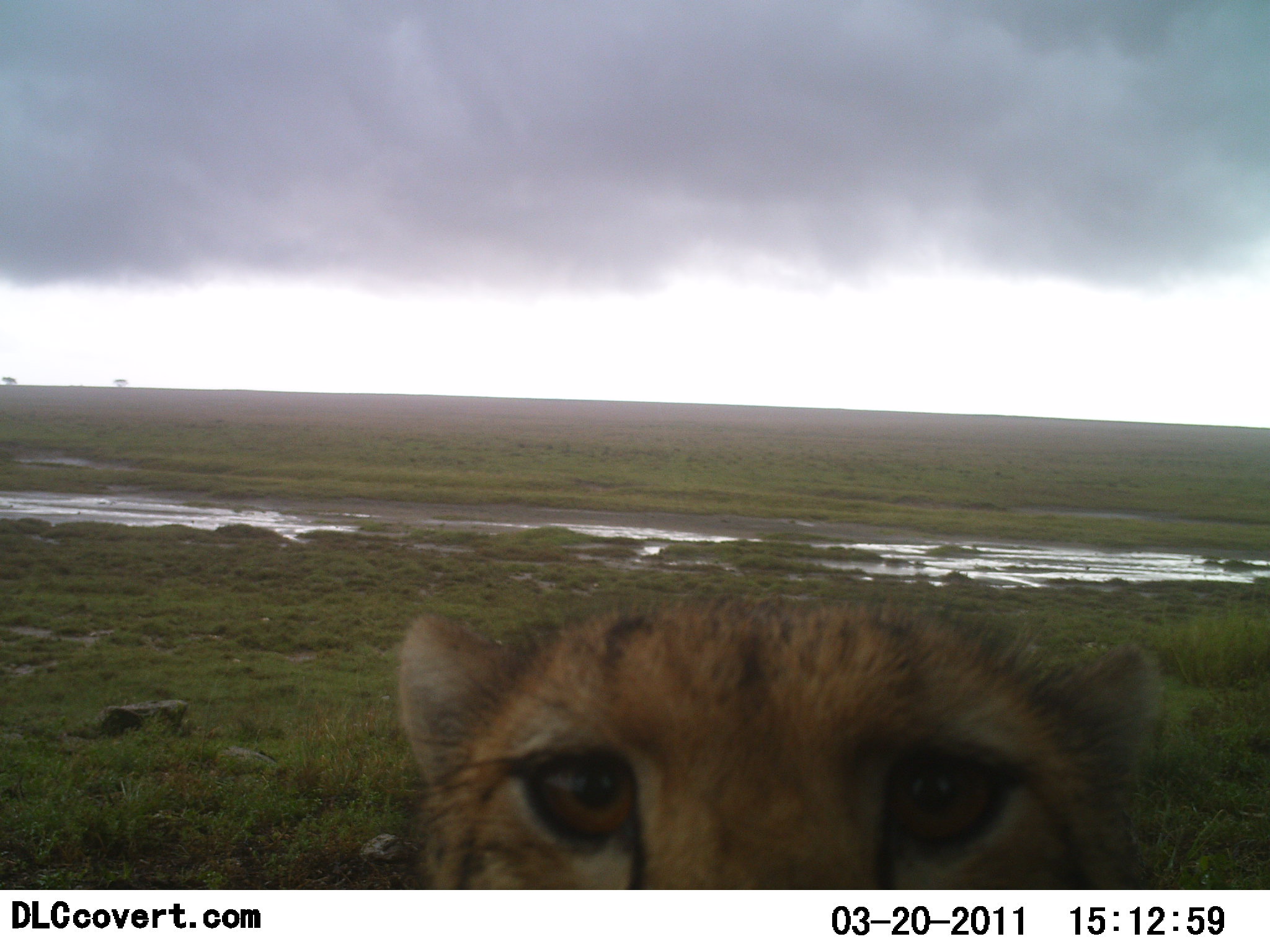
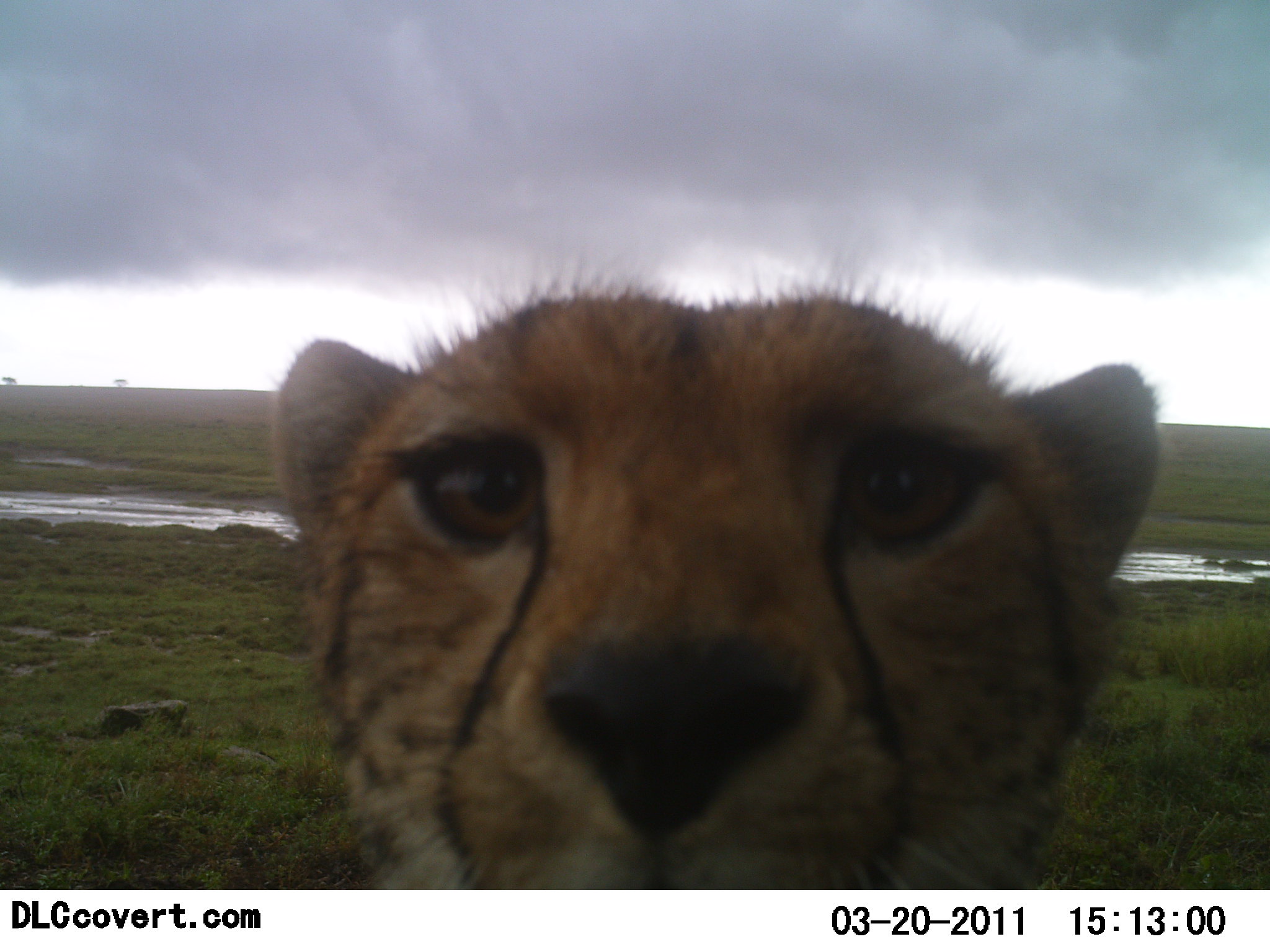
Hope you enjoy the view!
Data from Seasons 1, 2, and 3
Last week Michael Parrish sent me all your classifications for Seasons 1, 2, and 3. At 4,374,368 classifications, it’s going to take me a while to fully analyze them. Nevertheless, I’ve taken a first look through and am happy to give you some feedback.
Snapshot Serengeti volunteers classified 512,585 capture events. (We call a set of images a “capture event,” regardless of whether it consists of 1 or 3 images.) Of these capture events, 30% were from Season 1, 40% from Season 2, and 30% from Season 3. Based on your classifications, 72% of these capture events were “nothing here” and less surprisingly, Season 1 had the highest share of “nothing here” images. Season 1 was when Ali was still trying to figure out how to animal-proof the cameras and plenty of cameras got knocked off trees. I still have to double-check accuracy for these “nothing here” images, but suffice it to say that you guys classified a lot of blowing grass. Thanks for your perseverance!

And what about the Snapshot Serengeti community itself? I want to preface this by saying that in the data I get, all volunteers have been anonymized. That is, each user name has been replaced by a gibberish string of letters and numbers, so I don’t know who is who. I can tell you that we have 14,352 volunteers who created a user name. They provided us with 84% of the classifications; the rest were done by people who didn’t create – or hadn’t yet created – user names.
The median number of capture events classified by each logged-in volunteer was 63. I find that pretty awesome. In case you need a refresher on what the median is: imagine we put all 14,352 Snapshot Serengeti volunteers in a line according to how many capture events they had classified. Those that made just 1 classification would be on the far left end, and those that had classified thousands of capture events would be on the far right end. Then we would find the volunteer in the very middle of this line; she would be the 7176th volunteer from the left (7176 is half of 14,352). And we would ask how many classifications she had made. The answer would be 63; that is, half of all volunteers (on the left) made fewer than 63 classifications and half (on the right) made more than 63 classifications. Sixty-three classifications is no small number; you’ve got to be sitting there a while to do that many, and yet over 7,000 different people did so. Wow.
The most number of capture events made by one volunteer? 8,431. That’s just for Seasons 1, 2, and 3, so I’m betting that number is higher now that Season 4 is underway. The 5,000 Club is pretty exclusive: 23 of you classified more than 5,000 capture events in Seasons 1 through 3. The 1,000 Club has 829 members. And an astounding 5,777 people classified more than 100 capture events.
I continue to be amazed and humbled by your dedication to this project. Thank you.
Aardwolf vs. Jackal
#### Today I’m excited to bring you a guest post by UMN undergraduate Peter Williams. Peter conducted independent research in the Lion Lab through the University of Minnesota’s directed research program, helping to identify and process some of the early images from the camera trapping survey. You’ll likely see Peter on Talk from time to time. ###
One of my favorite animals of the Serengeti is the aardwolf. This little-known relative of hyenas has an extremely specialized diet—it mostly eats one genus of termite. Aardwolves, about the size of a fox, are not the toughest carnivores. Some other carnivores, such as lions, have been reported to kill aardwolves, and parent aardwolves guard their burrows to prevent jackals from eating their cubs. I wanted to know if the threat of a jackal attack affected aardwolves. Did aardwolves avoid jackals by living in different areas? Or by being active at different times?
To dive into this, I first compiled the camera trap sightings for aardwolves and jackals in a spreadsheet. Each sighting contains tons of information, such as time of day the sighting was taken, distance to the nearest river, how many trees in the area, what the grass cover was like, etc. I made graphs comparing aardwolf sighting to all of these different factors and looked to see if there were any trends. Then I did the same with jackal sightings. Most factors showed no correlation, but there were a few trends that stood out.
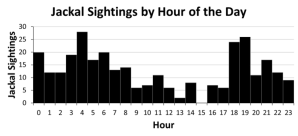
One pattern that was extremely clear was nocturnal behavior in aardwolves. Over 90% of the aardwolf sightings occurred between 7:00 pm and 6:00 am. Jackals, on the other hand, were active all day, with a drop in sightings around the heat of the day. It is unlikely that jackals have an effect on when aardwolves are active, especially because the termites that make up the bulk of an aardwolf’s diet only leave the mound at night.

Later, I tried comparing data between the wet season and dry season. For the aardwolves, there was almost no change in where or when they were active. Jackals in the dry season spent a lot of time in grassy areas that weren’t too arid—the same types of places aardwolves live. In the wet season jackals spread out into drier and more open spaces that are less habitable in the dry season. It makes sense that aardwolves would stay put, given how dependent they are on termites. The movement of jackal between seasons, though, is quite interesting.
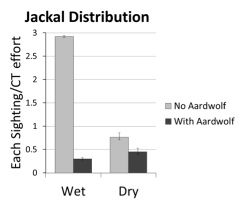
To answer my original questions, the presence of jackals doesn’t appear to have a noticeable effect on aardwolf behavior, nor do aardwolves seem to avoid jackals. However, the jackals moving into aardwolf territory in the dry season and back out to more open spaces in the wet season is a fascinating trend that I want to look into more. I didn’t find what I expected, but trying to find answers always leads to more questions.
We need an ‘I don’t know’ button!
Okay, okay. I hear you. I know it’s really frustrating when you get an image with a partial flank or a far away beast or maybe just an ear tip. I recognize that you can’t tell for sure what that animal is. But part of why people are better at this sort of identification process than computers is that you can figure out partial information; you can narrow down your guess. That partial flank has short brown hair with no stripes or bars. And it’s tall enough that you can rule out all the short critters. Well, now you’ve really narrowed it down quite a lot. Can you be sure it’s a wildebeest and not a buffalo? No. But by taking a good guess, you’ve provided us with real, solid information.
We show each image to multiple people. Based on how much the first several people agree, we may show the image to many more people. And when we take everyone’s identifications into account, we get the right answer. Let me show you some examples to make this clearer. Here’s an easy one:

And if we look at how this got classified, we’re not surprised:
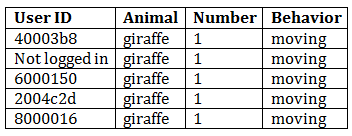
I don’t even have to look at the picture. If you hid it from me and only gave me the data, I would tell you that I am 100% certain that there is one moving giraffe in that image.
Okay, let’s take a harder image and its classifications:
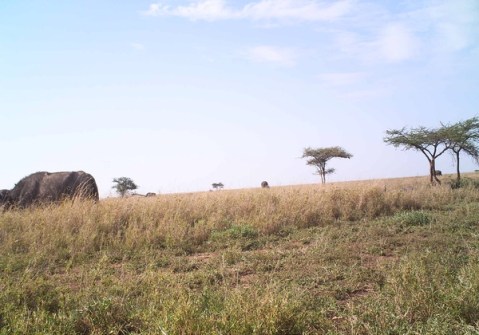
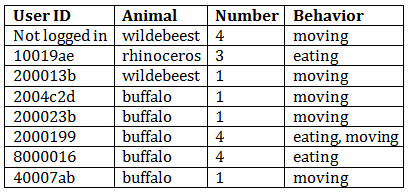
This image is, in fact, of buffalo – at least the one on the foreground is, and it’s reasonable to assume the others are, too. Our algorithm would also conclude from the data table that this image is almost certainly of buffalo – 63% of classifiers agreed on that, and the other three classifications are ones that are easily confused with buffalo. We can also figure out from the data you’ve provided us that the buffalo are likely eating and moving, and that there is one obvious buffalo and another 2 or 3 ones that are harder to tell.
My point in showing you this example is that even with fairly difficult images, you (as a group) get it right! If you (personally) mess up an image here or there, it’s no big deal. If you’re having trouble deciding between two animals, pick one – you’ll probably be right.
Now what if we had allowed people to have an ‘I don’t know’ button for this last image? I bet that half of them would have pressed, ‘I don’t know.’ We’d be left with just 4 identifications and would need to send out this hard image to even more people. Then half of those people would click ‘I don’t know’ and we’d have to send it out to more people. You see where I’m going with this? An ‘I don’t know’ button would guarantee that you would get many, many more annoying, frustrating, and difficult images because other people would have clicked ‘I don’t know.’ When we don’t have an ‘I don’t know’ button, you give us some information about the image, and that information allows us to figure out each image faster – even the difficult ones.
“Fine, fine,” you might be saying. “But seriously, some of those images are impossible. Don’t you want to know that?”
Well, yes, we do want to know that. But it turns out that when you guess an animal and press “identify” on an impossible image, you do tell us that. Or, rather, as a group, you do. Let’s look at one:
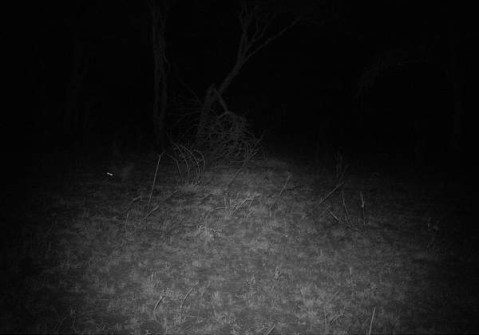
Now I freely admit that it is impossible to accurately identify this animal. What do you guys say? Well…

Right. So there is one animal moving. And the guesses as to what that animal is are all over the place. So we don’t know. But wait! We do know a little; all those guesses are of small animals, so we can conclude that there is one small animal moving. Is that useful to our research? Maybe. If we’re looking at hyena and leopard ranging patterns, for example, we know whatever animal got caught in this image is not one we have to worry about.
So, yes, I know you’d love to have an ‘I don’t know’ button. I, myself, have volunteered on other Zooniverse projects and have wished to be able to say that I really can’t tell what kind of galaxy that is or what type of cyclone I’m looking at. But in the end, not having that button there means that you get fewer of the annoying, difficult images, and also that we get the right answers, even for impossible images.
So go ahead. Make a guess on that tough one. We’ll thank you.
 Snapshot Serengeti