
Why does the zebra have stripes?
While procrastinating on this lovely Sunday afternoon, I stumbled across this incredible video of a octopus camouflage in action:
Now, we don’t have anything quite that camouflaged in the Serengeti, but in watching that video my thoughts turned to one of our more strikingly colored species: the zebra. Their starkly contrasting black and white stripes have puzzled researchers and naturalists for a long time.
For starters, the stripes seem like they would be terrible camouflage. I mean, how much more could you stand out from the open plains of waving gold grass? But at dawn and dusk, especially from a distance, the stripes seem to bleed into gray, making them look a surprising lot like elephants (no joke), or rocks, or even nothing at all. Still, up close they still look like bright black-on-white zebras, and it’s hard to imagine that any lion lurking in the thickets nearby would be fooled.
Some researchers have mused that the bold patterns disrupt the perception of predators, and that when the zebras run en masse from an attacking lion, they become a confusing jumble of stripes into which the initial target disappears. Others have pointed out that every zebra has a unique set of stripes, and that these stocky equids might use these patterns to identify herd members, mates, or even mothers (if you’re a hungry foal).
One of the my favorite explanations has always been that the stripes protect against the savanna’s most fearsome creature: the tsetse fly. These blood-sucking insects are not only vectors for some nasty diseases (such as sleeping sickness), but also hurt. A lot. (Having spent more time than I care to remember in the woodlands where these terrible, terrible creatures thrive, just the thought of tsetses makes me shudder. I have spent many hours hurling expletives (fruitlessly) at the tiny terrors.) Tsetse flies suck. A lot. And if wearing stripes were a way to fend them off, I’d have gone out in a zebra suit every day. There are in fact stories of one intrepid researcher back in the day dressing up in a stripey suit and attempting to test whether zebra stripes deter tsetses. But there’s only so much that one man in a zebra outfit can do, and field experiments are notoriously difficult…and so this remained a buried rumor until last year.
Last year, Swedish researchers discovered that horseflies (a close cousin to the terrible tsetse) don’t like stripes. And they tested this on an experiment useing number of fake, plastic zebras painted solid black, solid white, and various things in between. Turns out that the flies really like dark colors over light colors, but still like solid light colors over stripes. And while in the real world, there are things (such as smells) that may attract tsetses to stripey animals despite their off-putting pattern, this study is pretty exciting. And next time I have to venture into the savannah woodlands? You can bet I’m wearing that zebra-striped shirt.
Elles in the night
## I’m currently on a mini-holiday in the Minnesota wilderness (Boundary Waters Canoe Area). As I’ve lately been missing long mornings on the porch watching Serengeti wildlife, and Margaret wrote a recent post on one of the all-time most-watchable animals out there, I thought I’d share a story of a late-night elephant encounter from my first year in the field. I was in the car with Candida, a Lion Project Field assistant, and Philipp Henschel, a lion researcher for Panthera who has spent years working in west Africa, and the man who taught me how to camera trap, when we came across this…#
As we hurtled along the gutted road, we came face to face with a herd of elephants paying their respects to a fallen buffalo. At first, in the murk of night, we thought they huddled around one of their own, and concerned silence fell upon us. Ellies, for as aggressive as they can sometimes be, have earned our admiration and careful respect. They seem to me intelligent and emotional creatures; where they are not persecuted, they tolerate the roar of our passing engine with a casual glance. But they are supposedly nearsighted to the point of legal blindness*. In heavily hunted areas we are sometimes charged by a protective female, but as we hold our breaths and brace for impact, they stop their charge short and listen…but give up and turn away. If we remain downwind in silence we are invisible…or so we hope.
The elephants tonight are agitated as they mill around the buffalo. Philipp tells us that ellies often investigate death in the forests where he’s worked. In an eerie display of some sort of cognizance, they seem to recognize that something is not right and come to look at fallen creatures. When they come across the bones of one of their own, he says, they pick them up and carry them away. It is sad and scary and moving and beyond my comprehension, what must be going on in the heads of these big, gray, lumbering beasts.
The two tour vehicles that are blocking the watering hole eventually pull away, and the ellies step forward to drink. They cluster close, pressing together side by side. Hesitant lions slowly creep back to reclaim their half-eaten kill, and the matriarch whirls around, her ears flaring, watching the lions in a silent stand-off. The air is still. It is thick with tension and heavy with the severity of the moment. One ill-timed thud against the car window or a frightened squeal from any of us, and we could incited a rampage. Silence is imperative and we hold our breaths as the ellies file past within inches of our landrover.We can almost feel their fear and my heart twists as I wonder what it must be like to stumble blindly through a blurry world, sensing death and its bearers all around you lurking in the hazy shadows and around every corner. As they disappear into the acacias, we hear a long, lumpy-sounding elephant fart and giggle nervously. We can breathe again.
We drive closer to the buffalo carcass and watch the lions return. In the faint starlight, we see that an adult female has already resumed her demolition; her whole head disappears inside the opened belly to rip solid tracts of muscle from the ribcage. We fumble for our headlamps and cameras; I look around optimitistically for an onslaught of hyenas. I have yet to see them challenge a lion kill, and begin to question the feasibility of my research plans. The subadult males pad around our car, their massive paws falling silently in the sandy soil. They are full, and are now studying us. Our windows are open, as always, and we glance around with slight unease – where did the two subadult males go? Suddenly we hear a loud chomp from the back of our vehicle. Fearing that they’ve gone of one of our tires, and hardly in any position to fix a flat, we frantically turn the car ignition and pull a few meters forward. In the sideview mirror, we see a lion trot into the darkness with our plastic tire cover dangling from his teeth. Candida’s jaw drops. We are not quite sure what inspired them to steal such an inedible adornment, but it is late and we have company coming that night. So we chalk the loss up to a casualty of the field…and as we drive home along the corrugated dirt road, we remind ourselves that at least we are better off than the buffalo.

*Elephants do have pretty bad vision, but it’s not as bad as I believed it was on this ominous night at the buffalo kill.
The best view is from a balloon
Don’t get me wrong – it’s really nice to have running water, internet, and my pick of fresh vegetables from the weekend farmer’s market. But sometimes I miss the Serengeti. Watching from my window in Minnesota, I’m lucky if I see a squirrel. And let’s face it — squirrels are only so exciting, for so long.
One of my favorite ways to see the Serengeti was from the unbeatable vantage point of a hot air balloon. Yes, that’s right. We might not have an indoor toilet or fresh food, but we have hot air balloons. Okay, that’s not entirely correct: Serengeti Balloon Safaris has hot air balloons that fly tourists over the heart of the park. In fact, you’ve probably seen them floating past in the camera trap photos:
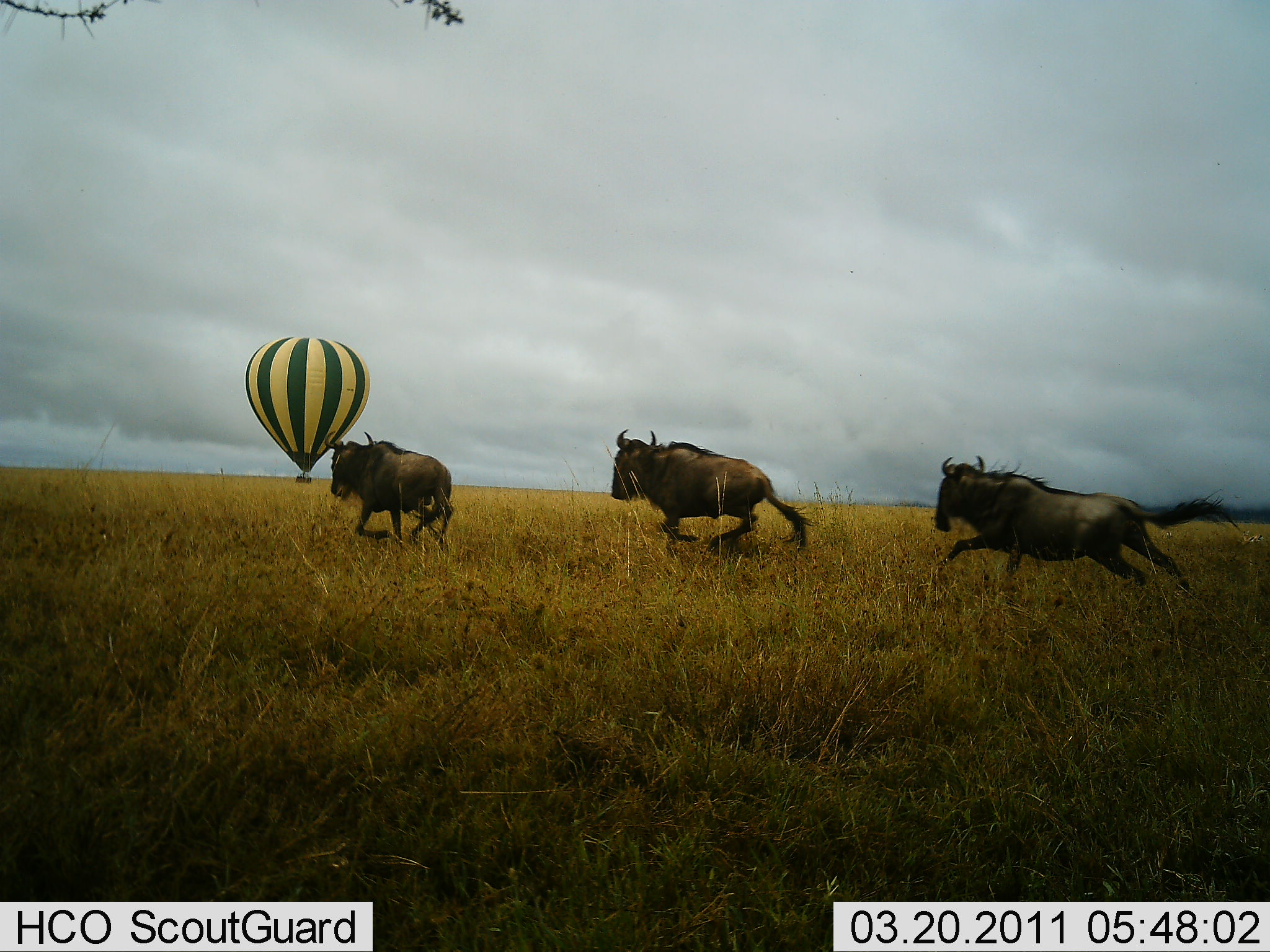
SBS has been flying balloons in Serengeti since the 1980’s, and has always helped us researchers out whenever they could, from letting us drag our hand-held tracking equipment up for flight to listen for lost lion prides, to letting us tinker with our Landrovers in their garage. In fact, they sponsored a lion cub during one of our fundraising campaigns a few years back – and now there’s a cub named “Balloo” living in the Mukoma Gypsies pride in the heart of Serengeti.
I went up for my first flight in 2010. George Lohay, Stan’s predecessor on the project, and I had to wake up at 4 am to make it to the launch field on time. That really is as terrible as it sounds, however, that morning it saved us from an invasion by the relentless carnivorous safari ants (siafu). Well, to be more exact, we were able to flee the house before the ants had invaded our beds, meaning we escaped with minimal damage. And by the time we returned that afternoon, the ants had already moved on.
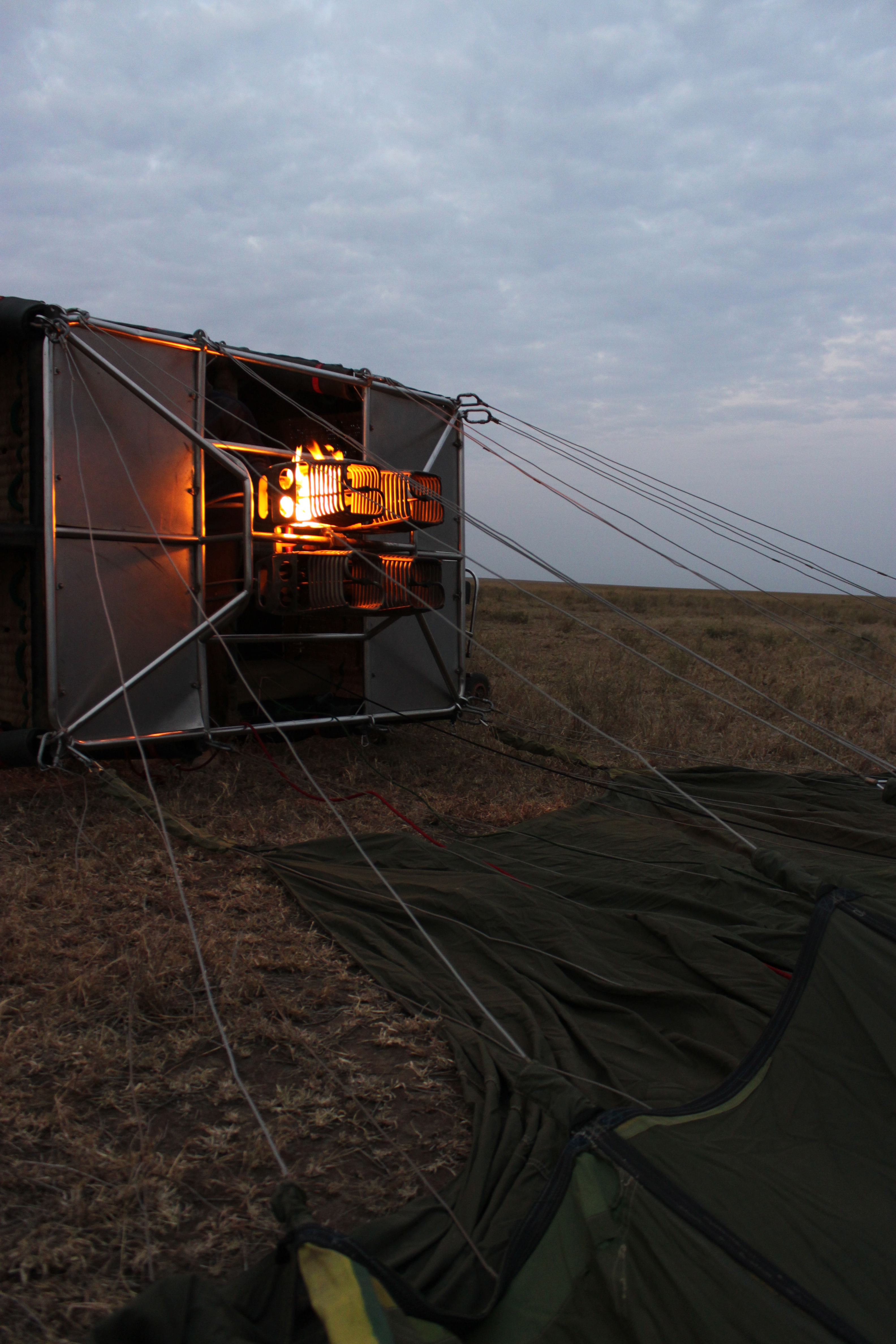

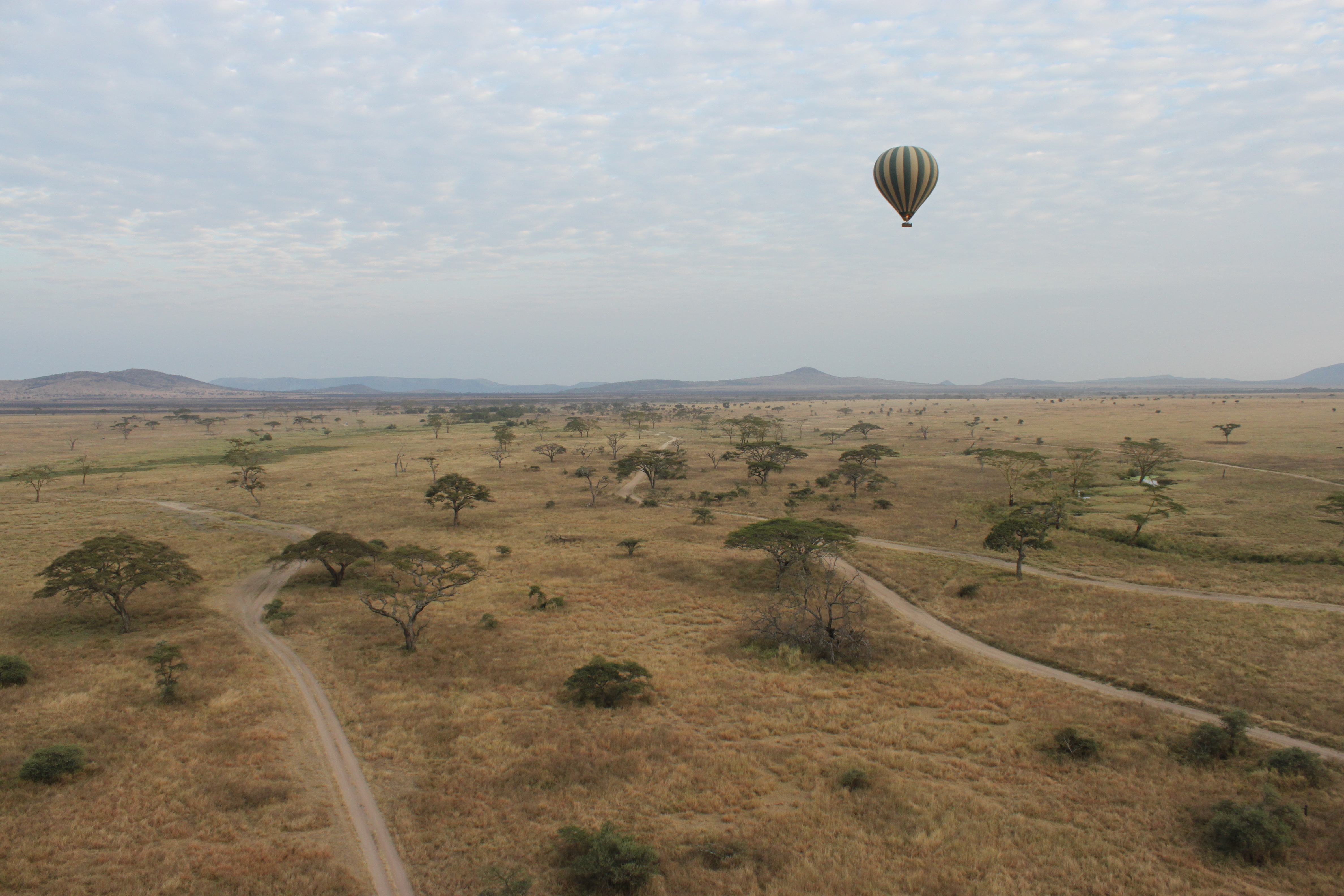
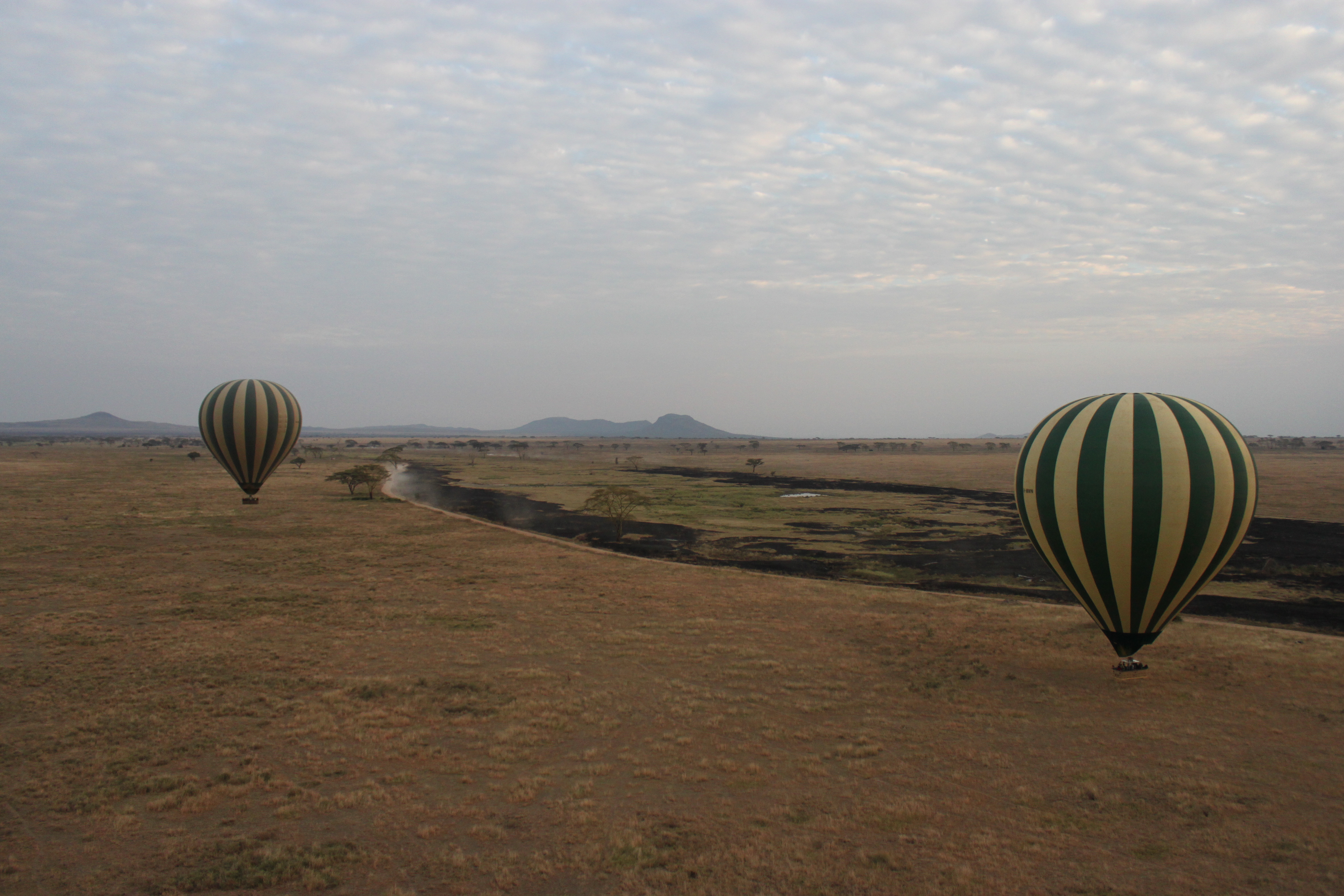
I’ve been thinking about balloons lately because one of SBS’s pilots and a dear friend of the Serengeti Lion Project & Snapshot Serengeti, Jason Adams, is currently preparing to defend his title in Canada’s upcoming National Hot Air Ballooning Championships. Everyone in Serengeti and on the Snapshot team will be rooting for him. Good luck Jay!
Top speed: Technology, movement, and the cheetah’s secret weapon
I got to spend all of last week at a movement ecology workshop in Zurich, Switzerland – conveniently beating the heat wave Minnesota has apparently been having!

Migration patterns of the sooty shearwater, revealed by Scott Shaffer of UC Santa Cruz in a new study.
Movement ecology explores both how and why the way animals move the way they do, and what this means for them as individuals, as populations, and species. What triggers do animals use to decide where to go and what to do while they’re there? Why are some species territorial, while others overlap? Why are some species migratory? What do these behaviors mean for their individual fitness, their population dynamics, and global distributions? How does our understanding of animal movement change the way we try to protect species and the habitats they need?
It’s a pretty big field…and it’s one that is growing in leaps and bounds with modern technology – from camera traps to GPS collars, vast satellite networks and high resolution global imaging – we are able to ask questions about movement and distribution that would have been impossible just a few decades ago.
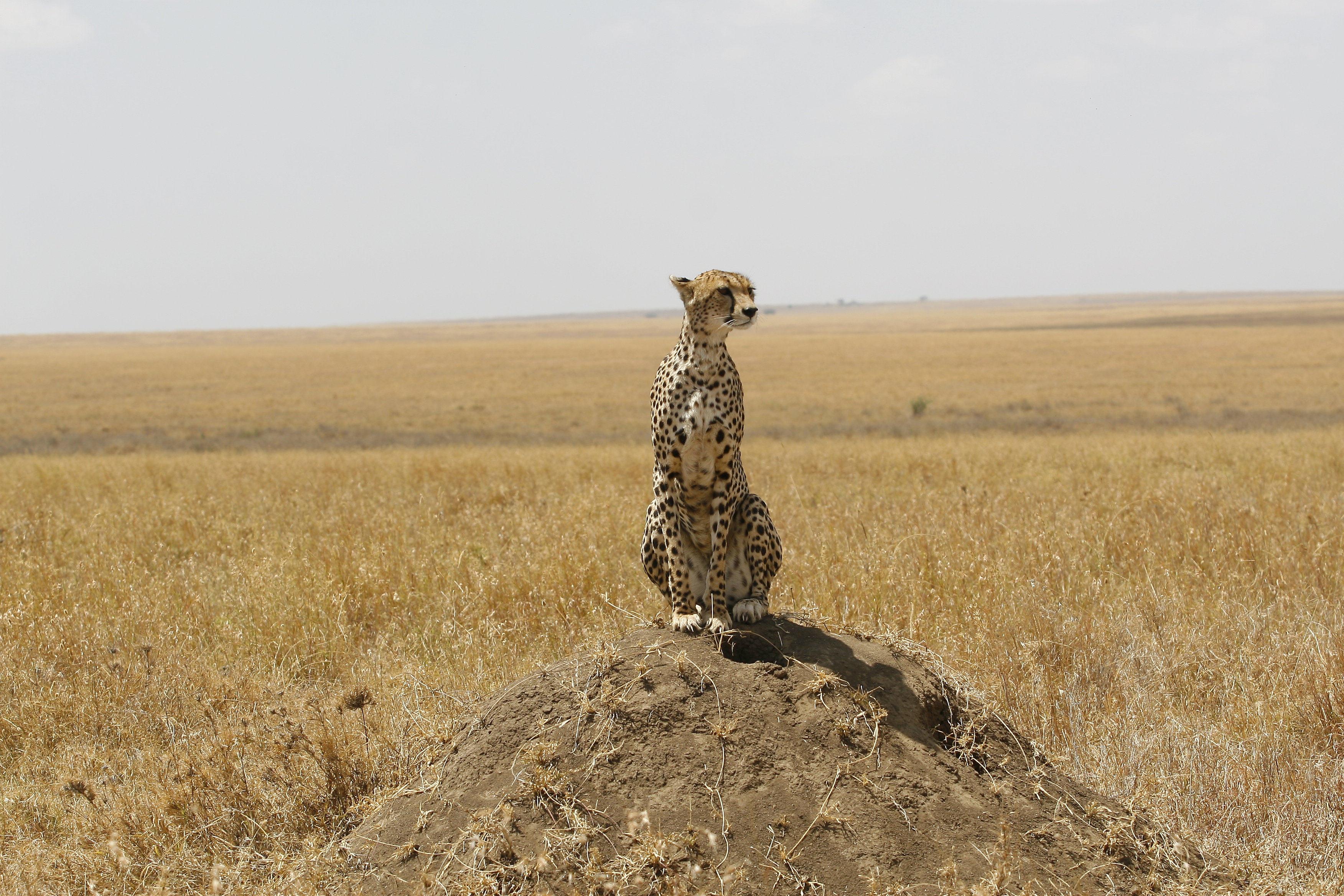
For example, researchers from London’s Royal Veterinary College recently discovered that cheetahs – contrary to popular opinion – might not rely on their top speed to catch their dinner, but instead their agility and acceleration. In captivity, cheetahs had been clocked at nearly 105 km/hour – but new, lightweight, super-fancy GPS collars let researchers take these speed tests to the wild. What they found was that cheetahs in the wild averaged about half that speed – but that they accelerated and turned with unparalleled power and agility. Which means that our long-standing perception of cheetahs as needing wide open spaces for really fast chases might not be accurate – and that they might actually be able to hunt quite well in the woods!
This is just one of many, many secrets that the field of movement ecology, with the help of modern GPS technology, is uncovering. Some other stories are a little less exotic and closer to home. The Today Show recently covered the amusing tale of a concerned cat owner who designed a tiny tracking device to see just where her pet was going every day. Her sleuthing turned up some interesting results – not just for cat owners, but for scientists too — and scientists are now encouraging cat owners around the country to track their cats and share their data on an online repository called Movebank.org. So if you have a cat and want to see where it goes when you’re not looking, or help scientists understand how domestic cats fit in to the larger ecosystem, check it out!
Lions, cheetahs, and dogs, oh my! (Continued)
Last month, I wrote about how, despite lions killing cheetah cubs left and right, they don’t seem to be suppressing cheetah population size like they do for wild dogs. And, that despite all this killing, that cheetahs don’t seem to be avoiding lions – but I didn’t have radio-collar data for wild dogs.
Well, now I do!
Although we’ve had collared lions continuously since 1984, Serengeti cheetahs and wild dogs were only collared from 1985-1990. We worked with Tim Caro, former director of the cheetah project, to access the historic cheetah data a year ago, but it was only a month ago that we finally tracked down the historic wild dog data. Thanks to a tip by a former Frankfurt Zoological Society employee, we found the data tucked away in the recesses of one of their Serengeti-based storage containers – and Craig braved a swarm of very angry bees to retrieve it!
The good news is that the data was totally worth it. Just like we suspected, even though cheetahs didn’t seem to be avoiding lions, wild dogs were. This map shows lion densities in the background, with cheetah (in brown dots) and wild dog (black triangles) locations overlaid on the lion densities.
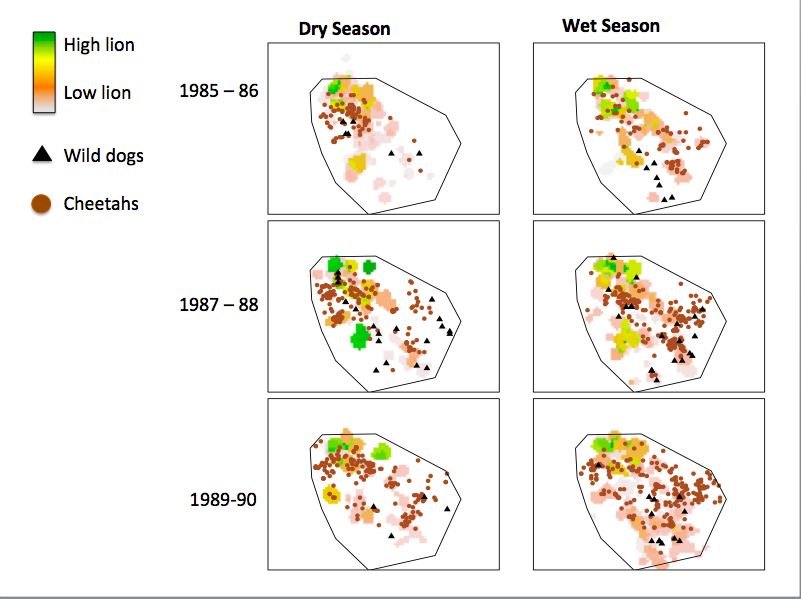
Lions, cheetahs, and wild dogs from when all three species were radio-collared in Serengeti.
It’s a pretty cool contrast. Even though lions kill cheetah cubs left and right, cheetahs do not avoid lions, nor do their populations decline as lions increase. In sharp contrast, wild dogs do avoid lions, and their populations also drop as lions increase. Now, that’s not to say that there weren’t other factors influencing the decline of wild dogs in Serengeti, but across Africa, this pattern seems to hold.
Speaking of wild dogs, has any one seen any in Season 6?
More at Nat Geo!
National Geographic keeps adding more Lion Project tidbits to their website: listen to Craig Packer talk about what makes good real estate if you’re a lion. The camera trapping survey is centered on prime lion real estate – and the Campsites, Transects, and Mukoma Gypsies prides are all ones you’ve undoubtedly seen!
A Serengeti Soap Opera
### Today’s story is a guest post by Craig Packer, Director of the Serengeti Lion Project. He’s currently in Tanzania, and will soon be bringing home Dead Camera Centerpieces for our Indiegogo donors! ##

This may look like the prototypical lion family – mom, dad and cub – but it is unique. The two adults, SU5 and SU6, are littermates, and they are the older siblings of the male cub, SU9. The adults have been raising SU9 since their mother died in December, when he had only just been weaned. This sort of adoption is extremely rare in any species, and it’s the first time we’ve seen it in the lions.
When SU5 and SU6, were born, their mother’s pride contained a healthy number of four females. But two died before SU5 & SU6’s first birthday, and a third died when SU5 & SU6 were 2.5 yrs old, leaving the mother, SU-K, as a solitary. Solitary female lions must confront the terrifying circumstances of living alone in a world filled with vicious gangs of neighbors, so solitaries often remain unusually close with their subadult offspring, and SU-K was remarkably tolerant of 3-yr-old SU5 and SU6 when she gave birth to three new cubs, SU8, SU9 and SU10, in May 2012.
Solitary females almost never rear cubs successfully, so it was truly extraordinary that SU-K managed to keep her three youngest cubs alive while also dealing with the needs of SU5 and SU6. Then SU-K was killed by a large neighboring pride in mid-December; SU8 and SU10 disappeared the same day as their mother, and we assumed that SU9 must have died as well. But we found 11-mo-old SU9 with his big brother, SU6, in April — and the two of them were seen with their sister, SU5, the following month.
Now all three siblings are constantly together, and they moved about 10 miles from their wet-season hangout before returning to the eastern Simba kopjes just a few days ago. The female is now a full-grown adult, but when I saw her two weeks ago, she was stalking a small herd of Grant’s gazelle in a fairly hopeless situation. All three lions were in good condition — it looked like they had eaten their fill a few days earlier. On the open plains, lions mostly feed themselves by scavenging from cheetah kills.
Besides the miracle of keeping their younger brother alive for the past 9 mos, the most fascinating part of the story is that if SU9 can survive another year or so, he will form a coalition with SU6 – and as a member of a pair, SU6 will be far more likely to take over a proper pride someday – so SU6 really needs his little brother.
I have no idea whether SU5 has any inkling of the advantages to her brothers from teaming up — or if she’s just glad to have company!
Close Encounters
## Margaret and I are both recovering from a crazy week at the Ecological Society of America conference and the incredibly successful Save Snapshot Serengeti campaign, so we’re posting a fantastic story from our regular contributor and Snapshot moderator Lucy Hughes. Thank you all again for helping us to make Snapshot Serengeti so successful. ###
When you live in the African bush you imagine it will be full of close encounters with wildlife like lion, hyena and elephant. It’s true to say there is a fair number of these encounters but in reality it’s the small critters you encounter more frequently. Often these can be far more heart stopping. I am talking about snakes. What’s more, they don’t relegate themselves to the bush; they tend to congregate around your house.

Black mamba in the road.
My house was a thatch and stone affair that nestled in amongst rocks, very scenic but also perfect snake habitat. Snake encounters were an almost daily occurrence on the reserve and life with them took a bit of getting used to.
My first encounter just weeks after I moved in was right by the front door. Coming home one day I caught movement out of the corner of my eye and realised I had just walked past a snake sticking its head out of the rock wall. I went hot and cold as my ankle must have been inches away from it. Fumbling with the key I burst through the door and from the safety of its glass watched the now empty hole to see if the snake would reappear. Oh yes, it came out alright, a Mozambique spitting cobra. To cut a long story short Sid the Spitting cobra and I became friends. I didn’t disturb my door sentinel and he didn’t bite me. I regularly saw him peak out of the same hole. Learning to live with snakes is important in the bush. Killing any wildlife is frowned on in a reserve.

Sid, the spitting cobra.
One night whilst doing the dishes idly gazing out the window the rock wall suddenly seemed to move. Once my brain readjusted to the image I realised a rock python was making its way out of the thatch and down to the ground on a night time foray. Now a 2 meter python in the roof is not a bad thing. For a start it keeps the tree squirrel population down and that in turn keeps the black mambas away (who love tree squirrel snacks). As long as it’s a small python you don’t worry about it finding its way into your bed at night, a black mamba on the other hand caused me quite a few sleepless nights after I saw it disappear into the thatch.
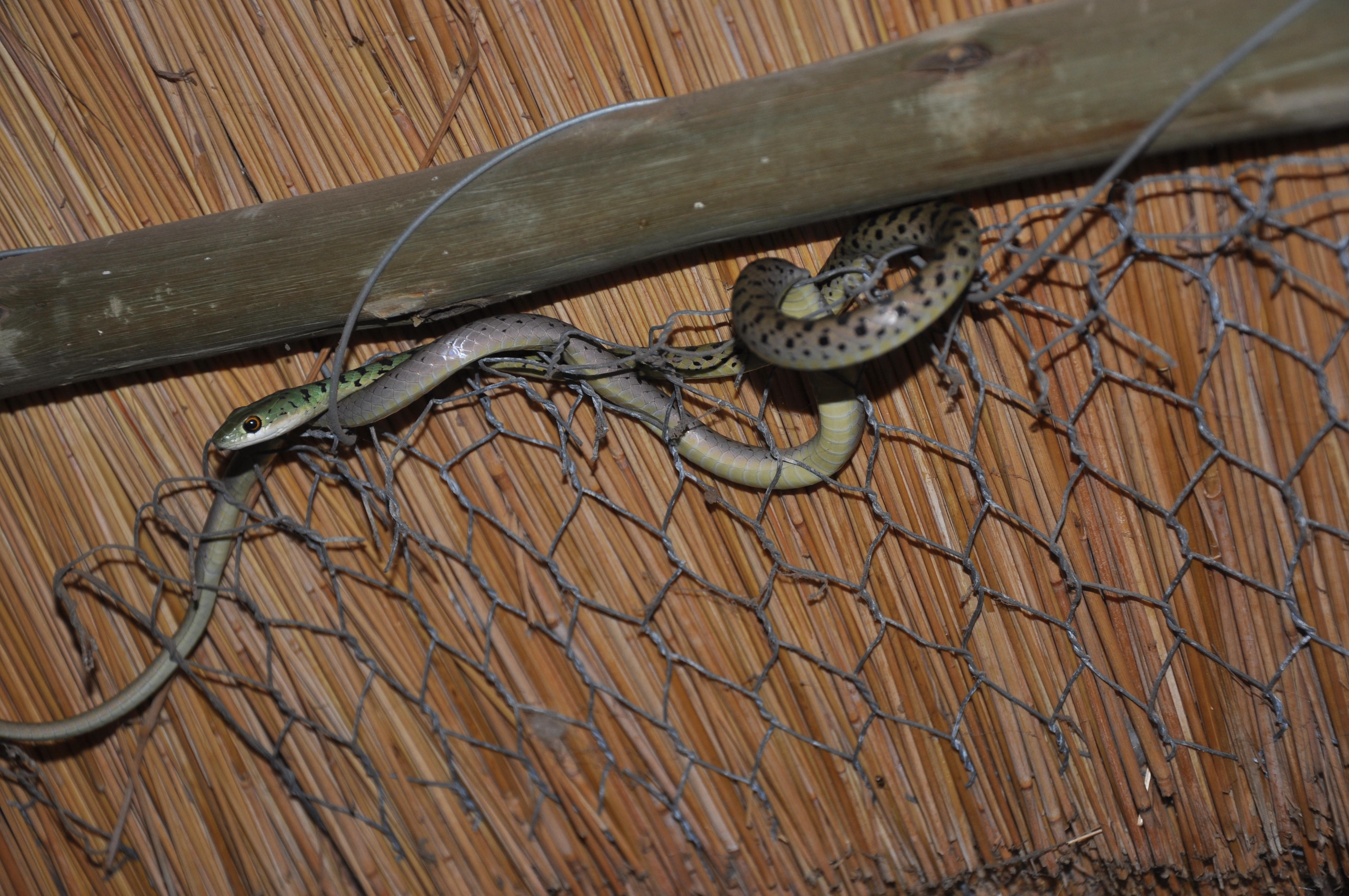
Spotted bush snake at home in the roof.
My shower was out doors and had a resident foam nest frog living on a shelf. One morning going for a shower I heard a terrible squealing. A spotted bush snake had my frog and was busy devouring it. It took over an hour to swallow my friend.

Spotted bush snake eating a gecko
I once had a pair of orphaned baby tree squirrels (yes mum fell afoul of a Mamba) When they where big enough I would sit in the garden with them whilst they ran around exploring. The little female was quite brave and was scampering around on the rocks. Next thing I hear a piercing squeal and the little squirrel shot up into a low branch. I raced over and scooped her up and sat with her in my hand for about a minute whilst she breathed her last. A Puff adder sitting in a crevice had struck her.
But for all the horror stories snakes are fascinating things and it is a thrill to see them in action so close. I would rather they stayed out of my house though, the garden is close enough! When we learn to live with nature it offers us such rewards.
And so our cameras keep on clicking.
We can’t begin to tell you how excited and grateful we are. Thanks to all of you, we’ve raised over $36,000 to keep Snapshot Serengeti going through our funding gap. You did it. And all the funds raised over our $33,000 goal will go towards expanding the survey (read: replacement cameras to fill in the gaps left by hungry hyenas) and keep it running even longer.

Not only are the pictures produced by the Snapshot Serengeti fun and funny, breathtaking and surprising, they are also real scientific data — data that wouldn’t be possible without your help. By clicking away night and day, the cameras give us a window into the Serengeti that we’ve never had before. One photo is an anecdote; thousands – or in our case, millions – tell a story about the way this ecosystem works. We’re learning how all the large predators live together, even though they kill each other whenever they can. We’re learning how prey animals try to balance their need to eat with avoiding being eaten themselves. And because our camera survey is currently the biggest in the world, and we’re the first to use camera traps to answer these questions, we are actually developing new statistical approaches to use camera trapping data – approaches that other camera trapping projects around the world will be able to use as well.
And none of this science would be possible without you. Since we launched last December, you have helped us wade through three years of data that would still be piling up otherwise. And now you’ve helped us bridge the gap between our National Science Foundation funding. We’ll be applying to research grants in the coming months, and will keep you posted on our process. But one of the coolest things about the Snapshot Serengeti camera survey (besides the incredible pictures) is that it sits on an incredible foundation of long-term research in Serengeti — research that would have shut down had we not met our goal — making it much, much harder to start back up later on.
So thank you, once again, for helping us to bring you a Season 7. In the meanwhile, Seasons 5 and 6 are still up and running – so check them out! You never know just what you’ll find…

Almost there
With just three days left, we’ve hit are 66% mark and are closing in on our fundraising goal. Margaret and I are still at ESA all week, so please do stop us and say “hi” if you’re here too!
Also! If you missed it on today’s MPR show, you can listen to the Daily Circuit story online about Snapshot Serengeti! In Tom Weber’s words, cheetah photo bomb!

We also got some coverage on BoingBoing this morning!
Thank you all again for your effort and support with this project — we really do love bringing you pictures of these ridiculously adorable cheetah cubs!
 Snapshot Serengeti