
Goodbye party
My last field season is drawing to a close. I’ve spent two and a half of the last four years living in Serengeti, and as much as I’ve missed my life in Minnesota, I can’t believe I’m really leaving Tanzania. Things have been a little hectic, so here I’m just posting some photos from my going away party.

Pre-party. Fabio is prepared.
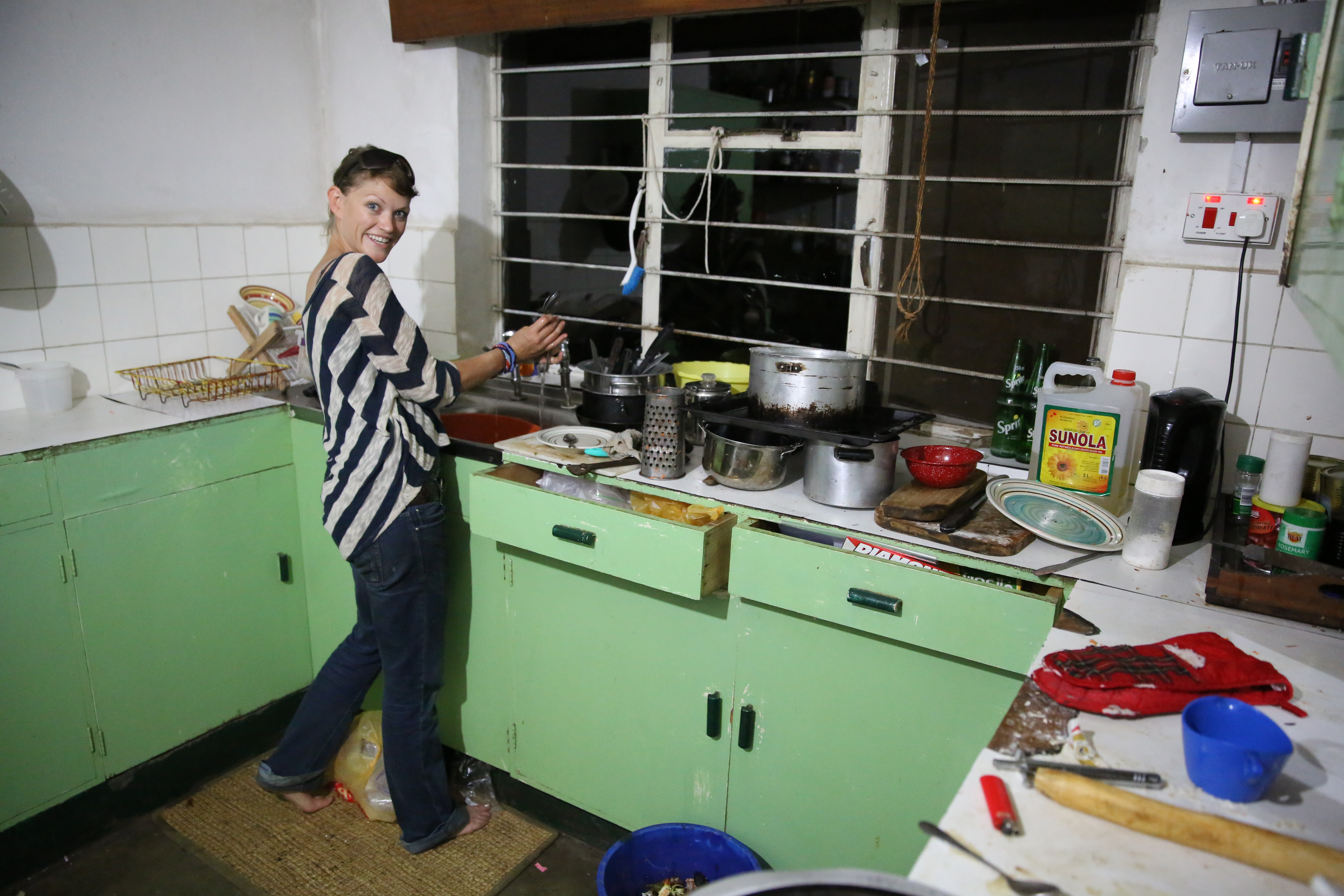
Cooking!
Winlady, who helps us with cleaning the house during the week, made delicious chapatis and pilau – a traditional spicy Tanzanian rice & meat dish. If I had any idea she was such a good cook, I’d have been bugging her for pilau every week!

The Swedish stick game. We throw sticks…at other sticks…it’s actually kind of awesome. (Hey, we have to entertain ourselves out here…)
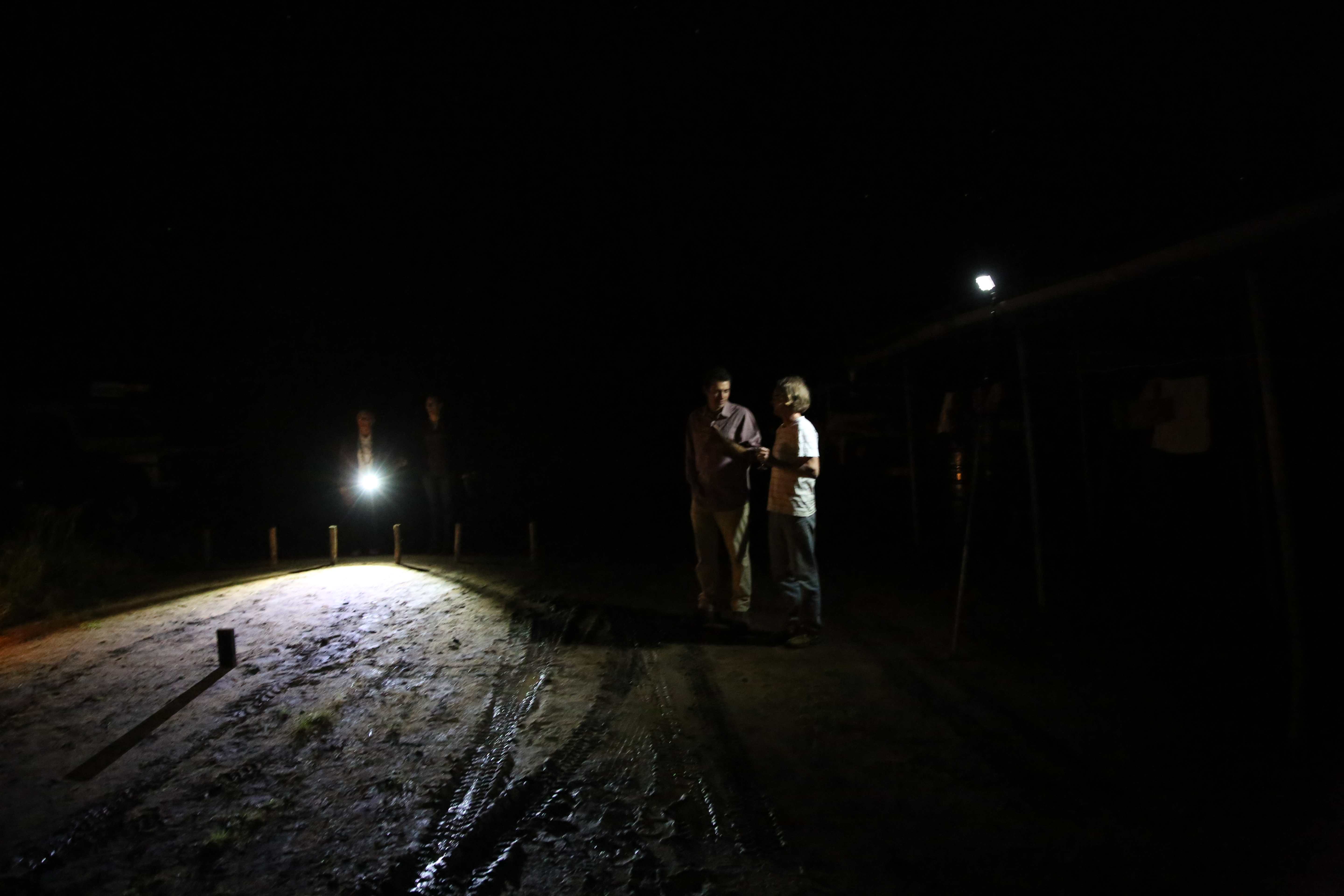
Sticks!

And then we had a visiting rhino beetle.

rhino bug.
Tom, a post-doc with the Savanna Dynamics research project, found me a going away present in the nearest town (Mugumu, ~ 3 hours away).

Oh the things you can get secondhand in Mugumu
I will miss this place.


Big, Mean, & Nasty

I recently gave a talk at the Arusha-based Interpretive Guide Society – a really cool group of people interested in learning more about the natural history of Tanzania’s places and animals. I’ve taken a few clips from the presentation that describe in a bit more detail how lions bully their competitors.
Looking at the photos above (all nabbed from the internet), how many of you would like to be a wild dog? A leopard? A cheetah? There’s no doubt about it – lions are big, and mean and nasty. If you are any other carnivore species in the Serengeti – or across Africa, lions chase you, steal your food, even kill you. So what do you do? How do you survive? That’s essentially what my dissertation seeks to answer. How smaller “large carnivores” – hyenas, leopards, cheetahs, and wild dogs — live with lions. Under what circumstances do they persist? Under what circumstances do they decline or even disappear?
There are a handful of ways in which these species interact, but what I’m most interested in is aggression and it’s repercussions. As the above pictures suggest, lions tend to dominate aggressive interactions.
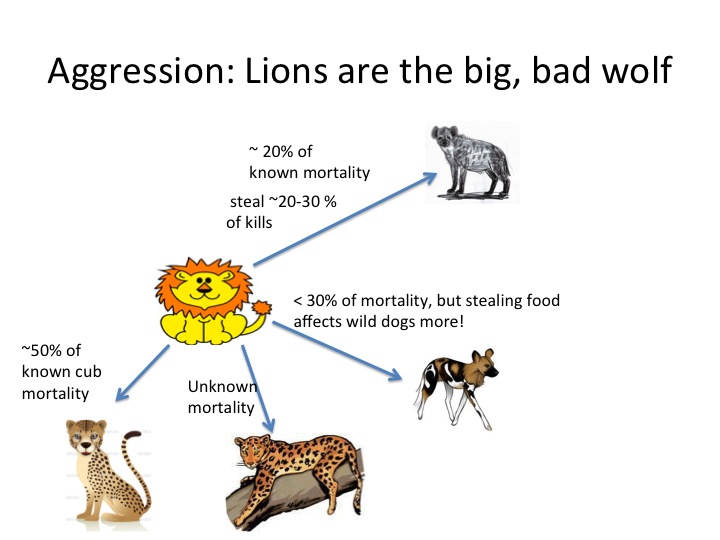
The relationship between lions and hyenas is one that has wormed its way into the public psyche through nature documentaries such as “Eternal Enemies.” While such movies play up the frequency of such interactions, they certainly do happen. Lions not only kill a number of hyenas, but steal their hard-won kills. Dispel any notion of lions as some noble hunter — they in fact steal a lot of their food from other carnivores. In fact, research from Kay Holekamp’s group in Masaai Mara indicates that lions can suppress hyena populations just because they steal food from them! It’s actually a similar story for wild dogs – lions kill wild dogs too, but since wild dogs expend so much energy hunting, that if lions steal just a small fraction of the food that wild dogs catch, wild dogs simply cannot recover. They would have to hunt for more hours than there are in a day to make up for this caloric loss.
It doesn’t stop there. We don’t know how much food lions steal from cheetahs or leopards. We also don’t know how often lions kill leopards, but lions kill cheetah cubs left and right. Studies from Serengeti indicate that lions may be responsible for up to 57% of cheetah cub mortality!

So how do hyenas, wild dogs, leopards, and cheetahs survive? Well, that’s what I’m trying to figure out. But what I can tell you is that not all of these smaller carnivores sit back and take their beating quietly. Take hyenas. They’re about 1/3 the size of a lion, but they live in groups. Big groups. Much bigger groups than lions. And if there are no male lions around, if hyenas have strength in numbers, they can steal food from female lions, and even kill their cubs. While leopards don’t live in groups, they can easily kill (and eat!) a lion cub that has been hidden while mom is away hunting.
Unfortunately, what we don’t know is whether this reciprocal aggression by leopards and hyenas has any measurable affect on lion populations, and whether it’s this aggression that allows hyenas and leopards to coexist with lions. The cameras behind Snapshot Serengeti will provide the first-ever map of leopard and hyena distributions within the long-term lion study area – by comparing lion reproductive success (which we know from >45 years of watching individually identified animals) to leopard and hyena distributions, we can see if lions do better or worse in areas with lots of hyenas or leopards – and whether this is due to getting less food or producing fewer cubs.

What about cheetahs and wild dogs? Even though wild dogs, like hyenas, live in groups, there’s no evidence that this helps them defend themselves or their kills against lions. And cheetahs, well, there’s no record of them killing lion cubs, but who knows?
So how do these guys live with lions? To be honest, wild dogs don’t tend to do very well in places with lots of lions. In fact, it’s generally believed that wild dogs have failed to recolonize Serengeti, despite living *just* a few km from the border, because lion populations are so high. For a long time, researchers and conservationists believed that cheetahs also couldn’t survive in places with lots of lions – but that perception is beginning to change, due, in part, to data coming in from Snapshot Serengeti! It seems that cheetahs not only do just fine in reserves with lots of lions, but use the same areas within the park as lions do. I have a sneaking suspicion that how cheetahs use the habitat with respect to lions, how they avoid encountering lions even though they’re in the same places, holds the key to their success. Avoidance, combined with habitat that makes avoidance possible (read: not the short grass Serengeti plains you see below).
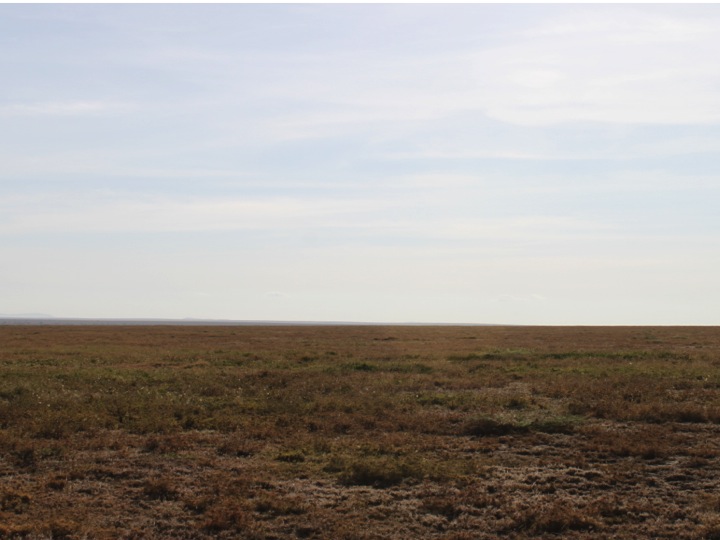
I’ll write more about avoidance and habitat another day. In fact, I’m currently revising a paper for a peer-reviewed journal that addresses how cheetahs and wild dogs differ in the ways they avoid lions – if accepted, it will be the first appearance of Snapshot Serengeti data in the scientific literature! I’ll keep you posted…
Data-palooza
You might remember the Kibumbu pride from their rather gruesome encounter with a leopard. But probably not – that was a long time ago.
They now have a new claim to fame. As of April 22, 2013, the Kibumbu lions became the first Serengeti pride to bear a GPS collar. GPS collars are cool, but if you are a nerd like me, and trying to calibrate 225 camera traps against the known reality of animal movements, GPS collars are really [expletive deleted] cool.
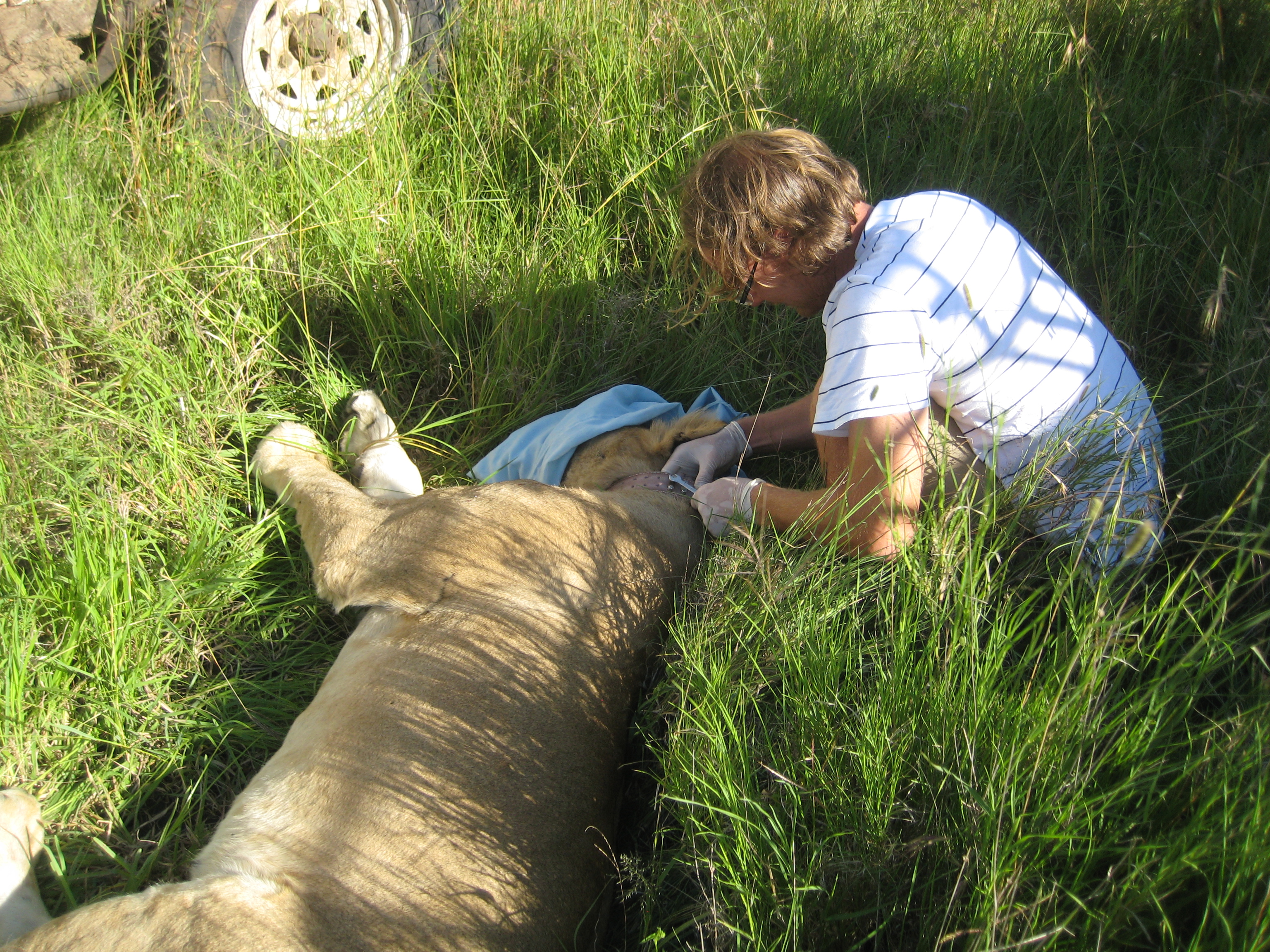
Daniel collaring a study lion
With regular old radio-collars, we have to get out in the field, driving (seemingly aimlessly to bystanders) in circles on hills until we get a signal in the direction of a given lion pride. With 26 prides being monitored now, we get to each pride about once a week. But with GPS collars, the data comes to US. On it’s own. EVERY HOUR. I can tell you where the lions are without ever leaving my hyena-chewed, baboom-mangled armchair. Data of this richness are simply impossible to get otherwise. I tried a few “all-night follows” – trying to serve as a living GPS collar. Trying to figure out why, when lions are lurking 300 meters from a camera trap, they don’t appear in it. I usually fall asleep by 9pm. Apparently I don’t make a very good GPS collar.
You might wonder why on earth we don’t have 26 GPS collars, instead of 1. Unfortunately, they are expensive (read >$5,500 a pop), and the battery life doesn’t last as long as regular old VHF collars, meaning we would have to dart lions more often – which is a stress that we like to minimize. But Ingela Janssen had an extra collar from her conservation work in the Ngorongoro Conservation Area, and the chance of calibrating camera trap captures against hourly lion movements was too good to pass up!
Here’s the first map of Kibumbu’s movements. The first position came in at 6pm on April 22, and the last was recorded on the 23rd at 9pm. Since lions are nocturnal, we take one position every hour from 6pm to 7am, and then one position during the day (at noon). You can see from the lines that lions can move quite a ways without actually getting very far.

Kibumbu’s first GPS recorded movements
And here’s their latest map.

And the last few weeks…
I realize that these graphics don’t give you any sense of where in the study area the lions are. Until I figure out how to work some really cool magic with Google Earth, here’s a map of where the cameras are. You can see from Kibumbu’s maps that they are hanging out along a (sometimes dry) river – the Ngare Nanyuki – which I’ve circled in red on this camera layout map.

Camera Traps – Ngare Nanyuki River circled
The GPS collar won’t show up until Season 6 camera photos — but it looks a bit different from our normal collars with two big lumps instead of one:
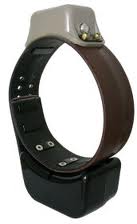
Vectronic GPS collar – stock image
So keep your eyes peeled!
Mom’s Visit
After living here for the last three years, I’ve finally dragged my mother into the bush. At 69 years old, I don’t think she is thrilled about our seatless (squatting required) outhouse, or the fact that she can’t blow dry her hair, but she’s been a good sport about everything so far – from layers of dust that covered all of her luggage to the relentless rattle of my noisy Land Rover.
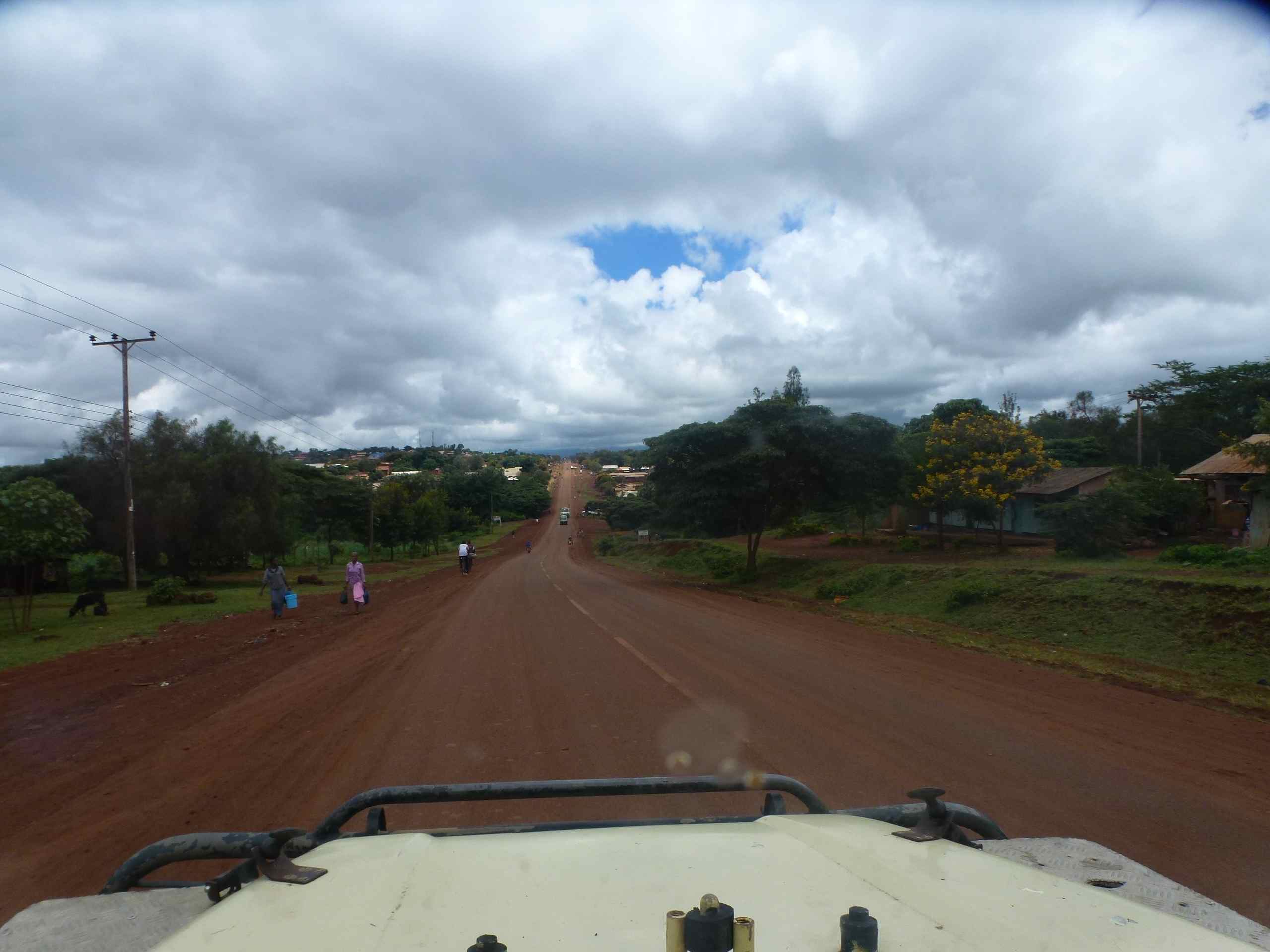
Arriving.
Arusha was harrowing (to be fair, it is hard to remember to look the “wrong way” when crossing the street)
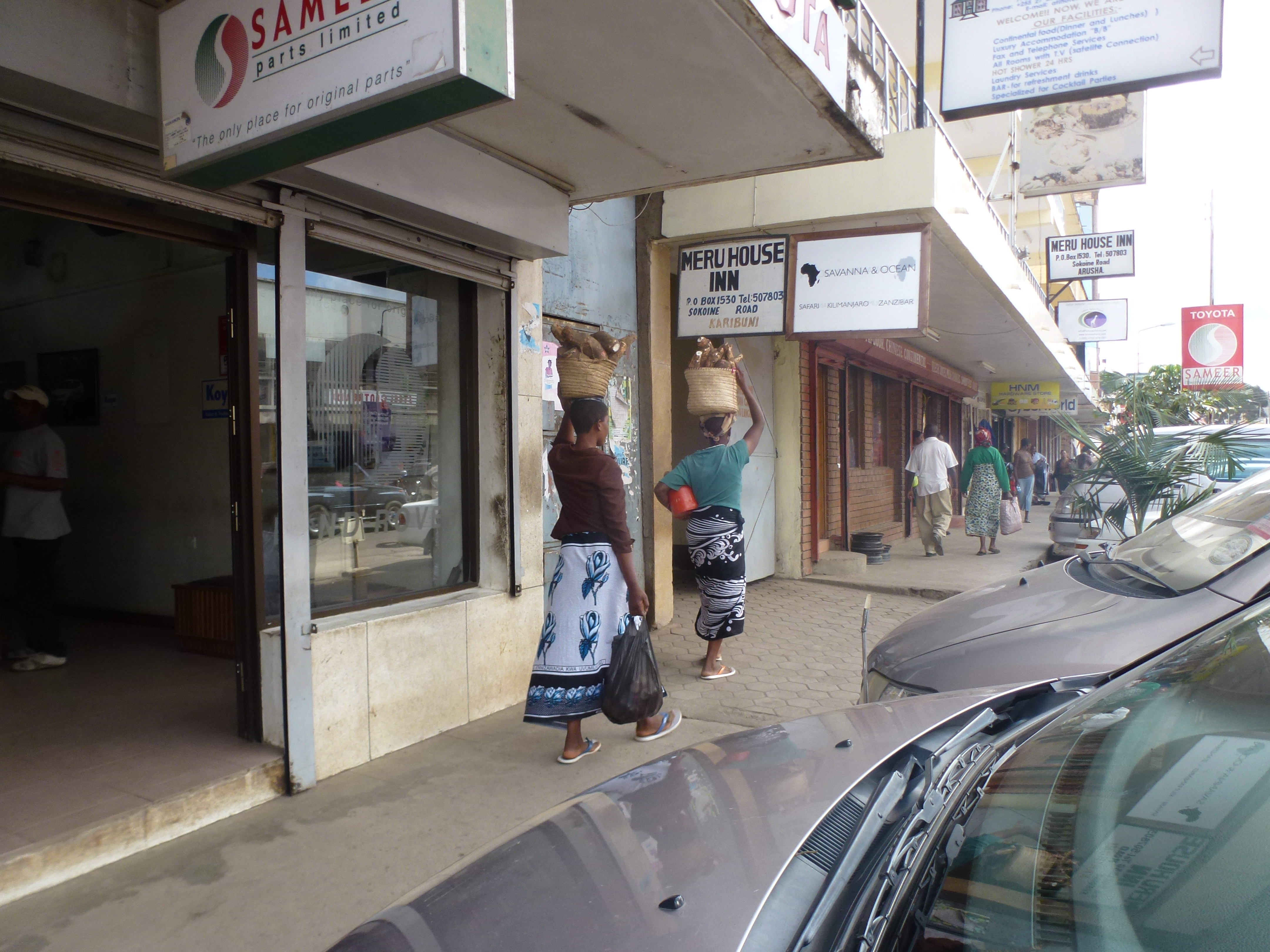
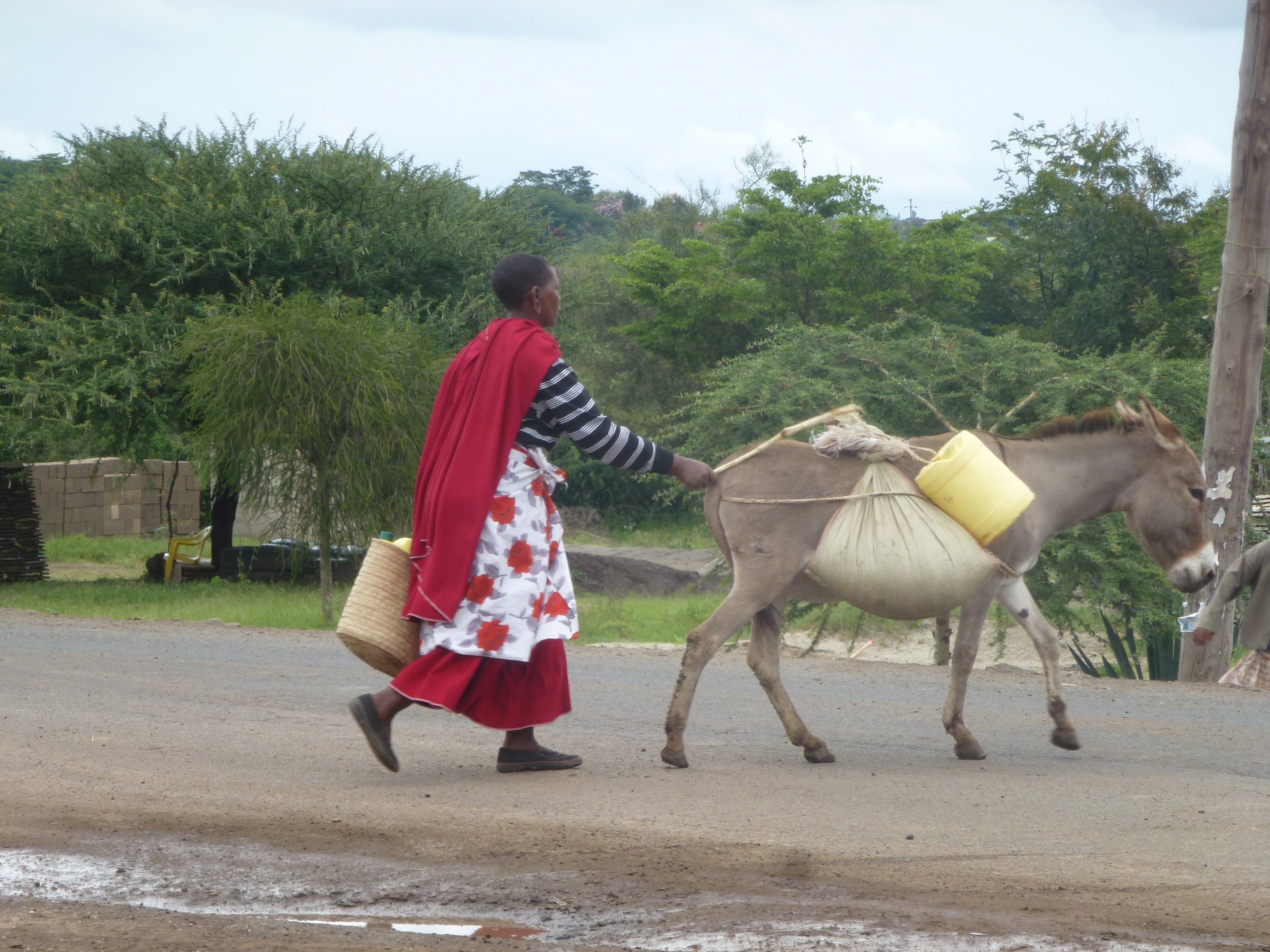
but I can’t complain, as pretty much all we’ve done since she got here is eat AWESOME food. And you all know how I feel about food.
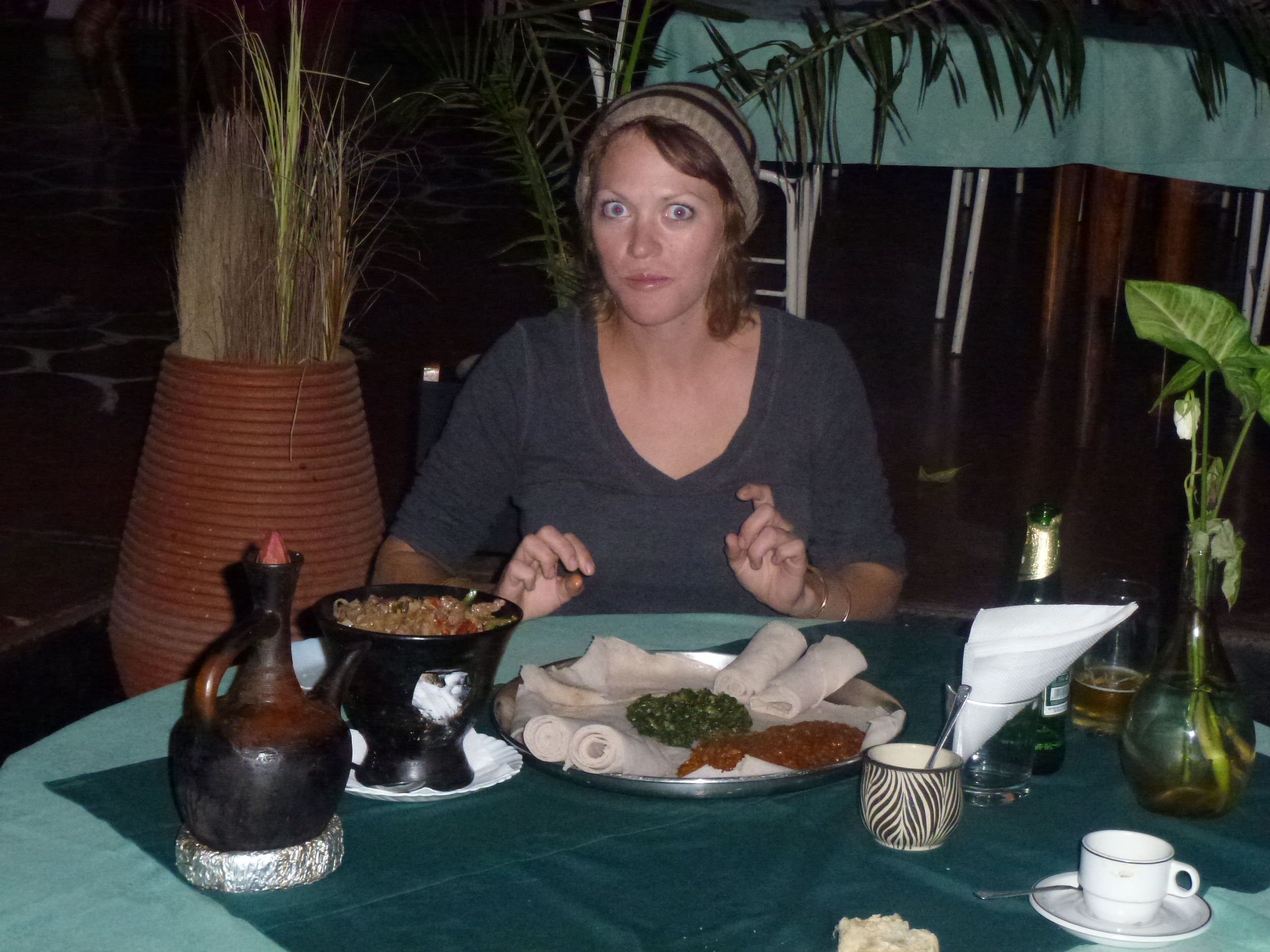
Food. Caught in the act at Ethiopian.
Grocery shopping was a little less fun than eating out…
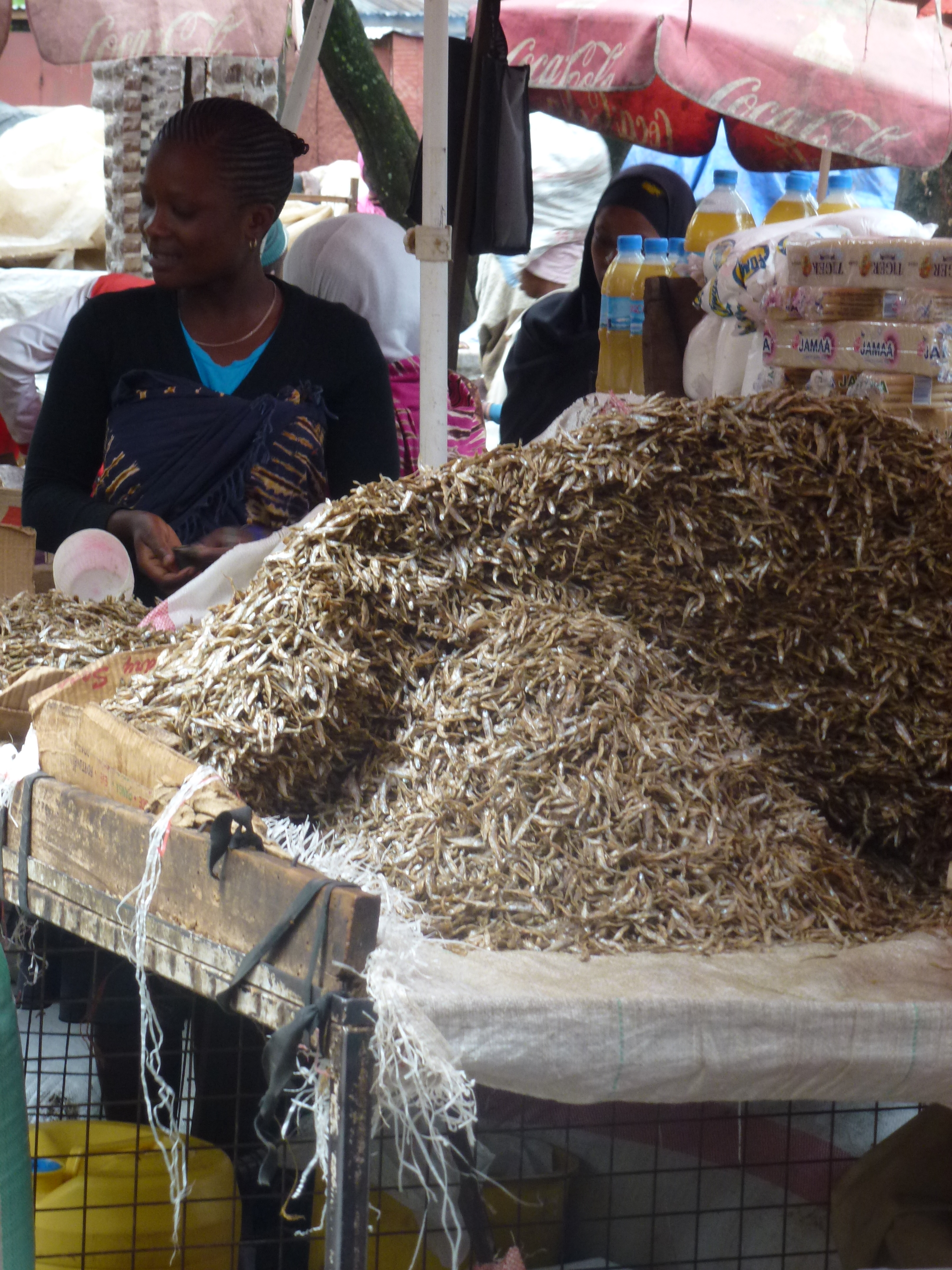
Dagaa at the market. One of the few things (alongside marmite) that I *do not* eat.
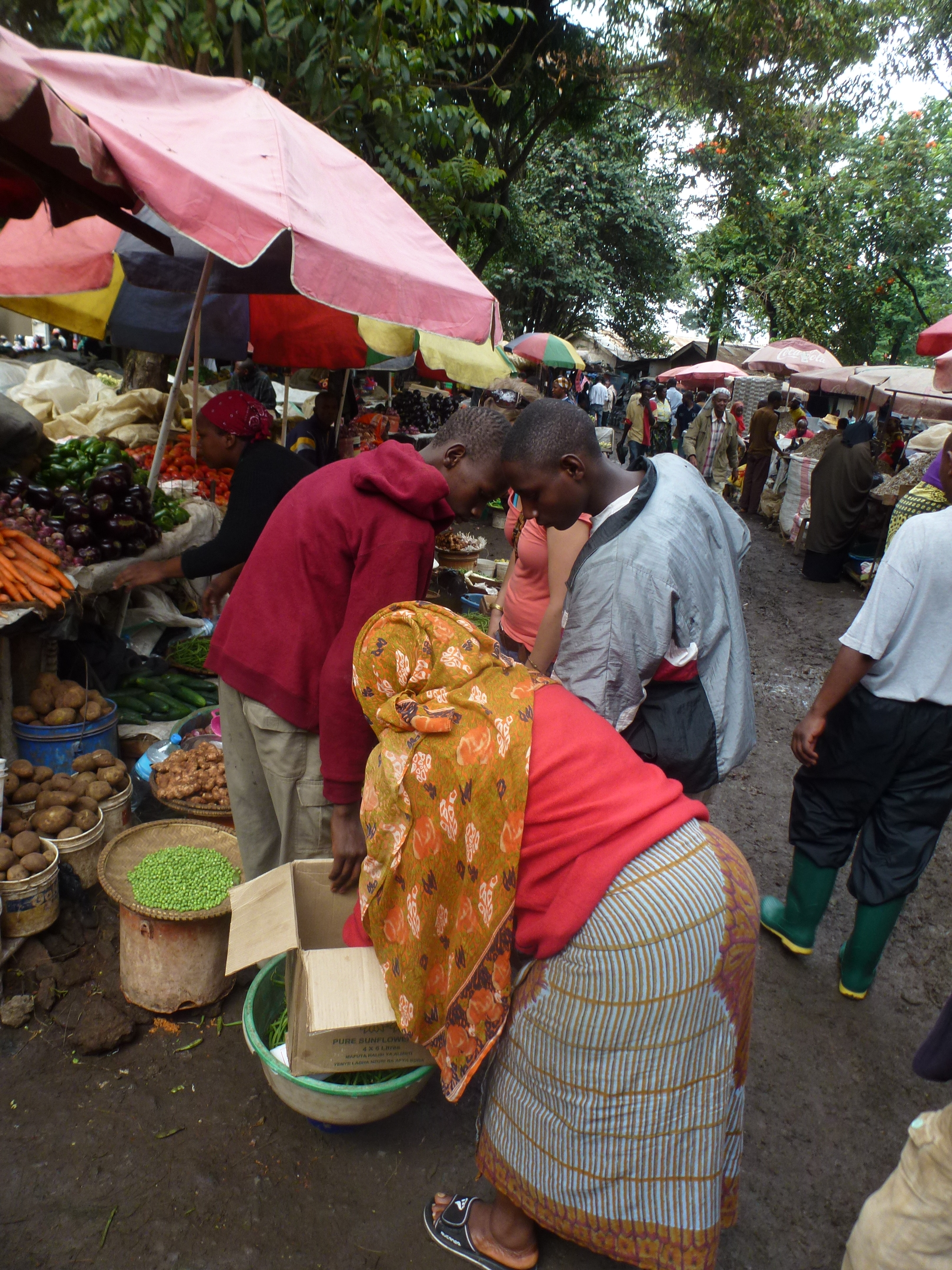
Grocery shopping.
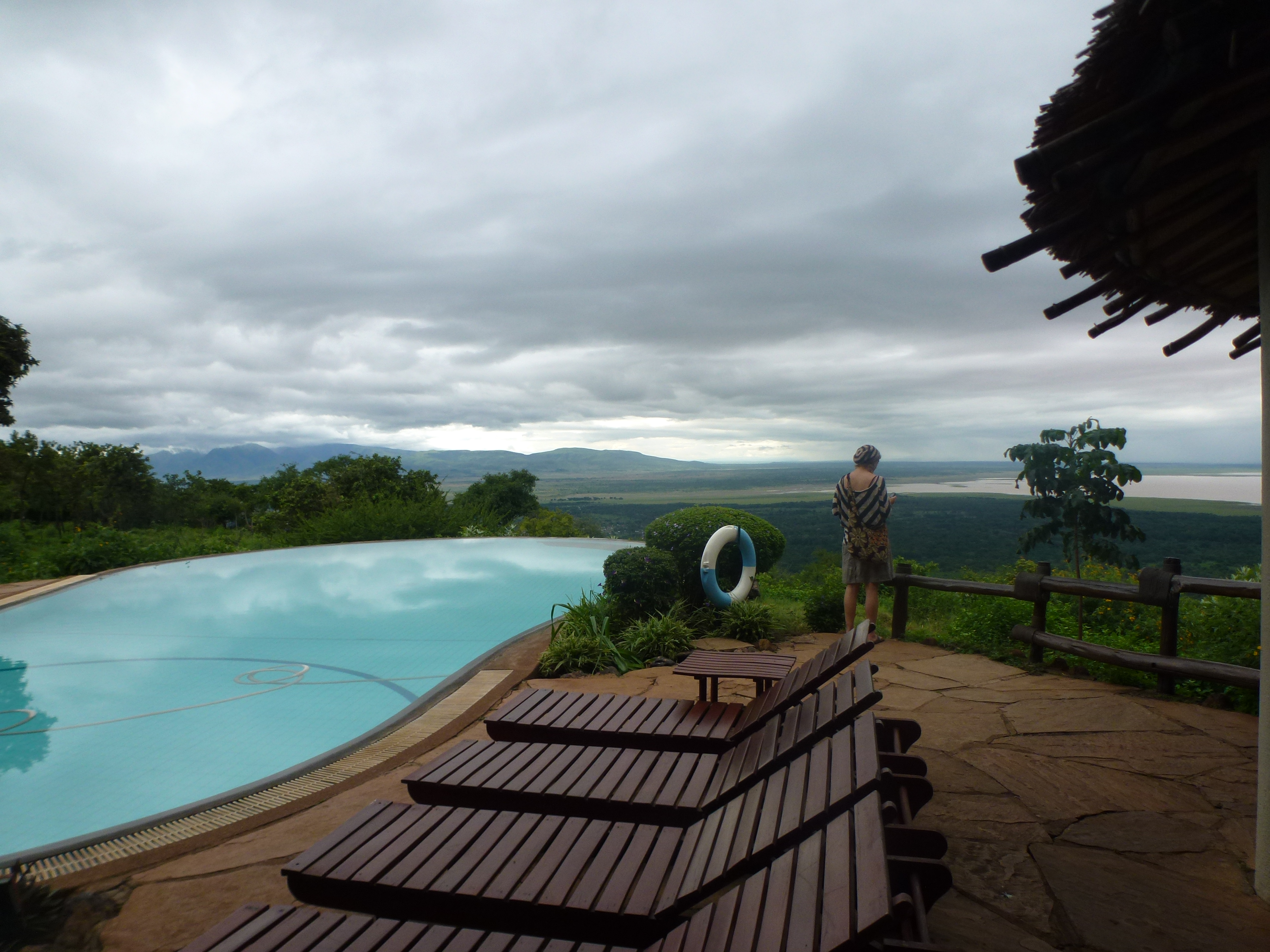
But we broke the trip from Arusha to Serengeti into 2 days, and got to stay at the super fancy Serena Manyara along the way.
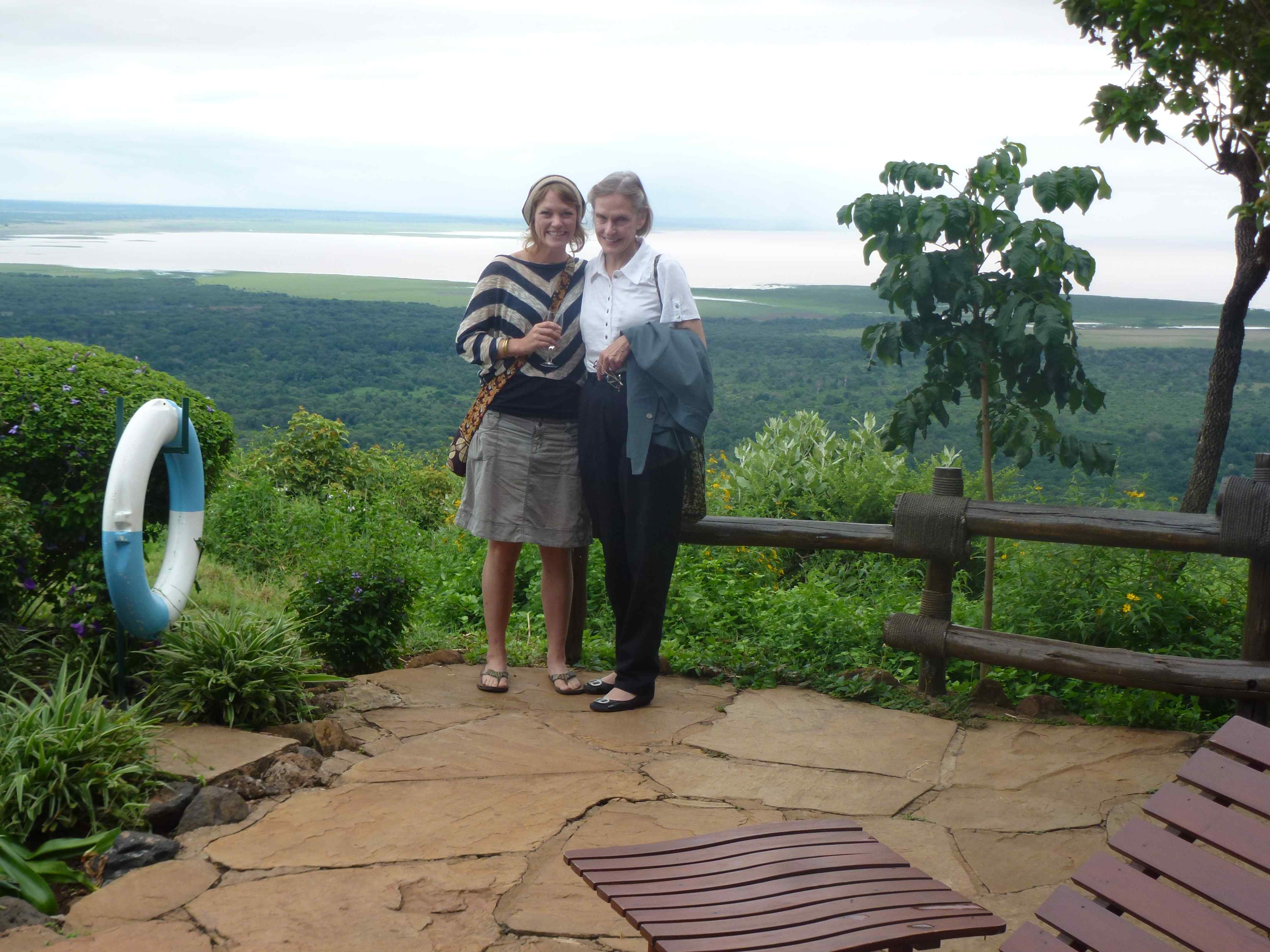
Mom & me at Serena Manyara. I’m thinking about food…
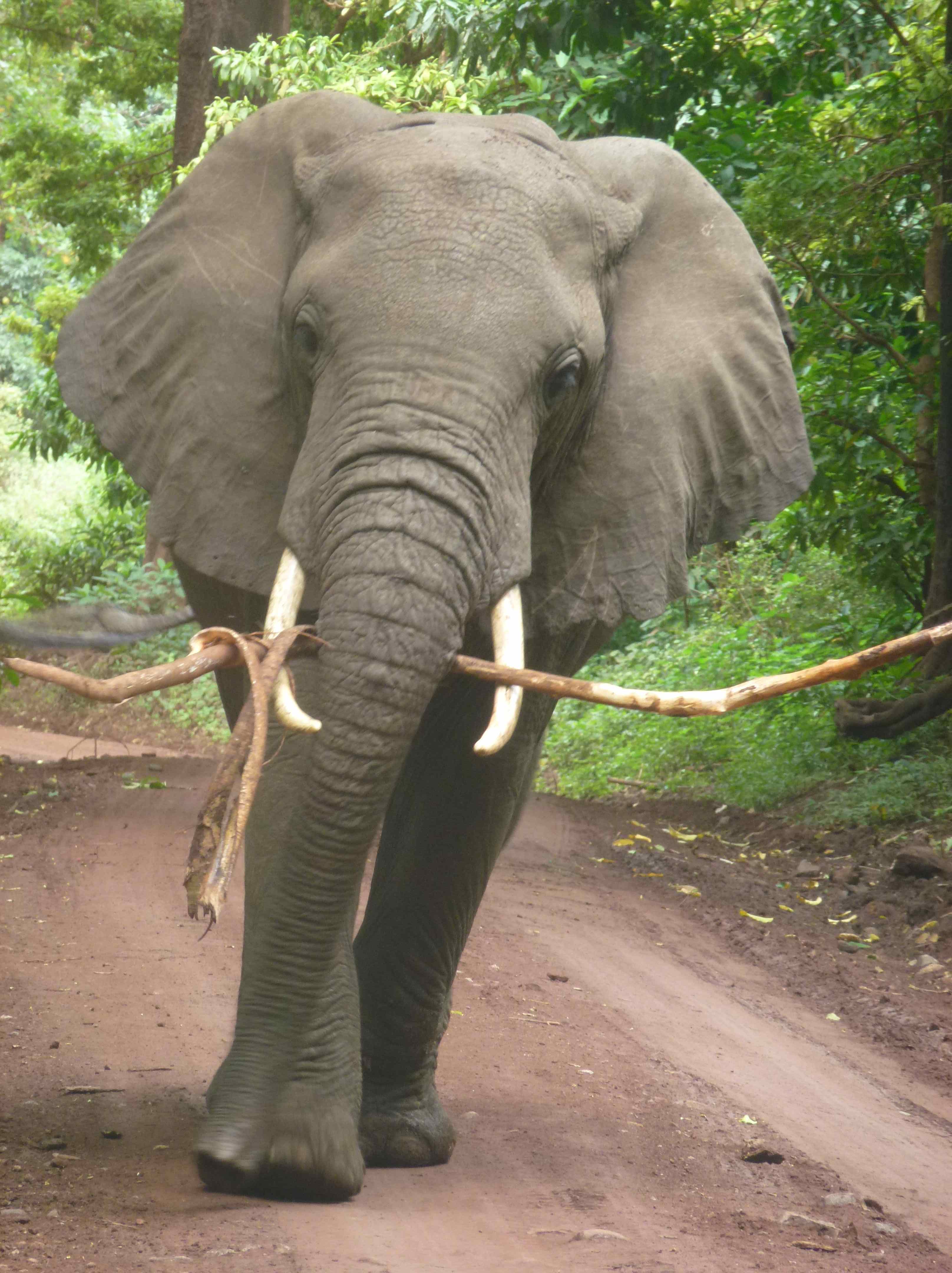
And we got a personal welcome into the park…
I’m just glad my mom is here, squat-choo or not. More pictures to come!
This is the wet season
### Craig, his wife Susan, and lion researcher Daniel and I went camping at Barafu the other night. These are Craig’s thoughts as we all sat on top of Barafu kopjes, watching the wildebeest out on the plains. ###
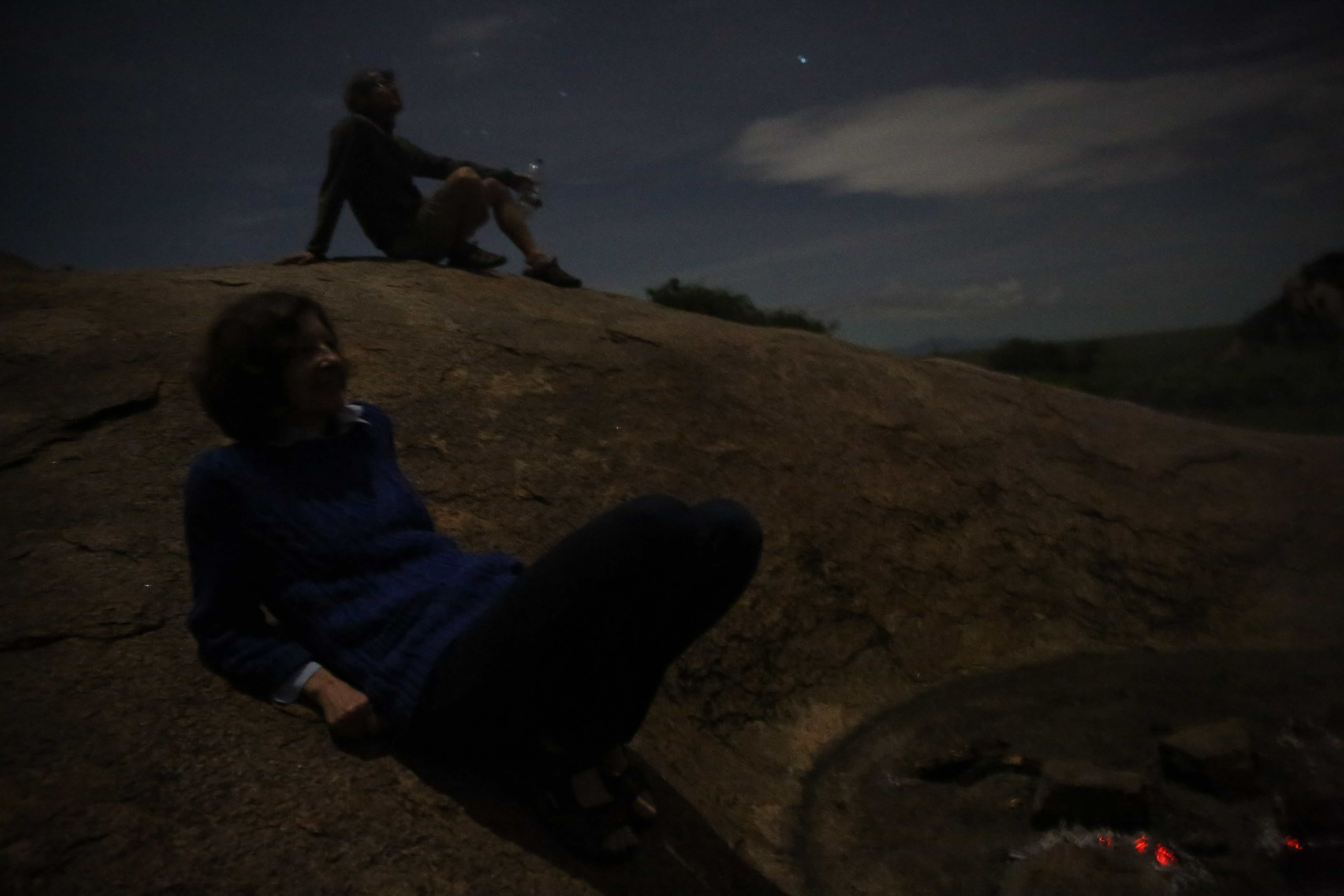
Daniel and Susan sitting on Barafu
The rains have been especially good this year. We are camping at Barafu Kopjes, at the eastern edge of the lion study area. The wildebeest have moved very far east, as I type this, I can hear them grunting loudly. The noise will only reach greater volume in the coming weeks as the rut approaches. The grass is green, the sky is full of rain clouds, and this is really the most glorious time to be in the Serengeti.
Back within the camera trap grid, the grass is getting tall, and Ali has to mow it every time she checks the cameras. There is almost nothing for the lions to eat inside the grid; most of the lions have moved very far to the south and east. This is the happiest time of year for the wildebeest, zebra, and gazelle – they are out on the open plains where they can see any danger approaching. They can easily move off away from a hyena, a lion, and still be in the lush green grass –so short it’s like the fairway of a golf course. For the lions, though, having to shift so far outside of their usual territories, this is a time of uncertainty. They may encounter rivals, unwelcoming territory holders, and so they move quietly across the land, always on edge. Further to the east, across the park boundary, into the Ngorongoro Conservation Area, there is also the danger that our study lions may encounter the Masaai warriors. Several years ago we lost three of our study lions in a wet April like this one.
All the grazers are drawn eastwards by the extraordinary richness of the volcanic soils immediately downwind from the Ngorongoro highlands. Without the wildebeest, the grass would be nearly as tall here as anywhere else, but it is so sweet, that it is mowed right down to the ground. The vistas here are breathtaking; every animal looks as though it’s floating in green space. It’s almost like snorkeling – the bright orange of the gazelle from head to toe, the vivid black and white stripes of the zebra, the dull brown of the wildebeest but in such mass it’s like a living train as the herd flows across the landscape. And lions, when we see them, stand out a mile. Usually they look like the bulls-eye – a large green target with a concentric circle of brown wildebeest around them.
This is the wet season.

Ali with sausages. Lots of sausages.

Susan, Daniel, and Ali, preparing a feast.

Wouldn’t be camping without a campfire.
Visitor!
I am back in Arusha. The drive this time was 9 hours long; the broken shock and my jua kali repairs didn’t help matters. Jua kali means fierce (kali) sun (jua), and is often used to refer to the type of repairs you get in the bush. Me tying my broken shock into place so it wouldn’t rub against the tire, and tying the coil spring down with twine in hopes that it wouldn’t pop out is a prime example of jua kali repairs. Wire, twine, mpira (old tire rubber) and duct tape. But a jua kali mechanic is worth his weight in gold – he can fix your Land Rover anywhere, anytime, and the rest of us who live in the bush strive for jua kali proficiency.
To be fair, the broken shock was easy. Last trip in, Norbert and I not only got two punctures, but broke the high-lift jack! That slowed down the puncture repairs some…
So. I am exhausted. Back in Arusha, and while there are a million project errands to run – filling our butane gas tanks, getting cash from the bank, and of course buying fresh food — the biggest reason I’m back in civilization, elbowing my way through a sea of people trying to sell me maps and newspapers, is because my mom is coming to visit. And while I’m absolutely thrilled to share this place with my family, I will admit I’m a little apprehensive. My mom is 69 years old. How is she going to like braving the outdoors for the long walk to the choo when nature calls at night?? At least this time I won’t let Daniel set out Fabio for her walk back…
Gombe, part II
## Follow up to Chickens have necks? ##
If he didn’t look so earnest, I would swear Hamisi was getting us lost on purpose. He’s now 40 steps ahead of me, my legs feel like lead (can lead burn?), and he turns around – “Are you tired?” he asks. A mischievous smile darts across his face and I give him my best withering death stare. “You’re killing me, Hamisi,” I grumble, plodding after him. Hamisi is my guide in Gombe. He is tiny, grew up in Kigoma not far away, and manages to trek these hills every day, in blue jeans (!), without so much as a pause. We are climbing to some waterfall that simply cannot be worth this. These are not hills; they are mountains. And I am pretty sure my legs are about to fall off. Like, detach from my torso and fall off.
I work out, I really do. Mostly to keep my sanity in the otherwise sedentary Serengeti. We can’t run, we can’t hike, we can’t do our fieldwork on foot; we spend all day behind the wheel of a dusty, power-steering-less Land Rover, and return home exhausted despite sitting for 10 hours straight. But apparently my kickboxing bag and TRX routines are no match for the hills (ha, mountains!) of Gombe. I can’t believe Lisa and all of the Jane Goodall Institute chimp researchers do this every day. These people are machines!
Despite the lactic acid leg burn, Gombe is kind of awesome. I feel like I am in the jungle, whatever it is that makes something actually a jungle. My mom calls me sometimes on Skype. “Are you out in the jungle?” she’ll ask. I’ll tell her I’m in the bush, Mom, but it’s a savanna, not a jungle. Though without fail, next phone call it’s the same question again. But here in Gombe, if anything feels like a jungle, it’s this. I am clawing my way through vines and chest high grass, tangled, disheveled, and entirely ungraceful, trying to keep up with the chimpanzees that glide seamlessly like little jungle fairies through the forest. Apparently not only am I out of shape, but I am also really uncoordinated.
If you read Chickens have necks? you’ll know I’m visiting my good friend and colleague, Lisa O’Bryan, at her research site in Gombe Stream National Park. It took three days to get here, and it will take two more to get back home. Which leaves me only two precious days to explore this magical place before getting my weary legs back into the (Serengeti) bush and back to my camera traps. Going out with Lisa on her observations, we follow Freud – an old male who spends most of his time alone. Eating.
As it turns out, chimps are only marginally more exciting than lions; whereas lions spend 90% of their time sleeping, chimps spend 90% eating. We watch Freud high up in an msilote tree, plucking the yellow flowers and stuffing them in his cheeks. 4 hours later, he descends, pauses on a rock to let out a looooong chimp fart (which, having the sense of humor of a 13 year old boy, I couldn’t help but laugh at), and then he starts walking. And eating. So, either chimps eat while the sit, or they eat while they walk. That’s a lot of eating. And the adults are big, and the babies are cute. Just as cute as they look in the movies. But not cute enough to make my legs stop aching. My Land Rover never seemed so comfortable before…
An ode to ants.
### Cameras have been keeping me busy — and the relentless rain that turns the landscape to soup isn’t helping me move quickly. I’m so exhausted I can barely keep my eyes open, and am frantically prepping for another several day camping trip. So! Thought I’d pull up and old post about ants. Although often a nuisance, they are pretty awesome creatures. You can learn more about ants here. ###
I keep flinching and slapping at the invisible bugs that land and leap away so fast I can’t tell sometimes if they are real or merely a figment of my imagination. By the time I slap my arm, they are gone, and all that lingers is that faint distant tickle on my skin. Craig peers up at me over his little wire glasses. We are wading through 25 years of radio-collaring lion data and I am playing the dusty, bugbitten, in-desperate-need-of-beer secretary. He gives me a withering stare as I twitch murderously at the bugs that seem to molest only me. “It’s all in your imagination,” he says with a playfully dismissive wave of his hand as he hunches back over the dusty files. Seething in indignation, I am finally successful in my arthropod assassination attempts and throw my tiny offender at my academic advisor. “I don’t want your pickings!” he squawks. Merciless, I catch another and drop it in his lap. Satisfied, I resume recording.
I think the bugs are the only thing I dislike more than the baboons that crap on our veranda. The ants recently invaded our drop toilet (the only one in town where you still have to squat), milling about on the concrete slab in typical ant frenzy. African ants seem to be generally unstoppable. They swarm across our kitchen countertop so thick that the white laminate is completely obscured. Yesterday I saw them dragging a dead tsetse fly across our windowsill. They are tiny pinprick ants, so ghostly as they crawl across your skin that you’re never quite sure if you’ve merely imagined them. But we don’t imagine them in our food. They are baked into our bread, spooned into our leftovers, drowned in our drinking water…They even invaded my canister of refrigerated Lindt chocolates. They flail hopelessly in our wash water and get stuck in the little holes of our makeshift shower bucket. I think sometimes they bite – the backs of my legs are covered with little red itchy bumps, and if they aren’t ant bites then they might be tick larvae, which is even more disgusting.
As much as I would prefer not to share my shower with a thousand tiny freeriders, I have this strange love/hate/admiration/disgust relationship with the colonial creatures. Philipp tells me how some ants raise aphid “livestock,” carrying their little aphids around to leaves and then milking them of their leaf-juice. Some ants live in little black balls on the whistling-thorn Acacias and attack hungry ungulates that dare to browse on their branches. One day while scouring game trails for fresh carnivore sign, I discovered a series of 4-inch wide paths that wove between the trees. I turned to the camera trapping guru by my side, the funny German who’s spent the last decade in the remote west-African bush. Ants! Philipp says.Yes, the ants move in such volume that they create barren little tracks through the woodland grass. Sometimes we can see the ant army marching in rigid formation outside the Lion House. They appear out of nowhere against our cinderblock corners and trudge across the dirt. I don’t know where they are going, but they look like they’re on a mission. Perhaps they heard that there was something in the outhouse.
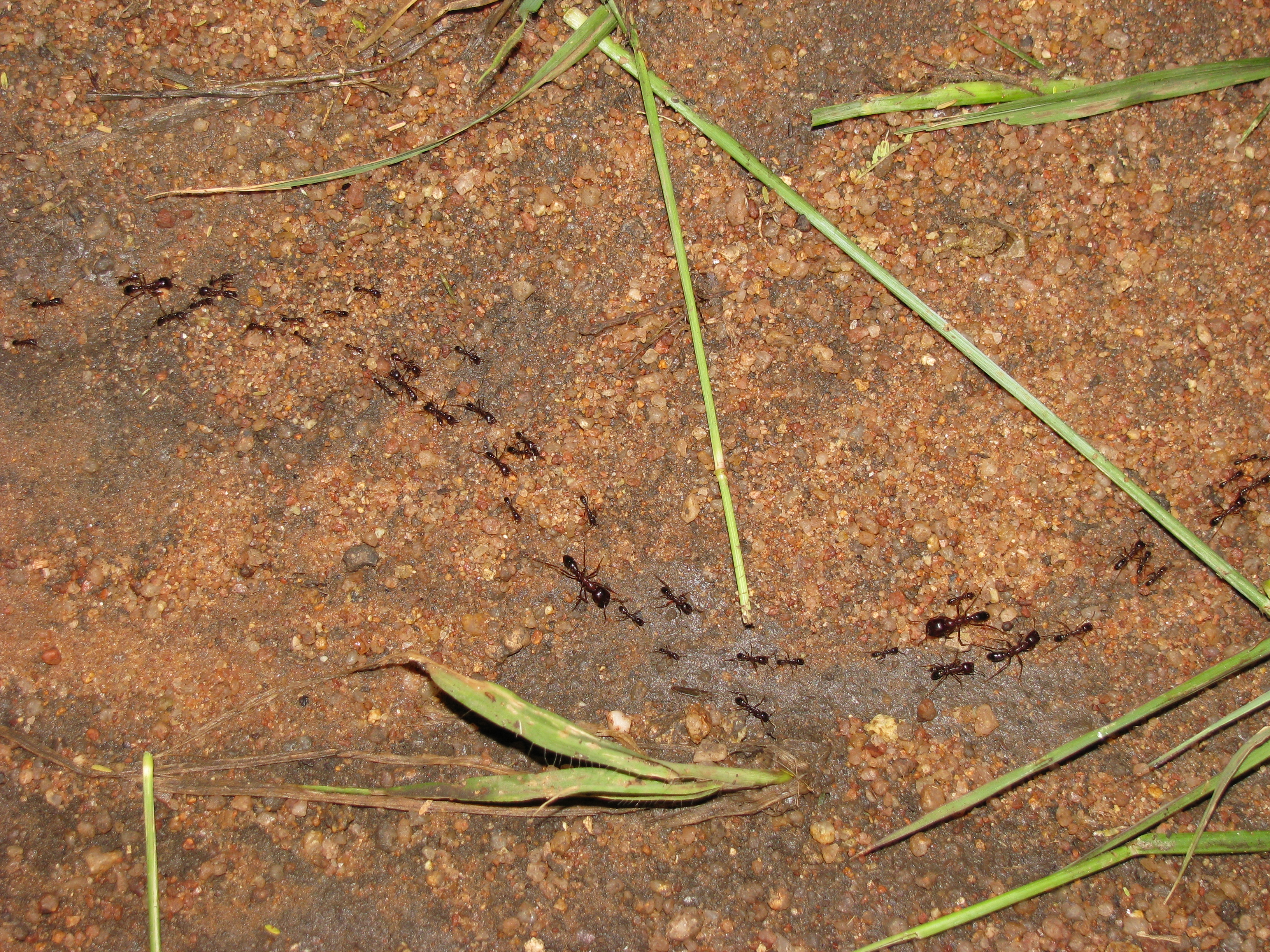
Owch.
Have *just* gotten back from Gombe and already back in the field frantically trying to finish camera traps before my mother comes out to visit. Stories of chimpanzees to come soon.
In the meanwhile, here’s a link to a clip that National Geographic Television did on lion-cheetah interactions. While lions kill a lot of cheetah cubs, they also occasionally kill adult cheetahs, as you’ll see in this clip. Since cheetahs don’t pose any direct threat to lions (unlike hyenas and leopards, which can kill lion cubs), and they only have minimal diet overlap, we’re not entirely sure why lions seem so intent on killing cheetahs. Watching this video clip, what do you think is going on?
Chickens have necks?
I often forget that chickens have necks. I mean, who eats neck? You buy chicken breast in the stores, barbecue some drummies, get wings at your local bar, or pick up a bucket of fried (yes, I’m originally southern and have a weak spot for fried chicken). But never eat neck. You can’t rock up to KFC and ask for a 2-piece meal with a neck.
But as it turns out, they are surprisingly tasty. I am gnawing on one right now, trying not to dance to the music.
What is love? Baby, don’t hurt me. Don’t hurt me. No more.
Yes, that’s right. I’m sitting at a hotel in Mwanza and “What is love” is blasting behind me. Apparently it is Easter, and there is a big celebration. It’s kind of amazing. And surprisingly hard to not groove along. Now Ace of Base’s “I saw the sign” comes on. I feel like I am 10 years old again.
I’m on my way to Gombe Stream National Park, home to Jane Goodall’s long term chimpanzee research center, and temporary home to my dear friend Lisa O’Bryan – a fellow UMN grad student who does the same long field stints there as I do in Serengeti. Lisa’s just received a competitive grant from National Geographic (read her blog) to study some of the ins and outs of chimpanzee communication. I’ve been meaning to visit her since we both first came out in 2009, but whenever I’m out here the months just slip away. I mean to go to places like Selous and Katavi, but before I know it I’m frantically finishing the last round of cameras, revising our data backup procedures, trying to figure out who the last 20 lions were that I saw, devise new hyena-proofing strategies, and board my plane home in a rush of papers, data entry, accounting, phone calls and goodbyes.
And so, even though I don’t have time for it any more than I ever do, even though I’m already counting the days I’ll need without rain to finish my vegetation assessments before leaving Serengeti for good, I’m taking a week and going to Gombe. For the record, by “week,” I mean four days in transit, and two at my destination. But that’s okay; it’s all part of the adventure.
For example, I caught a lift with a Tanzanian researcher – Chunde, a disease ecologist – out of Serengeti, west to Lamadi. Nearly two hours late, because the 10-minute job at the garage turned into 90 minutes, Chunde picks me up with a roll of his eyes. “Tanzanian time,” he says, and grins. We’re in Lamadi by noon, and soon I’m on a bus to Mwanza. A very, very, very full bus. I’m standing, gripping the luggage racks for dear life, chickens squawking at my feet, admiring the variety of decorative hairstyles in front of me. Several hours later, after some games of peek-a-boo with kits in the nearby seats, we’re there.
And I’m here, at the amazingly local Lenana hotel. With Ace of Base fading into horn music into the deep thumping base of Tanzanian dance music. For the first time in a long time, I’m on holiday. Chicken neck, 80’s music, and a lot of stares – and tomorrow? Kigoma, and then to Gombe. Not too shabby. Just like this chicken neck.
 Snapshot Serengeti