
Welcome to Snapshot Serengeti
Hi! And welcome to Snapshot Serengeti. We are all incredibly excited to be working with you to turn photographs into scientific discoveries. You might be wondering what this is all about, so let me start with some introductions. This is Ali:
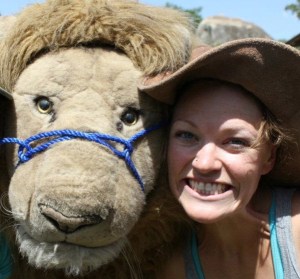
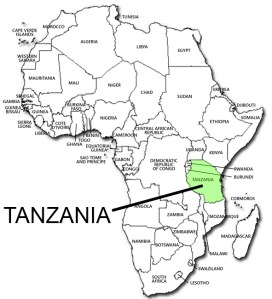
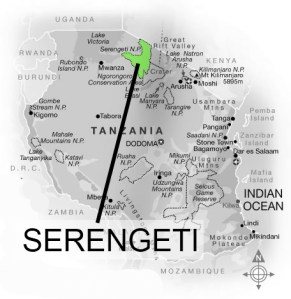
Ali is a researcher at the University of Minnesota. She studies the big carnivores (lions, hyena, cheetahs, and leopards) in the Serengeti. Every year she flies to Tanzania, loads up on supplies in Arusha, and then drives for a day – mostly on dirt roads – out into Serengeti National Park.
This is Craig:

Craig is a professor at the University of Minnesota and Ali’s advisor. He runs the Lion Research Center has been studying lions out in the Serengeti for decades. He has radio collars on lions in many prides, which allows him to keep track of lots individual lions over many years.
This is Daniel:

And this is Stan:

They are field assistants who work for Craig out in the Serengeti. Daniel is responsible for driving around and finding lions, while taking pictures of them and recording lots of information about what he sees. Stan is responsible for going out to the camera traps, making sure they’re still working fine, and changing the cameras’ memory cards when they fill up. Daniel and Stan live in Serengeti year-round at Lion House, where facilities are basic, but the scenery is amazing.
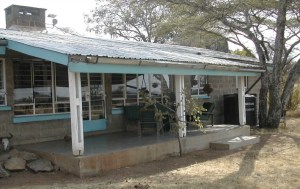
When Ali goes out the Serengeti, she stays at Lion House, too. Once she’s there, she makes observations that help her understand the big carnivores. A couple years ago, she installed a bunch of camera traps so she could see where the carnivores roamed when she wasn’t present. The cameras worked really well and the images were so useful that she installed some more. Now there are 225 of these cameras automatically taking pictures out the Serengeti!

My name is Margaret. This is me:

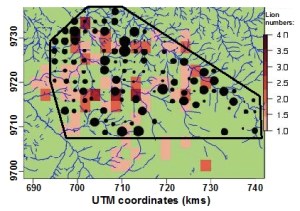
Like Ali, I’m a researcher at the University of Minnesota, and Craig is my advisor, too. Ali became inundated with the images the camera traps produced – a million per year! I have a reputation around here as a computer fundi – a Swahili word that translates as ‘master’ or ‘expert’ – and Ali asked me if there was a way to automate the process of turning images into data. See, the images by themselves aren’t that useful for research; Ali needs to know what species are in the pictures so she can do her analyses. For example, if she knows which images contain wildebeest and zebra, she can use that data put together a map that shows their density across the landscape. (The size of the circles show how many wildebeest and zebra there are in various places — bigger circles mean more wildebeest and zebra.)
 Unfortunately, I had to tell her that computers aren’t that good yet. They can’t yet reliably pick out objects from a picture, except under very controlled situations. But human eyes are remarkable in their ability to find objects in images. As I started looking through Ali’s images, I was blown away by how beautiful many of them are. And I wondered if we could ask for help from people. Lots of people. Hundreds. Thousands. So we started to think about how to do that.
The end result is Snapshot Serengeti, a collaboration with Zooniverse. We’d like to ask you to help us turn all these pictures from the Serengeti into scientific data by identifying what animals are in the images and what they’re doing. And in this blog, we will keep you updated on how the project is progressing, share cool information about the Serengeti and African wildlife, as well as hopefully answer a lot of questions you may have about animal behavior, ecology, and science in general.
So, check out the camera trap images. Tell us what you see in them. And let us know if you have questions. Thanks! You can get started by clicking here.
Coming soon…
…watch this space later today.

