
Frolicking Wildebeest
Rumor has it that a hard drive just arrived from Tanzania in the Ecology building at the University of Minnesota.
I’m so excited, I could go frolic with the wildebeest…
Owch.
Have *just* gotten back from Gombe and already back in the field frantically trying to finish camera traps before my mother comes out to visit. Stories of chimpanzees to come soon.
In the meanwhile, here’s a link to a clip that National Geographic Television did on lion-cheetah interactions. While lions kill a lot of cheetah cubs, they also occasionally kill adult cheetahs, as you’ll see in this clip. Since cheetahs don’t pose any direct threat to lions (unlike hyenas and leopards, which can kill lion cubs), and they only have minimal diet overlap, we’re not entirely sure why lions seem so intent on killing cheetahs. Watching this video clip, what do you think is going on?
Lost in the Mail
I have some sad news. The hard drive carrying Season 5 never arrived in Minnesota. Ali had it sent several weeks ago by postal mail. But not all the world’s mail is quite as reliable as we might hope. The hard drive may be sitting in some office somewhere, lost among piles of boxes. Or someone may have decided that a hard drive would turn a nice personal profit. Whatever happened, we’ll probably never see the hard drive again. Or we might – I once sent a package to a friend in South Africa and gave up on it when it hadn’t arrived after a couple months. But almost a year later, my friend sent me an email thanking me for the package and curious about some rather out-of-date news that I had written her.
But fret not. Ali said she’ll scrounge up another hard drive and load it with Season 5’s photos. She knows of someone traveling to the U.S. in a couple weeks and will ask for the hard drive to be hand couriered. Meanwhile, we’ll all have to sit tight.

The angle on this image makes this kori bustard look huge! I bet this bird could carry our hard drive over the Atlantic…
Since it’s Friday and I can’t leave you with just sad news for the weekend, here are some Serengeti laughing hippos.
Blast from the past
#### Spent all day yesterday driving from Serengeti *back* to Arusha — nine hours, two punctures and a broken hi-lift jack later, arrived in Arusha sweaty, grimy, and as excited as a human could possibly be about good food. At any rate — with last minute travel preps and a looooong travel day, this blog post got tucked away in the back of my mind until I woke up (well-fed!) this morning. I’m hoping I can appease you all with a blast-from-the-past note-from-the field from my *first ever* trip to Serengeti in 2009. Now I’m off to find a cappuccino. I did mention that 90% of my mental energy out here goes to thinking about food, right? #####
28-July-2009
Notes from my first days in Serengeti: I am so stunned I don’t even know what to write.
I am in the Serengeti.
I am smack dab in the middle of a natural phenomenon. In my first 24 hours here, I have seen a dozen things that I can barely pronounce. Impala, Topi, Hartebeest, Buffalo, gazelle. Baboons, Hyraxes, jackals, giraffes, zebra. Elephants, hyenas, lions and leopards. The baboons hang outside our house, like raccoons of Africa, but bigger and more agile…and much, much uglier.
Ingela, one of the field researchers and a spectacularly wonderful woman, reminds us to pull the front door closed lest the baboons invade (this has happened before). She also reminds us to occasionally look up in the tree in the side yard, as it seems to be a favorite rest-stop for a the neighborhood leopard. As I watch a giraffe meander past the outhouse out back, I feel vaguely like I have stepped back in time. Or landed on mars. What is this place? (Answer: AWESOME.)
Over whiskey and chocolates, Phil and Ingela and I discuss the important things in life, such as the following:
Q: What to do if you encounter a lion while on foot?
a)Run screaming
b) Make yourself look really big and menacing
c) back away slowly, maintaining eye contact with the lion, but without tripping. At a “safe distance” turn around to face the direction you are heading, and absolutely do not look back.
d) wave your pot and shout “kakakakakaka.”
Answer: Word on the street is that “c” is textbook correct, but “d” has proven to work after sunrise in the Serengeti. I do not personally know anyone that has attempted a, b, or c and lived to tell the tale. Both Craig and Ingela have survived on variations of d.
I think I’m going to like it here.

Lions and Wolves: Hunting and Conservation
Lion hunting is an active sport in Africa, with wealthy foreigners paying thousands of dollars for a chance to kill a lion and take its skin back home to taxidermy. Done right, lion hunting could benefit the species, by helping to pay for land protection and other conservation measures. However, too often it is done poorly.

For many years, Craig has been actively involved in figuring out how to do lion hunting sustainably. In 2009, he, Ali, and I, and a bunch of others wrote a paper (“Sport Hunting, Predator Control and Conservation of Large Carnivores”) about the pressures and dynamics of hunting large carnivores with a focus on lions and wolves. If you’re not a hunter yourself, you may believe that hunting and conservation are diametrically opposed to one another. But that’s not true; most hunters are also conservationists and many of the strongest wildlife protection laws in our country were championed by hunters. In our paper we explore the complexities that arise when you add the third party: not just hunters and conservationists, but also rural citizens, and particularly ranchers. While hunters want to maintain wildlife (to hunt, and often for other reasons as well), ranchers would be most happy if there were no predators around at all; predators like lions and wolves kill livestock and even threaten rural people. Wildlife managers then have the unhappy task of trying to please all three groups, and they often do so by employing hunters to maintain lower than full capacity predator populations.
Late last year, the U.S. Fish and Wildlife Service responded to a petition to list African lions as endangered species, which would prohibit the importation into the U.S. of lion trophies. This week the Tanzanian Ministry of Natural Resources and Tourism wrote an opinion piece in the New York Times about it, saying that doing so would cripple Tanzania’s ability to protect lions and other wildlife. Our intrepid safari reporter Chris Egert followed up with Craig on KSTP to get his take on the controversy. What do you think? Should the U.S. prohibit the importation of lion trophies? What do you think about hunting as a component of conservation? What can be done to reduce the conflict between large carnivores and the people who live (and tend livestock) near them? These are not questions with easy answers, and I’m curious to hear what Snapshot Serengeti fans think.
No post today!
Hi all – sorry, no post today — on two days holiday for the “Royal Bush Wedding” as we’ve dubbed it.

Felix and Laura are cornerstones of our small Serengeti Community. Congratulations to a wonderful couple, wonderful friends, and two people I couldn’t imagine Serengeti life without.
Friday Favorites
In case you’re not aware of it, Snapshot Serengeti is still live. (Or I should say, live again, as it was down for a few days following the completion of Season 4.) The pictures up now are all from Season 4, but the ones of nothing but grass have been removed. So every picture should have something to see in it. We are still recording all the classifications that are made, so your classifications still count.
However, we think we have enough classifications for Season 4 to be able to get science out of it. So if you’re looking to really make an impact science-wise, try out one of the other Zooniverse projects. My personal favorites are Seafloor Explorer and Old Weather. (But if you’re really just loving the fuzzy animal pix, we understand if you want to hang out on Snapshot.)
Ali tells me that Season 5 is in transit! A hard drive with hundreds of thousands of images is somewhere between Arusha, Tanzania, and Saint Paul, Minnesota. We’ll be working on it soon to get it ready for you to classify.
Meanwhile, here are some lovely snapshots to tide you over:


Sequestration, Science, and Snapshot Serengeti
Even if you live outside the U.S., it’s been hard to miss the arrival of the dreaded sequester. However, the impact of sequestration on science research doesn’t get a lot of attention in the general din. The U.S. government funds almost all of the nation’s basic science research, which means science research that doesn’t have an immediate application like creating a new medicine or figuring out how to grow crops to withstand drought.
Much of ecology research is basic. In Snapshot Serengeti, we’re interested in learning how a large assemblage of animals coexist and use the landscape. The results will not have an immediate impact on how the Serengeti is managed, but we hope it will help inform conservation management decisions down the line.

Worth funding?
Most of the nation’s basic research – and much applied research – is being cut by approximately 8%. Now, science funding hasn’t been doing all that well over the past couple decades anyway. And now things are getting worse. Snapshot Serengeti and its parent organization, the Lion Research Center, are mainly funded by the National Science Foundation (NSF), which announced recently that it will award 1,000 fewer grants this year than anticipated.
You may remember that in January, we were working hard on a grant proposal to keep our cameras rolling past the end of 2012. The way the process works is that each proposal gets evaluated on whether it is good, well-planned, and worthwhile science and either gets recommended for funding or rejected. To give you an idea, in our division of the NSF, 16% of proposals got recommended for funding last year.
But it doesn’t end there. Each year the NSF gets many more good, well-planned, and worthwhile proposals than it can fund. So it ranks them. And then it starts funding them, starting at the top and moving down the list, until it runs out of money. Of the recommended proposals, NSF expected to be able to fund just the top 22% of them this year.
And with sequestration, that pot of available money just got even smaller.
What that means for our proposal isn’t clear yet. If the sequester sticks, then we will be competing for a smaller pot of next year’s NSF money. And even if it doesn’t, we’ll be in tighter competition with all those really good proposals from this year that just missed out on getting funded. In either case, the sequester is bad news for Snapshot Serengeti.
TV Coverage of the Lion Project and Snapshot Serengeti (updated)
UPDATE: You can now watch the report online. There is also a “web extra” report on the Lion House facilities.
Chris Egert, who wrote our blog post yesterday, will air a report this Monday on KSTP 5 EYEWITNESS NEWS at 10 pm Central (US) time. Here’s a sneak peek:

Home
I arrived in Serengeti on January 24. It’s been more than a little crazy since then. But I thought you might like to see what home looks like. Karibu lion house!
This is our office. Living room. Dining room. Everything. This is home.

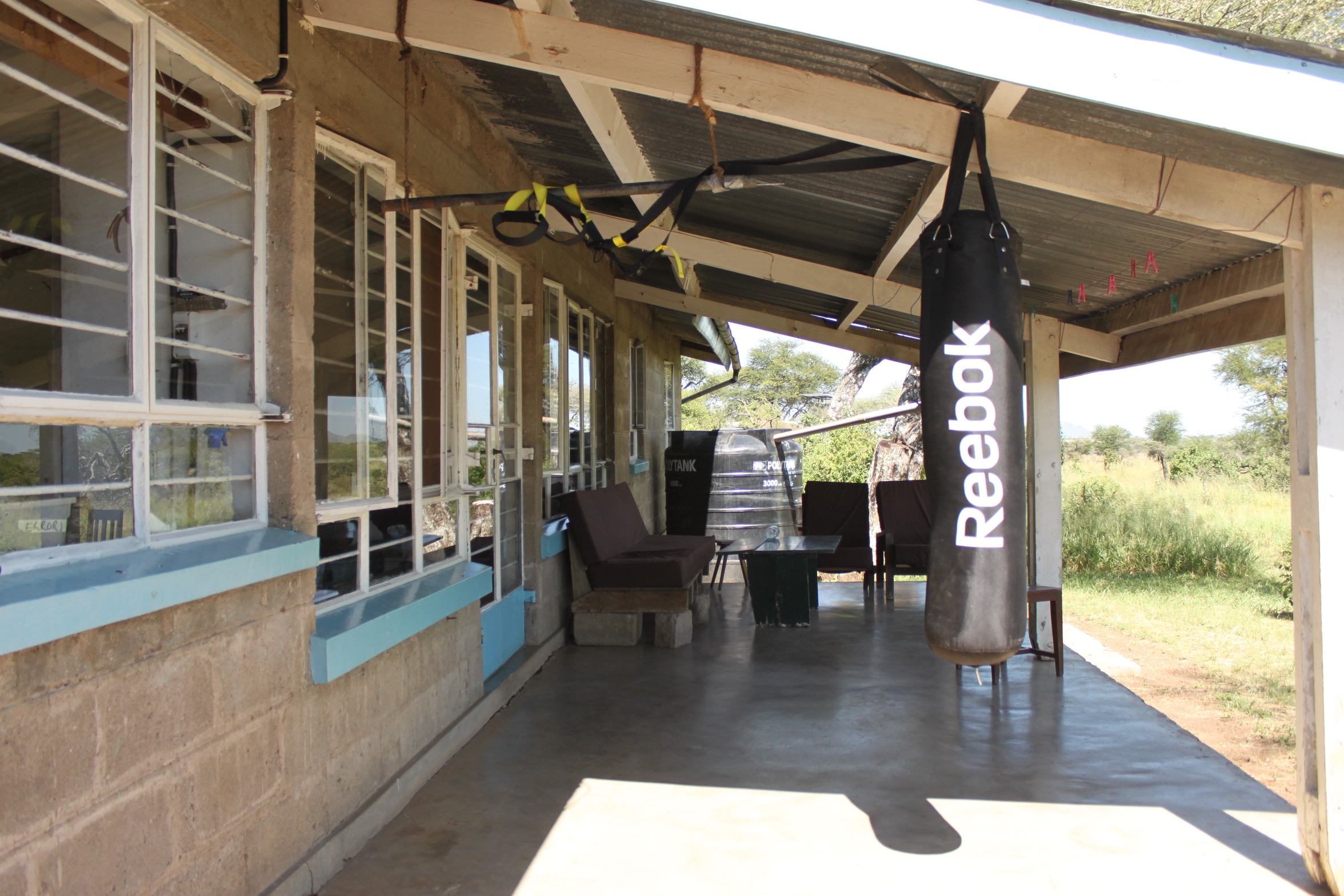
Our “gym.” Taken down for rain and hyenas. Also doubles as our porch on which to enjoy sundowners and the view. Notice the rain tank in the background. Constant battle to keep the baboons from opening the tanks.
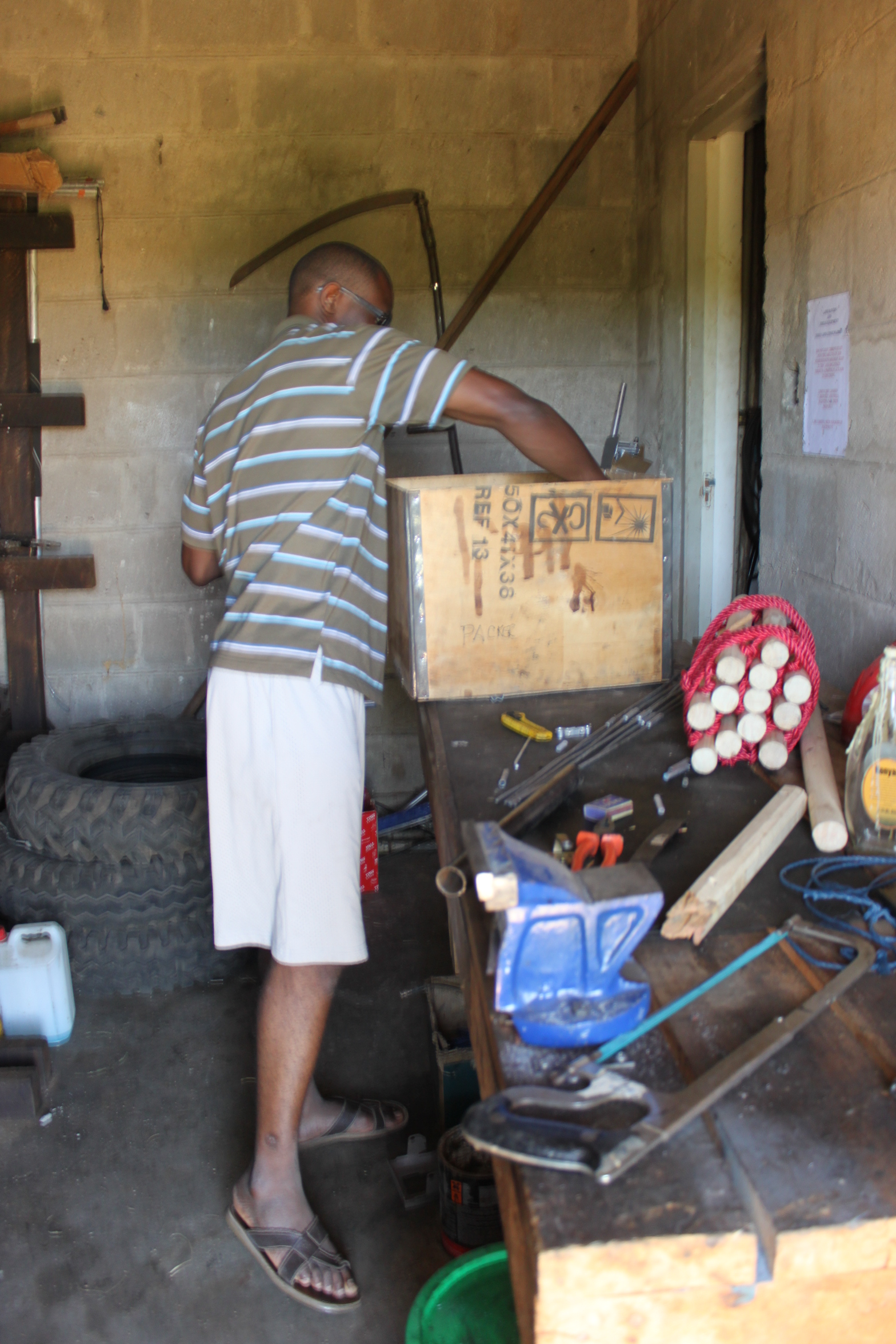
Stan making replacement antennas in the “shop”.
Daniel entering data. We don’t have a lot of chairs.

Me trying to get internet on the USB modem.

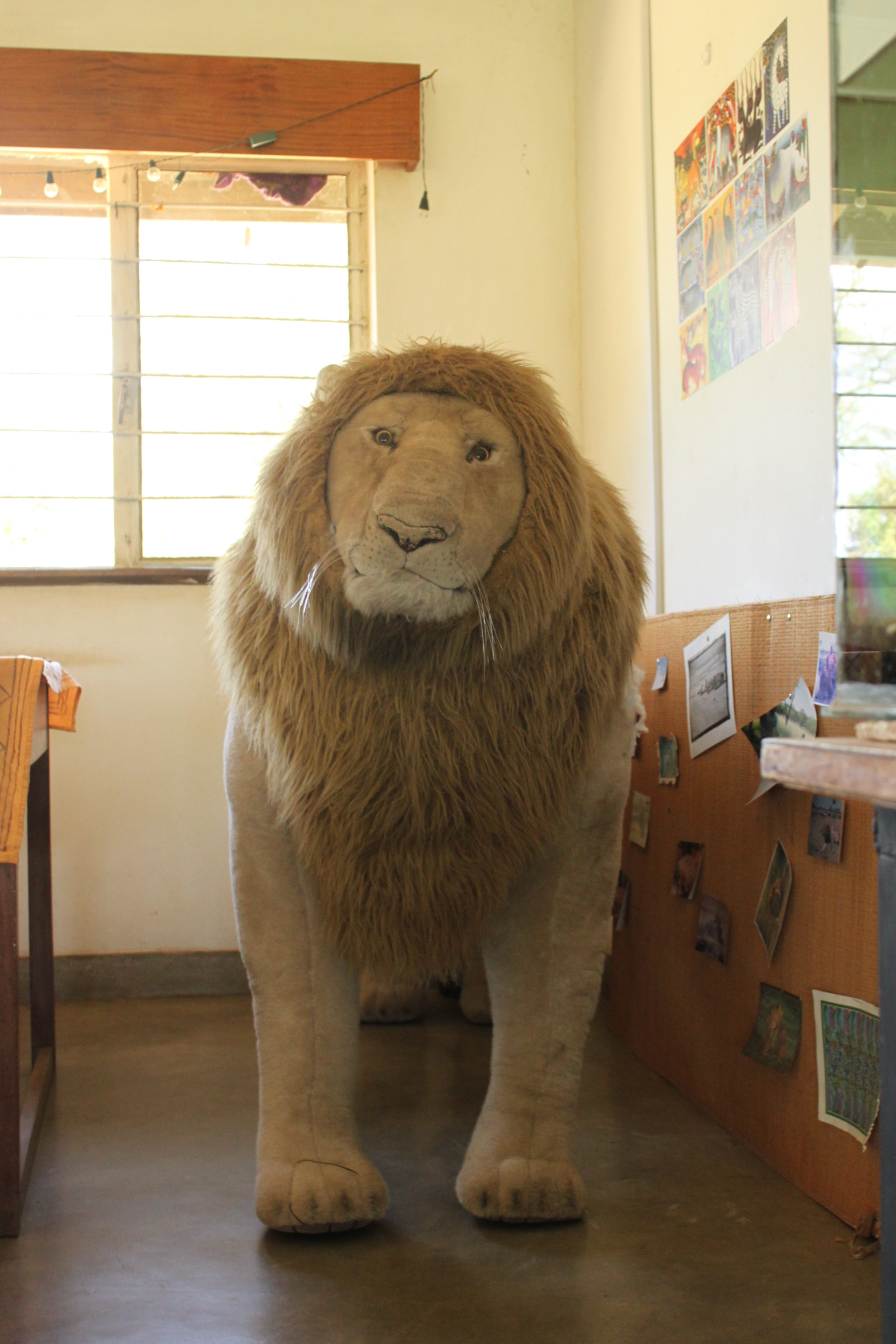
Fabio. Our guard lion. Sometimes when the baboons are bad we put him on the porch to scare them away. (It used to work…)
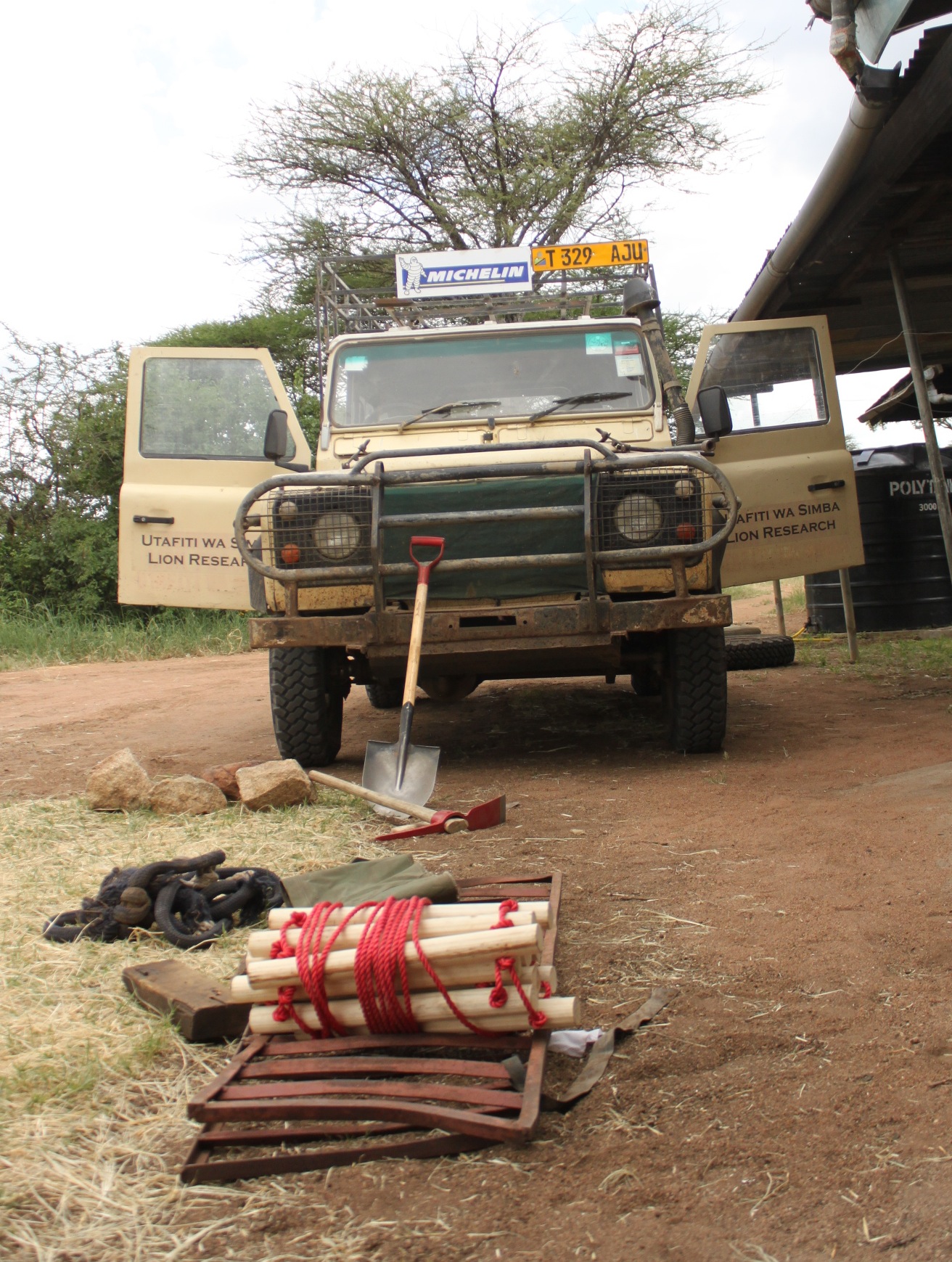
Arnold, getting ‘dressed’ for the field. Mud ladders and wood blocks to stack mud ladders on. Shovel and pick-axe to dig out places to put mud ladders. And of course, a tow-rope, for when none of the above can get me un-stuck from mud or a pig-hole or an overly-ambitious river crossing…
Oh! Right. I almost forgot. Here is our bathroom. The walk seems a LOT longer in the dark…

 Snapshot Serengeti