
Open source and multilingual
In keeping with Zooniverse’s philosophy of openness, the code for Snapshot Serengeti was released back in February. (And the code for several other Zooniverse projects has been released, as well). What this means is that you — or anyone else — can contribute directly to the development of Snapshot Serengeti!
In particular, we’d love to internationalize the site so non-English speakers can participate. If you go and classify images in Snapshot Serengeti right now, you can see a beta version of a Polish translation of the site. Look for the word “English” in the upper left, pull down the arrow, and select “Polski (beta)”. You can now develop your Polish vocabulary, if you don’t happen to be a native Polish speaker. (Seriously. I studied for my high school AP French exam by installing Civilization in French on my computer and playing it endlessly. I’ll admit it was tricky to work the words caserne (barracks) and galère (galley) into my exam essay, but playing Civilization was so much more fun than flash cards…)
All the text you see on Snapshot Serengeti is in what is called a “localization file.” If you look at Snapshot Serengeti’s English localization file, you’ll see all the English text that you could possibly encounter on the site, starting like this:

And if you wanted to, say, create a Swahili version of Snapshot Serengeti (which would be awesome), you would change the text that reads ‘Welcome to Snapshot Serengeti!’ to ‘Karibu Snapshot Serengeti!’. And you would continue doing that for all the English.
So, want to do some translating? If you’re tech-savvy, follow these instructions for translating Galaxy Zoo, but use the Snapshot Serengeti code instead of Galaxy Zoo’s. If those directions leave your head spinning, leave a comment below and we’ll help get you started.
Braving the wilds of Washington D.C.
While Ali is braving the wilds of the Serengeti, I’m braving the wilds of Washington D.C. You know — the herds of tourists, the temperamental and unpredictable congressional staff, the roaring protesters. I work right downtown on the National Mall at the Smithsonian’s National Museum of Natural History; I’m doing a fellowship here. And most days, I find shelter from the D.C. wildlife up in my office in the east wing.
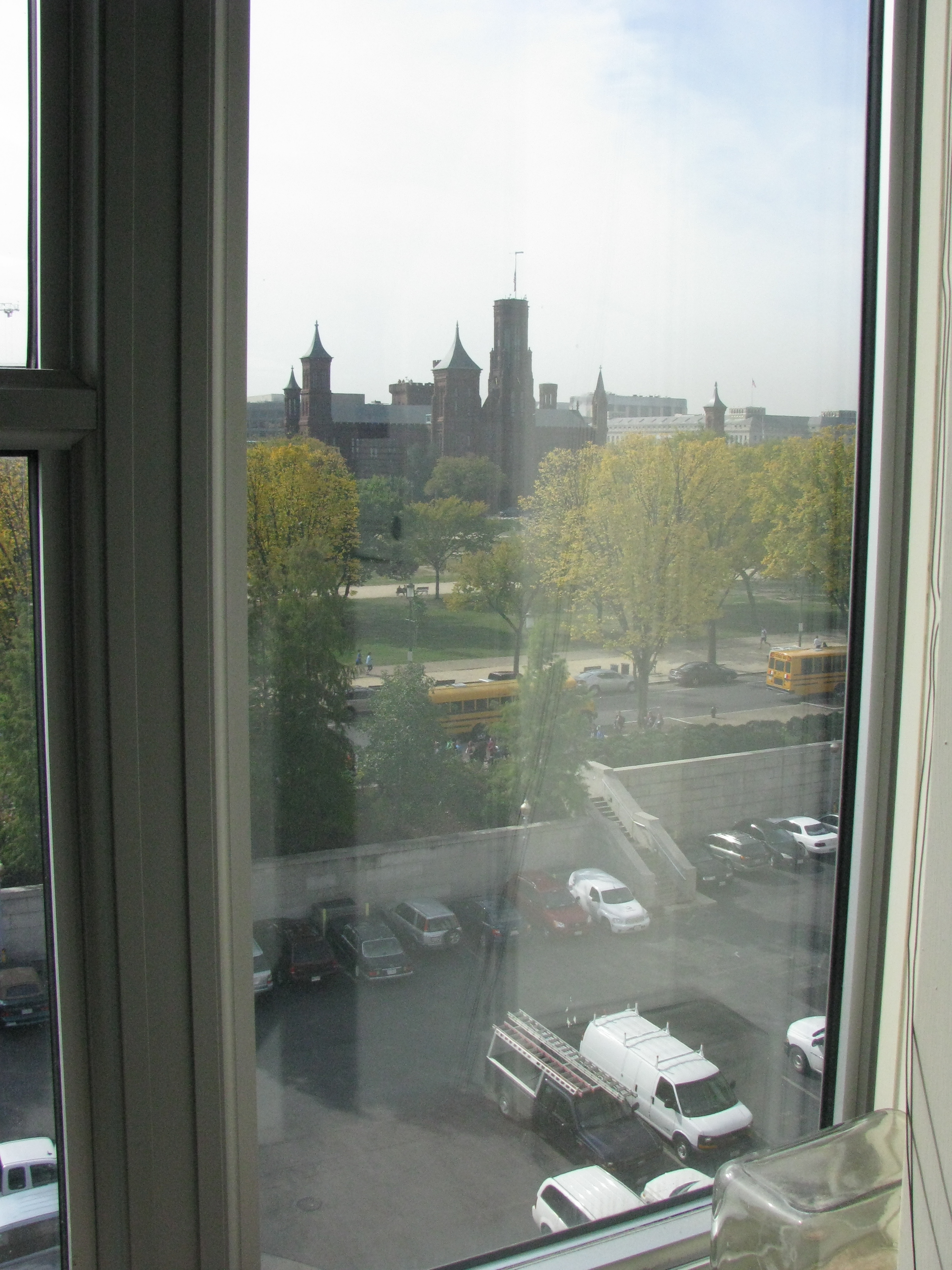
Overlooking the D.C. wildlife from the safety of the National Museum of Natural History’s east wing.
But for the next couple days, I’m donning my pith helmet business clothes, hopping into my Land Rover onto the metro, and heading over to the kopjes Capitol Hill. I’m going to be lobbying.
The Biological Ecological Sciences Coalition (BESC) holds an annual Congressional Visits Day, inviting scientists to come talk to congresspeople about the importance of federally funding biological research. Today is a training day, so that people like me can get clued-in to how the federal budget works and how to communicate with politicians. (My guess is that it’s not a good idea to spout off lots of numbers and use a lot of jargon.) Then tomorrow, we’ll be put in small groups and have meetings all day long with the staff of various senators and representatives.
I’m participating in the Congressional Visits Day in part because I’m always curious about how things work, and the opportunity to learn more about how money gets from the coffers of the Treasury into the hands of the scientist on the street savanna is a draw. But I’m also participating because federal funding for the sciences is in trouble. It has been stagnant for the past decades and is now declining thanks to the Sequester.
Over the next half-century (which I hope to experience), I see two major threats to our physical and financial well-being as a people. The first is the disruption of agriculture due to unavoidable factors like climate change and the introduction of invasive species. The second is the emergence and spread of zoonotic disease facilitated by unavoidable globalization. It is critical to understand the science surrounding these issues if we want to be able to adequately prepare for them, and the science to understand is fundamentally biological.
So I’m leaving the quiet sanctuary of my office to head out and study talk to the lions policy makers.
 Snapshot Serengeti